Will Modi’s Upper Caste Quota Gamble Pay Off?
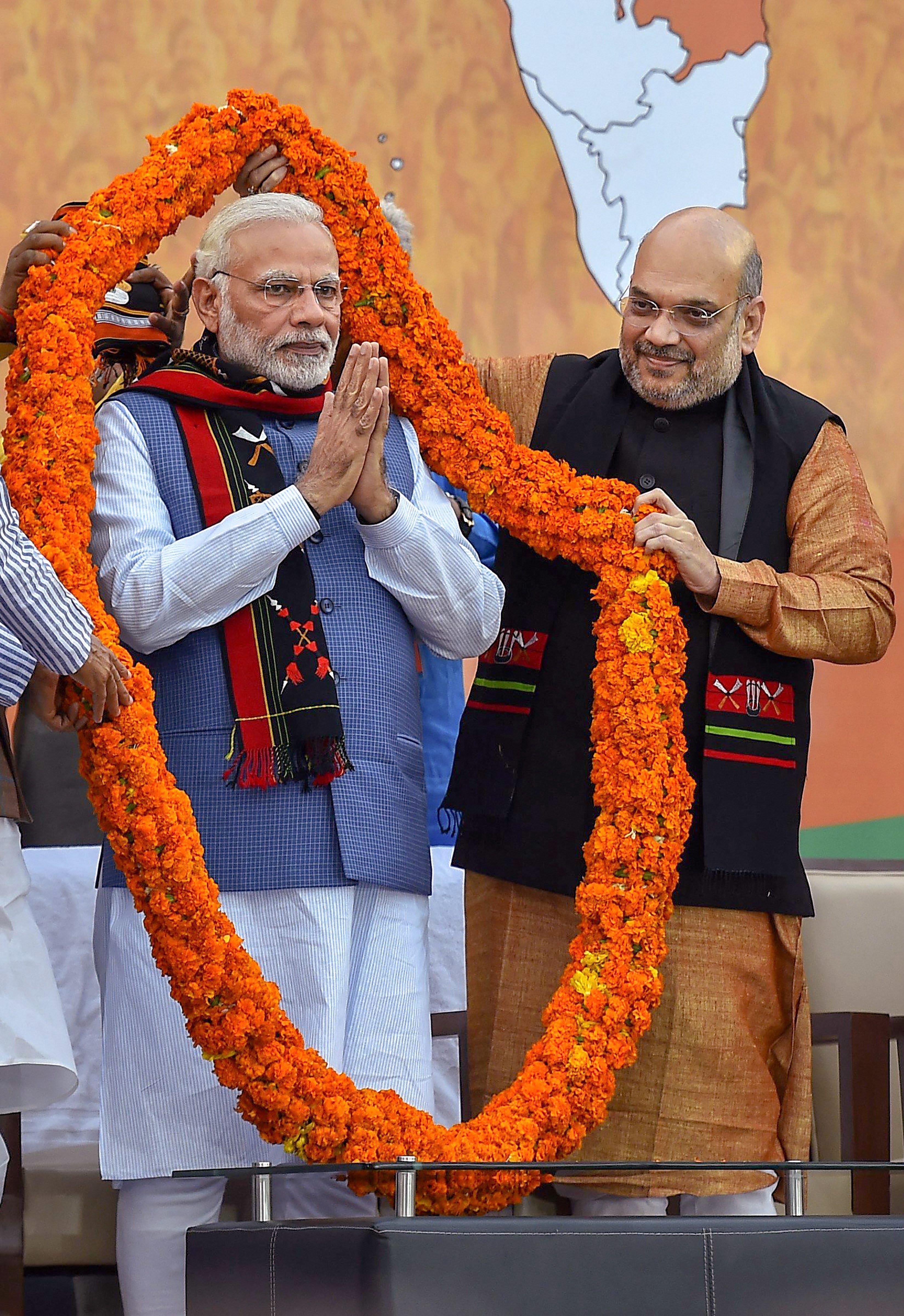
The Narendra Modi government plans to create a 10 percent quota in jobs and state-funded education institutions for economically backward sections among the general category ahead of the next general election. But will it cross the legal hurdle? More importantly, will it help him win voters?
The cabinet cleared the decision to allow 10 percent additional reservations over and above the quota for backward castes, multiple news reports said quoting unnamed people. A constitutional amendment bill will be tabled in Parliament on Tuesday, PTI reported.
As of now, 50 percent government jobs and seats in government-funded schools, colleges and universities are reserved for the Scheduled Castes, Scheduled Tribes and Other Backward Classes. But upper caste communities like the Patidars of Gujarat, Marathas in Maharashtra and Jats in Haryana have been demanding reservation, too, as India stares at a jobs crisis and falling farm returns discourage people from taking up agriculture. The new proposal, if it goes through, could theoretically give them a better chance at coveted government jobs.

Dalit ideologue Chandrabhan Prasad, however, said the objective of reservations is not economic upliftment. “The purpose of reservation is to bring social equality and not to alleviate poverty,” he told BloombergQuint. “The move will only frustrate the upper caste youth in the long run because of lack of government jobs.”
The Centre for Monitoring Indian Economy estimates that there are 2.3 crore central and state-government jobs in all. As per the Department of Expenditure, there were only four lakh vacant positions in the central government as of March 2016.
The demand for government jobs is so high that nearly two crore people applied for 63,000 vacant posts in the Indian Railways recently.
And the bigger question is how will the government implement the new quota?
Since the constitution envisions reservations only on the basis of caste, a Constitutional amendment will be needed to push the changes through. This entails the bill being voted by a two-thirds majority in both the houses. The government has very little time.
Political analyst Amitabh Tiwari said the decision is aimed at a favourable verdict in the “people's court”. It will be difficult for any political party to argue against quotas among the upper castes who make up 25 percent of the population. “It's a win-win for the BJP.”
Yet, even if the Modi government does cross the parliamentary hurdle, the changes can be challenged in the Supreme Court because it has capped reservations at 50 percent and turned down several requests by states to breach that level.
Senior Advocate Arvind Datar, however, said the grounds to challenge a constitutional amendment are limited because a violation of the basic structure of the Constitution will have to be demonstrated.
If you can have reservations for different categories, it will be very difficult to say why there should no reservation for economically weaker people in the forward community.Arvind Datar, Senior Advocate

-
It's Time To Take The GST Council's Bet On Trust Global

Payment records can prove India's services exports, and clear, proportionate rules can bring foreign digital sellers into the tax net.
-
Opinion | India at 38: From Innovation Overperformer to Innovation Powerhouse
India now has 453 VC-backed deep science startups, 18 of them late-stage, after 117 percent growth since 2020. Laurus Labs, at USD 9.3 billion, is the most valuable deep science company in any middle-income economy outside China.
-
Navigating Energy Crossroads: S Jaishankar's Call For Diversified Supply Chains At G20 Ministerial Meeting
As geopolitical fault lines continue to test maritime trade routes and commodity flows, Jaishankar's message remains pertinent: true economic resilience requires open markets, protected transit lines, and a genuine commitment to multilateral cooperation rather than coercion.
-
Indians Are Travelling, But Not Every Journey Is A Holiday | The Week In Whys
Pilgrims, patients and working women are the real travellers, and the system hasn't quite caught up with them.
-
Getting To Work Costs Women More | The Reason Why
It is not just about women paying more than men. It is about women paying much more in cities than in villages.
-
AI Bias In Investing Cannot Be Eliminated, But It Can Be Governed
Framing is a particularly important example as identical financial information presented in terms of gains rather than losses can lead an LLM to reach a different assessment.
-
Joining The Dots | Dark Skies, Steady Diya: Why Hope Holds This Diwali
With war, a weak rupee and foreign outflows weighing on sentiment, policymakers at the NDTV World Summit and market veterans at NDTV Profit Ignite: Diwali Edition offered the same advice: stay invested and filter out the noise.
-
The Curious Case of Equitas Small Finance Bank And A CEO Who Quit For Stock
PN Vasudevan believes persistent investor concerns over a perceived conflict of interest had become a governance overhang on Equitas Small Finance Bank's stock, even as the lender improved profitability and asset quality.
-
Talking Points This Week: AI Cash Burn, A Tiger Comeback And An India That Still Finds Its Own Path
India is not immune to higher oil or tighter global liquidity, yet its earnings base is broader, its domestic policy levers are still available.










