Will India Do Better Or Worse With ‘Centrists’ Biden And Harris?
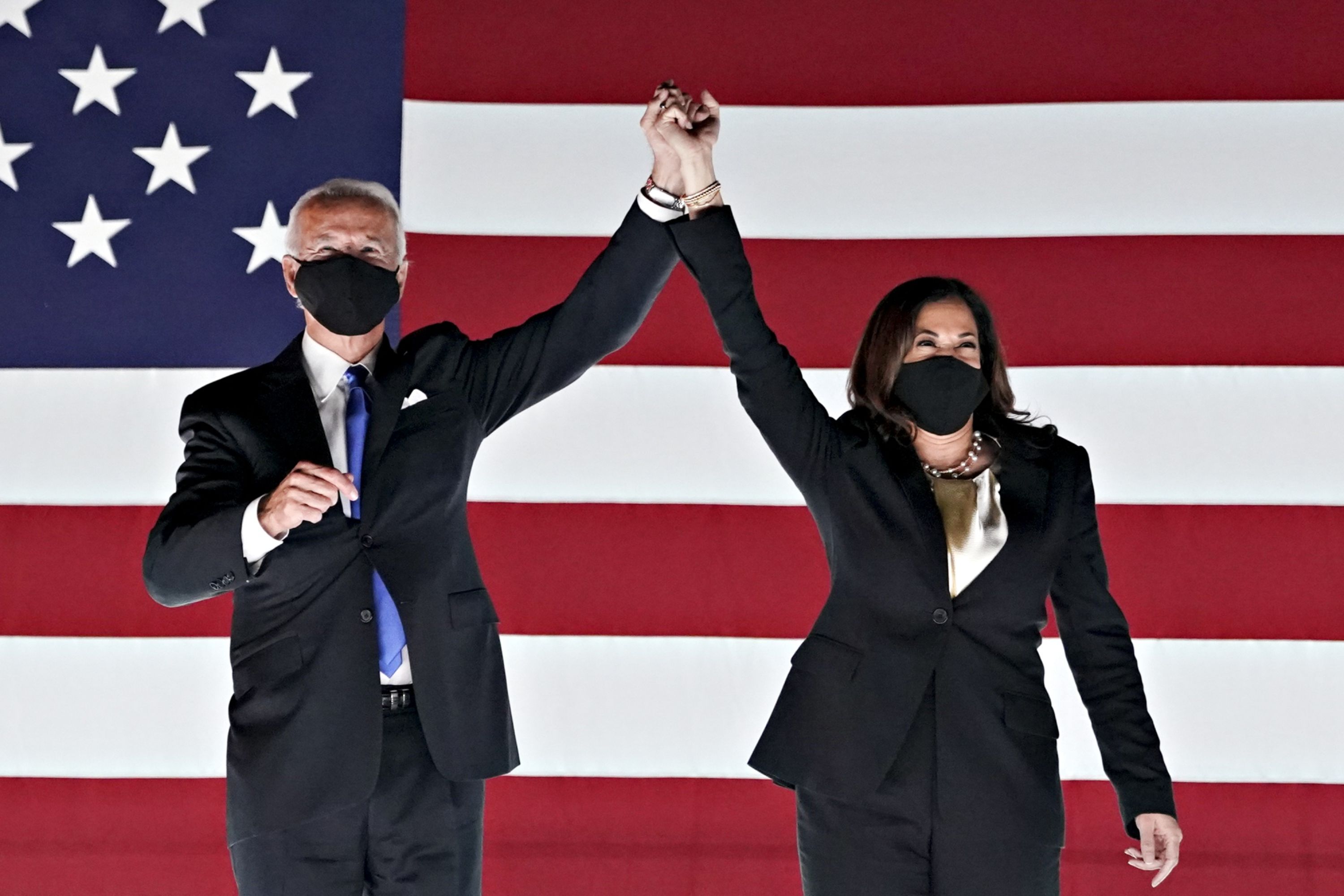
The Democratic National Convention nominated Joe Biden and Kamala Harris for the November elections in a uniquely spectacular manner. The fact that it was a Covid-induced ‘virtual event' was perhaps the least of it. But the parade of Republican heavyweights at a Democratic convention was unprecedented, from Colin Powell, John Kasich, to Cindy McCain. I shudder to think what legal convolutions would have gotten triggered if India's moth-ridden anti-defection law was applied to these worthies! Be that as it may, this unusual pivot to the politics of a ‘centrist consensus and reconciliation' has given Biden-Harris a real shot at defeating the incumbent Trump-Pence duo. Once thought to be outside the realm of possibility, it could be happening now, thereby begging the question: Will India do better or worse under ‘centrists' Biden and Harris? How will the U.S.-India relationship pan out from here on?

Trump's America Was Disruptive And Disorienting
For India, as for much of the world, the 2016 election of Donald Trump as president of the United States proved disruptive and disorienting. In short order, he canceled the Trans-Pacific Partnership, withdrew the U.S. from the Paris climate accord, blasted America's North Atlantic Treaty Organization allies while sucking up to adversaries such as North Korea and Russia, ridiculed global bodies from the United Nations to the World Trade Organization, launched a trade war with China, and pulled out of the Iran nuclear deal, re-imposing sanctions lifted by the Obama administration. His push to ‘put America first' reduced U.S. engagement in Asia, as everywhere, upending the old Western world order and leaving a power vacuum custom-made for China to fill. Trump retreated even more menacingly into his polarising shell as his monumental failure in handling the Covid-19 pandemic exposed him to anger, ridicule and perhaps an imminent defeat come November.
Unlike Presidents Bush and Obama, his predecessors, Trump has been unabashedly transactional with India.

Plunging into a divisive trade war, the U.S. president singled out India for unfair practices, threatening to cut off bilateral trade altogether over India's high tariffs on Harley Davidson motorcycles. And Washington's 2018 imposition of sanctions on countries that buy oil from Iran was especially painful for India—even with a temporary waiver—given that Iran is one of our biggest suppliers. At the height of the Covid-19 pandemic and lethal China-India border clashes, he twisted the knife to extract hydroxychloroquine supplies, shafted H-1B visa-holders, and short-circuited foreign students' education in America – all of which hit India hard where it hurt.
But The U.S. And India Need Each Other
In the long history of U.S.–India relations, the Trump presidency is just a hiccup. After all, events of the twenty-first century have drawn U.S. and Indian interests into closer natural alignment, underscoring both the strategic challenges we share—Islamic extremism, Chinese dominance, instability in the Middle East—and the advantages of enhanced security and trade ties. We need each other.
Inherently, the oldest democracy and the largest have more in common than perhaps either would care to admit.
Born of British colonialism 200 years apart, both India and the U.S. feature diverse, sometimes unwieldy populations that nonetheless maintain faith in free-market enterprise, basic trust in free and fair elections, and the expectation of government transparency.
And both India and the US are blessed with youthful, energetic populations, promising a steady stream of workers for decades to come, in contrast to the rapidly aging workforces of China, Japan, and the European Union.
Most importantly, they share the same basic world view, centred on advancing democracy, stopping Islamic terrorism, regulating China, and ensuring the free movement of goods, people, and ideas throughout the global common. Their economies share structural strengths—including robust consumer spending, strong exports, a shrinking deficit, an entrepreneurial private sector, and technological prowess—that helped them withstand not only the 2008 global financial meltdown but also more recent geopolitical bombshells such as Brexit, China's slowdown, the Syrian refugee crisis, and widespread Russian hacking. The jury, of course, is out on how both will recover from the post-Covid-19 economic shock.

Shorn Of Bombast, Centrists Biden-Harris Would Like To Embrace India
In many ways, our economic and strategic bonds with the U.S. are deeper than ever. The U.S. has become India's largest partner with bilateral trade near $100 billion. More than 600 American companies—including Microsoft, Google, Uber, Walmart, and Amazon—operate in India. Apple is actively planning to manufacture its latest iPhones here. US investment in the country has jumped manifold. Our strategic relationship, too, has broken new ground, as we join forces in unprecedented ways and places to stabilize a precarious world. We can go further still.
The truth is that the U.S., especially under a centrist Biden/Harris administration, would prefer to embrace India, perhaps without the bombast, but in several subtle ways. India is the world's second-most populous country—expected to overtake first-place China by 2022—with the third biggest economy measured at PPP, and the fourth strongest military.
By 2050, China will be the world's largest economy with a nominal GDP of $106 trillion (nearly $62 trillion at PPP). Its share of global GDP is expected to peak at 20% around 2030, and then slowly begin to shrink. At the same time, the US and India will rank as the second and third-biggest economies respectively. Measured at PPP, India's GDP is expected to be slightly higher than America's by 2050, pushing it into second place, assuming a reasonably quick reversion to the mean once Covid-19 is tamed. And its share of global GDP could nearly double by 2050, from 7% at PPP in 2014 to 13.5%—roughly the same as America's. Add Japan—expected to fall from third to seventh place in GDP rankings by mid-century—and the three democratic powers will account for roughly 35% of global GDP, making them the strongest economic bloc in the world. That will guarantee the global primacy of their strategic and diplomatic agendas.
Like Britain and Japan, we share with the U.S. a commitment to democracy and all its freedoms, both civic and economic.
While this may not have mattered much to a ‘transactional Trump', a Biden-Harris administration will have to visibly respect our political dispensation. Diplomatic impasses such as the one over Iran will allow us to test the relationship's resilience, perhaps finding new compromises or at least learning to respect one another's sovereign interests.
Raghav Bahl is the co-founder and chairman of Quintillion Media, including BloombergQuint. He is the author of three books, viz ‘Superpower?: The Amazing Race Between China's Hare and India's Tortoise', ‘Super Economies: America, India, China & The Future Of The World', and ‘Super Century: What India Must Do to Rise by 2050'.

-
Where You Live Shapes How You Get To Work | The Reason Why

Two-wheelers are the most popular way to get to work in India, accounting for nearly 43% of workplace commutes.
-
High US Salaries, No Green Card Certainty: The Financial Calculation Facing Indian H-1B Families
The suspension of PERM processing at eight technology employers does not cancel existing H-1B visas. What it does is force a question many Indian families have been avoiding: is the US salary worth tying your career and family plans to one employer?
-
Unhedged Position: Can India See An Indonesia-Style Time Correction?
The Nifty is trading below levels it first clocked in 2024. Is there, then, as I have suggested in the headline, potential that the current time correction drags on painfully for the next three-five, even ten years?
-
Navigating Friction And Energy Realities: An Analysis Of Marco Rubio's October Visit To India
Occurring at a critical juncture marked by stalled trade negotiations and escalating geopolitical pressures over global energy supplies, the visit offers a profound window into modern US-India relations.
-
India Exports Capital. Why Not Export Trusteeship?
The big question, then, is whether India can build an institution that global borrowers, investors, banks, and lawyers can trust, even without an Indian connection.
-
France's Economy & Politics Are In Crisis | The Reason Why
Let's look at how the French economy and politics evolved under Nicolas Sarkozy, Franois Hollande and Emmanuel Macron.
-
You May Inherit The Business. You Must Earn Its Credibility.
Succession tests the founder's ability to share authority as much as it tests the next generation's readiness to assume it.
-
Signing Deals Is One Thing; Making Them Work Is Another | The Week In Whys
Sometimes, things don't turn out as planned. Indian companies have lost some bids to rivals, some projects won't produce until 2030.
-
FOMC Wall, PERM Suspension, Hospital Stocks | Talking Points This Week
A PERM suspension would directly affect green-card sponsorship rather than H-1B visas, so the near-term earnings impact could remain relatively limited. The key question is whether this marks a new phase in US scrutiny of Indian IT.
-
Everything, Everywhere, All At Once: Dalal Street's Week To Forget | Joining The Dots
Visa curbs, a Starlink spat and cancer drug caps: what connects this week's shocks for Indian markets









