Why Pulwama Was Left Out Of UN Resolution On Masood Azhar
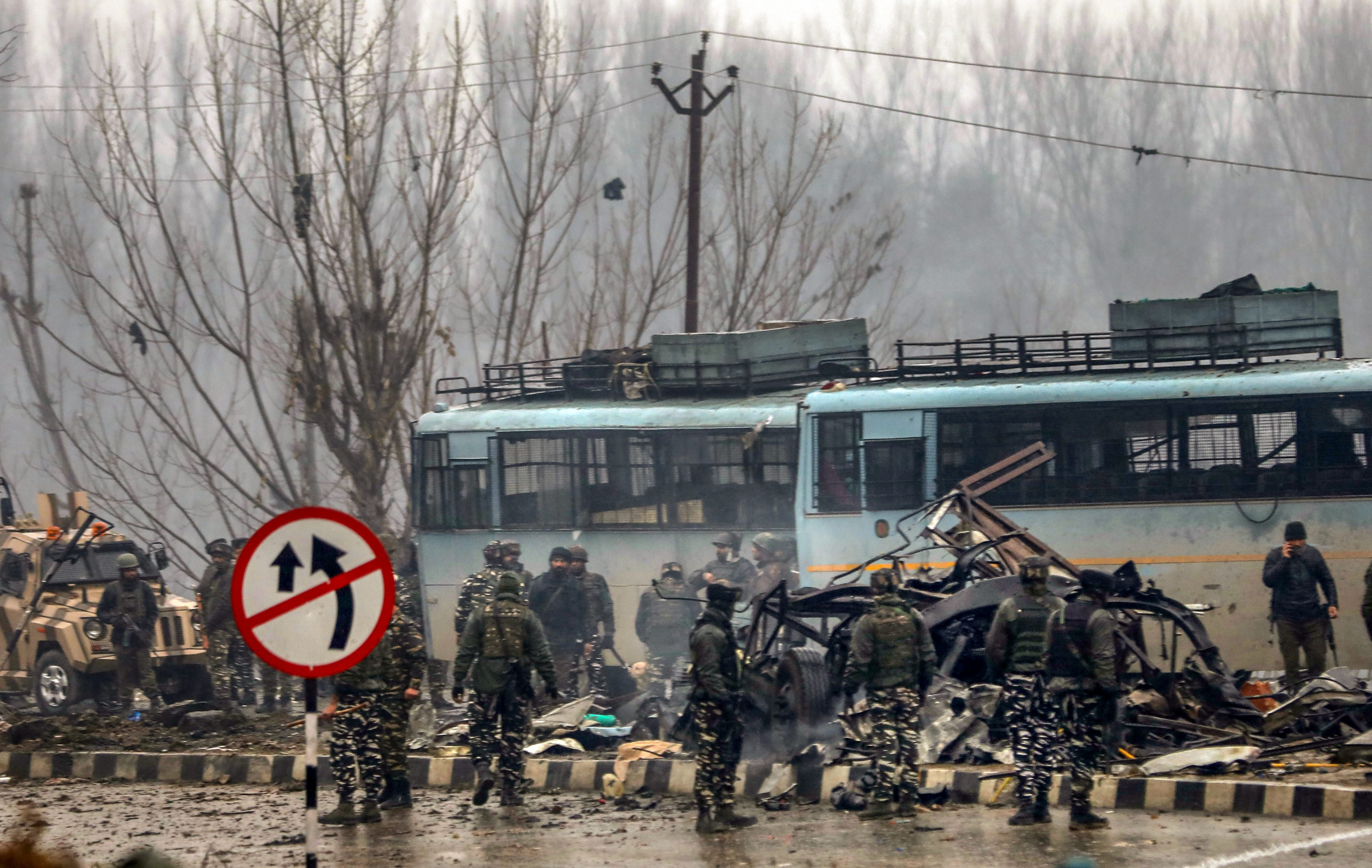
India's big diplomatic win at the United Nations Security Council came after a decade of lobbying and negotiating with countries to designate Jaish-e-Mohammad chief Masood Azhar as a global terrorist. While that's seen as a first step to put pressure on Pakistan to end terror networks operating from its soil, it led to a political tussle between the ruling Bharatiya Janata Party government and the opposition over the “omission” of the Pulwama attack in the security council's notice.
The Pulwama attack had already achieved due recognition from the United Nations Security Council in its release on Feb. 21, according to Syed Akbaruddin, India's permanent representative to the United Nations. While the Pulwama attack was the catalyst to ensure that India's effort succeeded, negotiations to brand Azhar as a global terrorist were ongoing years before, he told BloombergQuint in an interview.
If you have a victory in diplomatic terms, why would you bring that back to the table?Syed Akbaruddin, India's Permanent Representative To United Nations
BJP leaders were quick to credit Prime Minister Narendra Modi for this big win, highlighting his “assertive” and “firm stance on terror and Pakistan” as key factors in Azhar's blacklisting.
Arun Jaitley on UN declaring #MasoodAzhar as global terrorist: Govt & PM should be applauded. When the country wins, every Indian wins. It is unfortunate that some friends in the opposition think that if they join in this victory they might have to pay a political price for it. pic.twitter.com/qpgVuBCU7F
May 2, 2019But the Congress expressed its disappointment saying the announcement did not mention the Pulwama attack or attacks carried out by Azhar in Jammu and Kashmir.
Pakistan based #MasoodAzhar's belated declaration as a global terrorist by UN is surely a welcome step.
May 1, 2019
India's fight against terrorism is resolute.
We are disappointed that UN listing doesn't mention Pulwama/J&K while listing Azhar's role in terrorist activities.
Statement:- pic.twitter.com/De7qfvWDS9India's push for a unanimous vote against Azhar involved convincing all the members of the United Nations Security Council that what they were doing was acting in concert against an individual who has a track record of being involved in unsavory activities in countries like India, Akbarudin said. “In the end, it was countries like the U.S., the U.K. and France that rallied behind India's cause to achieve a consensual outcome in the committee.”
Watch the full interview here:

-
Talking Points This Week: Tech Nerves, FII Buying, And A Faraway Banking Shock

The global markets are not shining this Diwali. The exception in the large markets is, India.
-
Midterm Rally Lasted A Day. The Hard Reality Of A Divided US May Last Two Years | Opinion
Between a contested AI boom, a debt ceiling that arrives in 2027 and a president with every incentive to act alone, the next two years may prove more volatile than the first day's rally suggests.
-
Blue Wave Will Derail the AI Trade but Won't Dismantle the AI Era | Unhedged Position
The Democrats' sweep of the US Congress will see politics collide with economic forces both over the long and short term.
-
It's Time To Take The GST Council's Bet On Trust Global
Payment records can prove India's services exports, and clear, proportionate rules can bring foreign digital sellers into the tax net.
-
Opinion | India at 38: From Innovation Overperformer to Innovation Powerhouse
India now has 453 VC-backed deep science startups, 18 of them late-stage, after 117 percent growth since 2020. Laurus Labs, at USD 9.3 billion, is the most valuable deep science company in any middle-income economy outside China.
-
Navigating Energy Crossroads: S Jaishankar's Call For Diversified Supply Chains At G20 Ministerial Meeting
As geopolitical fault lines continue to test maritime trade routes and commodity flows, Jaishankar's message remains pertinent: true economic resilience requires open markets, protected transit lines, and a genuine commitment to multilateral cooperation rather than coercion.
-
Indians Are Travelling, But Not Every Journey Is A Holiday | The Week In Whys
Pilgrims, patients and working women are the real travellers, and the system hasn't quite caught up with them.
-
Getting To Work Costs Women More | The Reason Why
It is not just about women paying more than men. It is about women paying much more in cities than in villages.
-
AI Bias In Investing Cannot Be Eliminated, But It Can Be Governed
Framing is a particularly important example as identical financial information presented in terms of gains rather than losses can lead an LLM to reach a different assessment.









