Vijay Mallya’s Extradition Trial Hearing Inconclusive
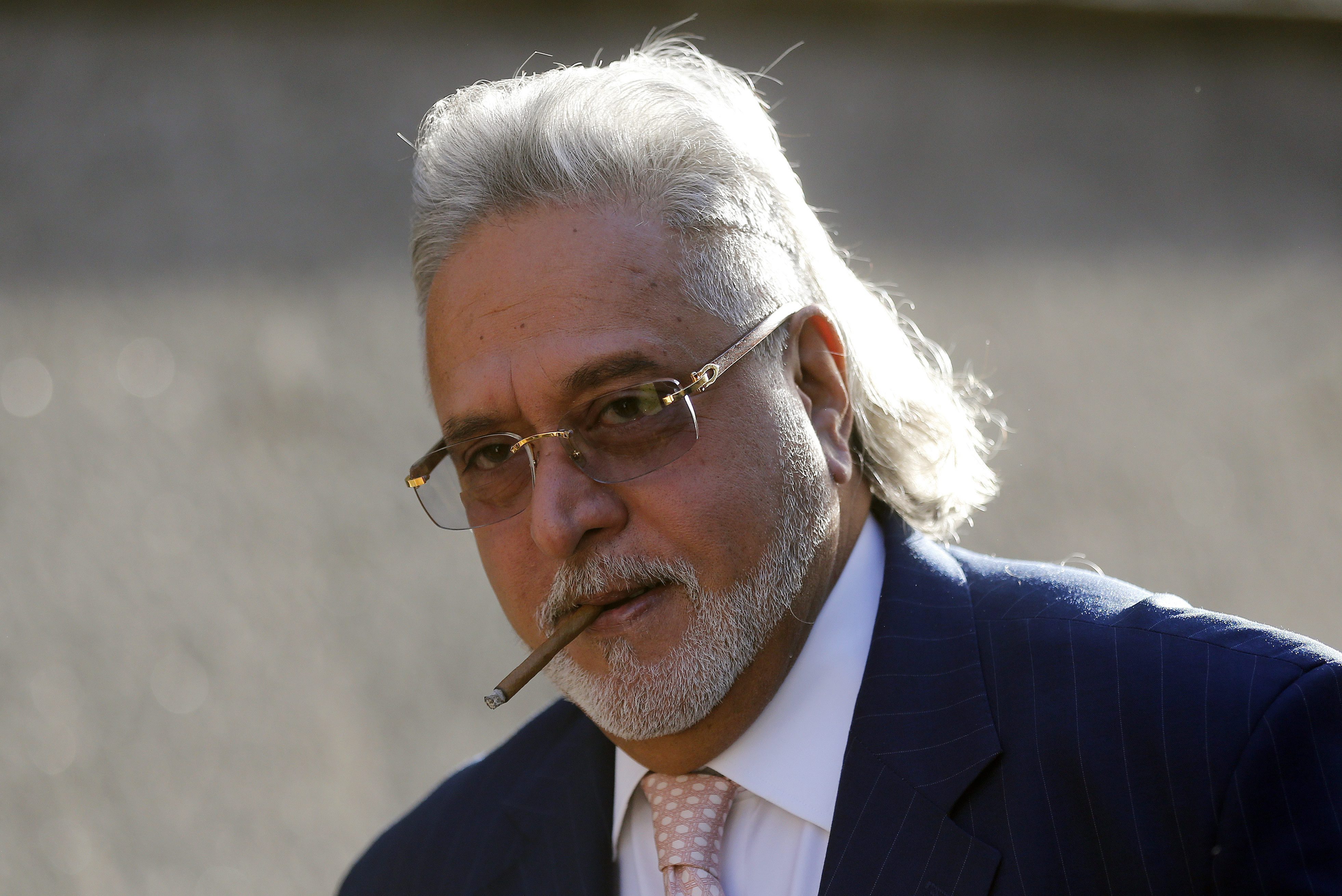
Embattled liquor baron Vijay Mallya, wanted in India on charges of fraud and money laundering allegedly amounting to around Rs 9,000 crore, today appeared in court here for his extradition trial but the hearing was inconclusive as the defence is yet to complete its arguments.
The 62-year-old was back in the dock at Westminster Magistrates' Court in London as his defence team sought to argue against the admissibility of much of the evidence presented by the Indian government.
Today's hearing was expected to be one of the final hearings in the case but it remained inconclusive as the defence is yet to complete its arguments, which seek to demolish the Indian government's case.
The Crown Prosecution Service, arguing on behalf of the Indian government, is then set to respond and argue in favour of the evidence and against the defence's claim of "absence of a strong prima facie case on grounds of iniquity".
Due to prior diary commitments, no date has been set for the next hearing on the matter and Mallya has been bailed until April 2. Both sides will determine a date to return to court to complete their representations on the admissibility of evidence in the case within the next three weeks.
Also Read: Vijay Mallya Declared Proclaimed Offender By Delhi Court
During today's hearing, Mallya's barrister, Clare Montgomery, argued that evidence that was claimed as a "blueprint of dishonesty" by the CPS was in fact a privileged conversation between Mallya and his lawyer about "legal advice in clear contemplation of litigation" and hence should be inadmissible.
On a separate category of evidence presented by the Indian government, Montgomery questioned the reliability of investigating officers in the case.
She pointed to over 150 pages of "near identical material" purporting to be statement of witnesses taken under Section 161 of the Indian CrPC.
Dismissing the nature and source of these witness statements, Mallya's legal team claimed they do not meet "obligations" under the India-U.K. extradition treaty to provide "proper" statements.
"They do not appear to be in any way an account of things that witnesses would have said but rather seem to be somebody else's analysis put into the mouths of the witnesses, down to the spelling mistakes," Montgomery said, adding that the documents were "identically reproduced" with not only the same words but also the same typing errors.
Chief Magistrate Emma Arbuthnot will rule on the evidence, following which she is expected to set a timetable for closing arguments and her verdict on whether the U.K.-based businessman can be extradited to India to face the fraud and money laundering allegations involving his now-defunct Kingfisher Airlines.
Judge Arbuthnot had also sought further clarifications related to availability of natural light and medical assistance at Barrack 12 of Mumbai Central Prison on Arthur Road, where Mallya is to be held if he is extradited from Britain.
The extradition trial, which opened at the London court on December 4, is aimed at laying out a prima facie case of fraud against the tycoon, who has been based in the U.K. since he fled India in March, 2016.
It will also seek to prove that there are no "bars to extradition" and that Mallya is assured a fair trial in India over his erstwhile airline's alleged default of over Rs 9,000 crore in loans from a consortium of Indian banks.
Mallya was arrested by Scotland Yard on an extradition warrant in April, 2017 and has been out on bail on a bond worth 650,000 pounds.
If the judge rules in favour of the Indian government, the U.K. home secretary will have two months to sign Mallya's extradition order.
However, both sides will have the chance to appeal in higher courts in the U.K. against the chief magistrate's verdict.

-
Where You Live Shapes How You Get To Work | The Reason Why

Two-wheelers are the most popular way to get to work in India, accounting for nearly 43% of workplace commutes.
-
High US Salaries, No Green Card Certainty: The Financial Calculation Facing Indian H-1B Families
The suspension of PERM processing at eight technology employers does not cancel existing H-1B visas. What it does is force a question many Indian families have been avoiding: is the US salary worth tying your career and family plans to one employer?
-
Unhedged Position: Can India See An Indonesia-Style Time Correction?
The Nifty is trading below levels it first clocked in 2024. Is there, then, as I have suggested in the headline, potential that the current time correction drags on painfully for the next three-five, even ten years?
-
Navigating Friction And Energy Realities: An Analysis Of Marco Rubio's October Visit To India
Occurring at a critical juncture marked by stalled trade negotiations and escalating geopolitical pressures over global energy supplies, the visit offers a profound window into modern US-India relations.
-
India Exports Capital. Why Not Export Trusteeship?
The big question, then, is whether India can build an institution that global borrowers, investors, banks, and lawyers can trust, even without an Indian connection.
-
France's Economy & Politics Are In Crisis | The Reason Why
Let's look at how the French economy and politics evolved under Nicolas Sarkozy, Franois Hollande and Emmanuel Macron.
-
You May Inherit The Business. You Must Earn Its Credibility.
Succession tests the founder's ability to share authority as much as it tests the next generation's readiness to assume it.
-
Signing Deals Is One Thing; Making Them Work Is Another | The Week In Whys
Sometimes, things don't turn out as planned. Indian companies have lost some bids to rivals, some projects won't produce until 2030.
-
FOMC Wall, PERM Suspension, Hospital Stocks | Talking Points This Week
A PERM suspension would directly affect green-card sponsorship rather than H-1B visas, so the near-term earnings impact could remain relatively limited. The key question is whether this marks a new phase in US scrutiny of Indian IT.
-
Everything, Everywhere, All At Once: Dalal Street's Week To Forget | Joining The Dots
Visa curbs, a Starlink spat and cancer drug caps: what connects this week's shocks for Indian markets









