Vijay Mallya Granted Bail Till April 2 In Extradition Case
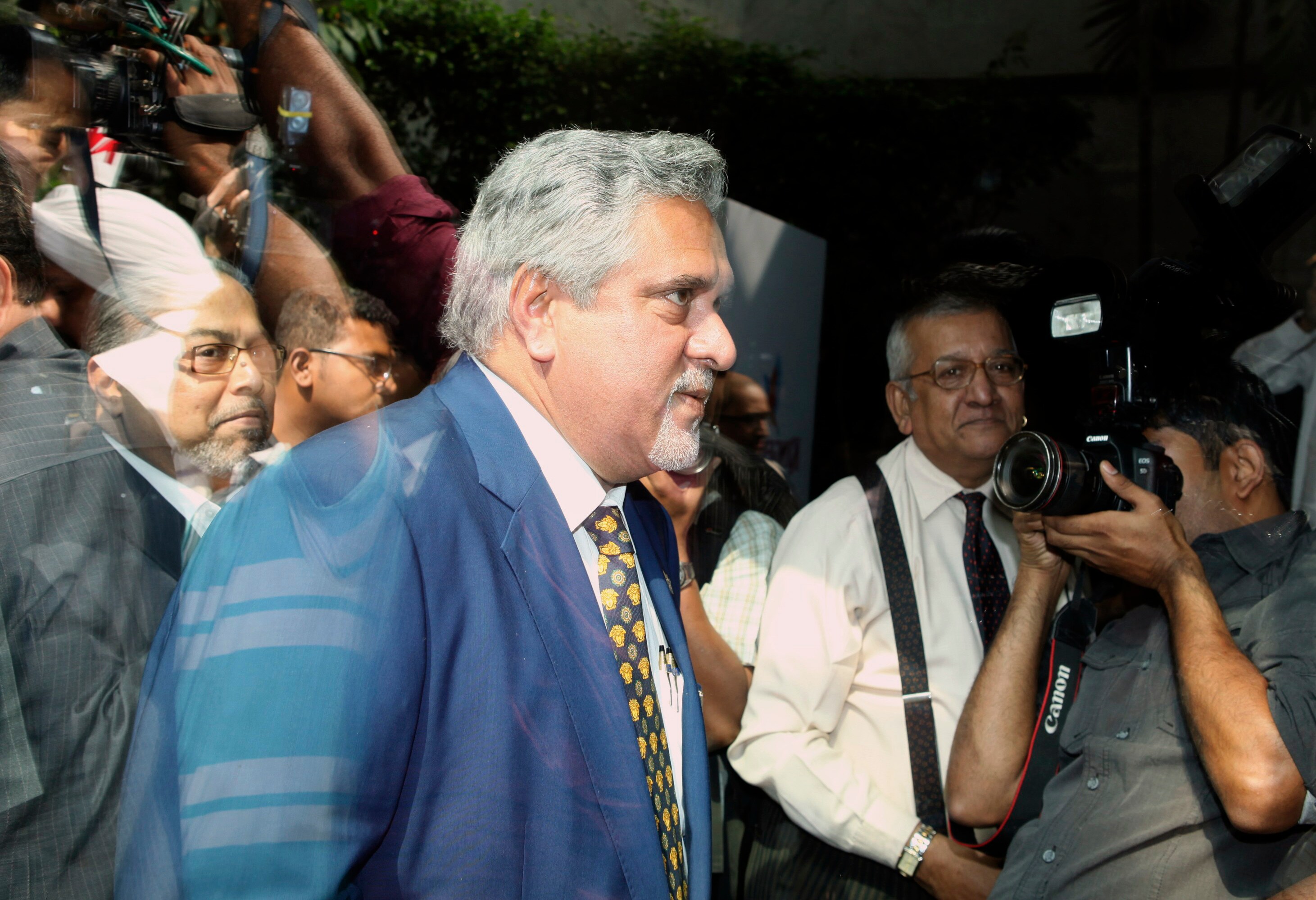
The U.K. judge presiding over the extradition trial of Vijay Mallya has granted bail to the embattled liquor baron till April 2 as she heard arguments from the defence against the admissibility of evidence presented by the Indian government.
The extradition trial, which opened at the London court on Dec. 4, is aimed at laying out a prima facie case of fraud against the tycoon, who has been based in the U.K. since he left India in March, 2016.
Mallya was arrested by Scotland Yard on an extradition warrant in April 2017 and has been out on bail on a bond worth 6,50,000 pounds.
Mallya's hearing was expected to be one of the final hearings in the case but it remained inconclusive as the defence is yet to complete its arguments, which seek to demolish the Indian government's case.
Also Read: Vijay Mallya's Extradition Trial Hearing Inconclusive
The Crown Prosecution Service is expected to respond at the next hearing itself after the defence concludes its arguments. That hearing date is yet to be determined but expected within the next three weeks.
The 62-year-old was back in the dock at Westminster Magistrates' Court in London as his defence team laid out arguments against the admissibility of much of the evidence presented by the Indian government.
Due to prior diary commitments, no date has been set for the next hearing on the matter and Mallya has been bailed until April 2. Both sides will determine a date to return to court to complete their representations on the admissibility of evidence in the case within the next three weeks.
During Thursdays hearing, Mallya's barrister, Clare Montgomery, argued that evidence that was claimed as a “blueprint of dishonesty” by the CPS was in fact a privileged conversation between Mallya and his lawyer about “legal advice in clear contemplation of litigation” and hence should be inadmissible.
On a separate category of evidence presented by the Indian government, Montgomery questioned the reliability of the investigating officers in the case.
She pointed to over 150 pages of “near identical material” purporting to be statements of witnesses taken under Section 161 of the Indian Code of Criminal Procedure.
Also Read: Vijay Mallya Declared Proclaimed Offender By Delhi Court
Dismissing the nature and source of these witness statements, Mallya's legal team claimed they do not meet “obligations” under the India-U.K. extradition treaty to provide “proper” statements.
“They do not appear to be in any way an account of things that witnesses would have said but rather seem to be somebody else's analysis put into the mouths of the witnesses, down to the spelling mistakes,” Montgomery said, adding that the documents were “identically reproduced” with not only the same words but also the same typing errors.
Chief Magistrate Emma Arbuthnot will rule on the evidence and set a timetable for closing arguments and her verdict on whether the U.K.-based businessman can be extradited to India to face the fraud and money laundering allegations involving his now-defunct Kingfisher Airlines.
Judge Arbuthnot had also sought further clarifications related to availability of natural light and medical assistance at Barrack 12 of Mumbai Central Prison on Arthur Road, where Mallya is to be held if he is extradited from Britain.
It will also seek to prove that there are no "bars to extradition" and that Mallya is assured a fair trial in India over his erstwhile airline's alleged default of over Rs 9,000 crore in loans from a consortium of Indian banks.
If the judge rules in favour of the Indian government, the U.K. home secretary will have two months to sign Mallya's extradition order.
Also Read: Mallya Funded Formula-1 Team With Kingfisher Fraud, Lawyer Says

-
Talking Points This Week: Tech Nerves, FII Buying, And A Faraway Banking Shock

The global markets are not shining this Diwali. The exception in the large markets is, India.
-
Midterm Rally Lasted A Day. The Hard Reality Of A Divided US May Last Two Years | Opinion
Between a contested AI boom, a debt ceiling that arrives in 2027 and a president with every incentive to act alone, the next two years may prove more volatile than the first day's rally suggests.
-
Blue Wave Will Derail the AI Trade but Won't Dismantle the AI Era | Unhedged Position
The Democrats' sweep of the US Congress will see politics collide with economic forces both over the long and short term.
-
It's Time To Take The GST Council's Bet On Trust Global
Payment records can prove India's services exports, and clear, proportionate rules can bring foreign digital sellers into the tax net.
-
Opinion | India at 38: From Innovation Overperformer to Innovation Powerhouse
India now has 453 VC-backed deep science startups, 18 of them late-stage, after 117 percent growth since 2020. Laurus Labs, at USD 9.3 billion, is the most valuable deep science company in any middle-income economy outside China.
-
Navigating Energy Crossroads: S Jaishankar's Call For Diversified Supply Chains At G20 Ministerial Meeting
As geopolitical fault lines continue to test maritime trade routes and commodity flows, Jaishankar's message remains pertinent: true economic resilience requires open markets, protected transit lines, and a genuine commitment to multilateral cooperation rather than coercion.
-
Indians Are Travelling, But Not Every Journey Is A Holiday | The Week In Whys
Pilgrims, patients and working women are the real travellers, and the system hasn't quite caught up with them.
-
Getting To Work Costs Women More | The Reason Why
It is not just about women paying more than men. It is about women paying much more in cities than in villages.
-
AI Bias In Investing Cannot Be Eliminated, But It Can Be Governed
Framing is a particularly important example as identical financial information presented in terms of gains rather than losses can lead an LLM to reach a different assessment.