Not Just Oil: Understanding US-Saudi Relations in Five Charts
(Bloomberg) -- The Biden administration has warned it will “recalibrate” its ties with Saudi Arabia after the kingdom supported an OPEC+ decision to cut oil production despite US entreaties.
But the reality is that the relationship has been changing for years.
Over the last few years, the relationship seesawed between Barack Obama's aloofness to Donald Trump's warm embrace and back to President Joe Biden's arm's-length approach. Here is a closer look into a complex dynamic that straddles trade, energy, arms sales and corporate stakes.
Chart 1: US Crude Imports
While the energy trade has taken up much of the focus, Saudi Arabia lost its preeminence as an oil exporter to the US years ago, dwarfed by Canada, Mexico and Russia -- at least before the US banned imports following Russian President Vladimir Putin's invasion of Ukraine.
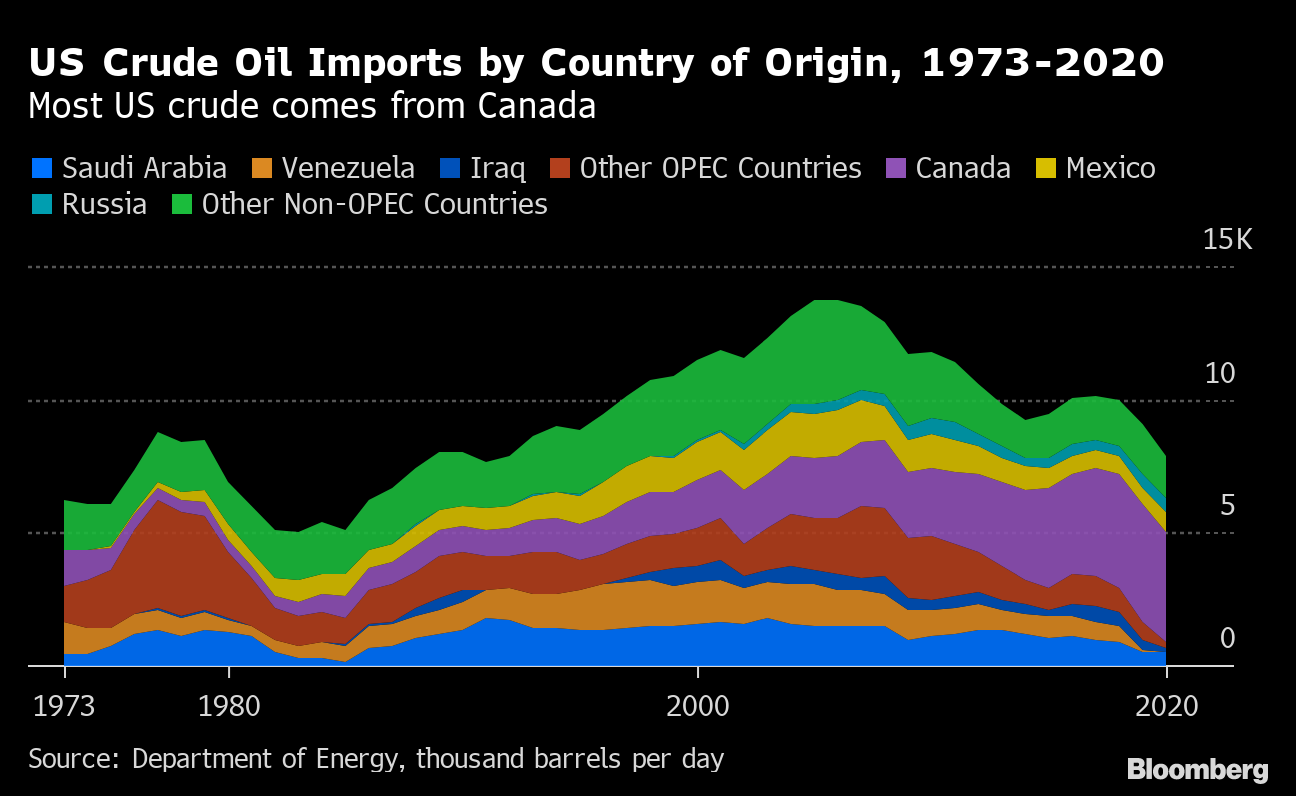
Chart 2: Arms sales
Another focus is arms sales. Yet the numbers there have dropped sharply over the kingdom's military intervention in Yemen and the 2018 killing of Washington Post columnist Jamal Khashoggi.
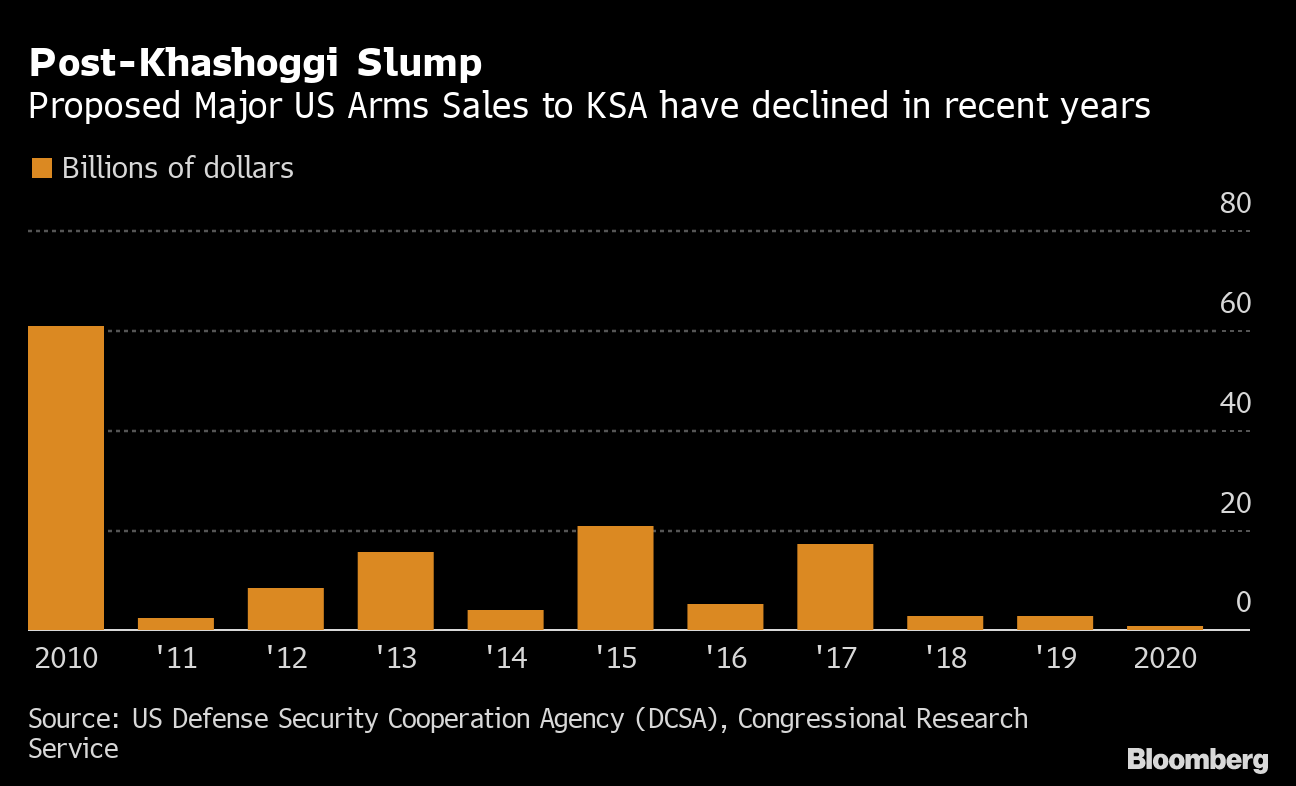
Chart 3: Weapons and Fuel
At the same time, US imports of Saudi crude oil have dwarfed proposed weapons sales to the kingdom, reflecting both the commercial and strategic importance of the country. Saudi Arabia is the second largest oil producer in the world, just behind the US. It provides 11% of the total supply of the world's crude oil and can have an outsize impact on prices through its membership in the OPEC cartel. The US, China and India are the top three consumers of oil, as of 2019, according to the Energy Information Administration.
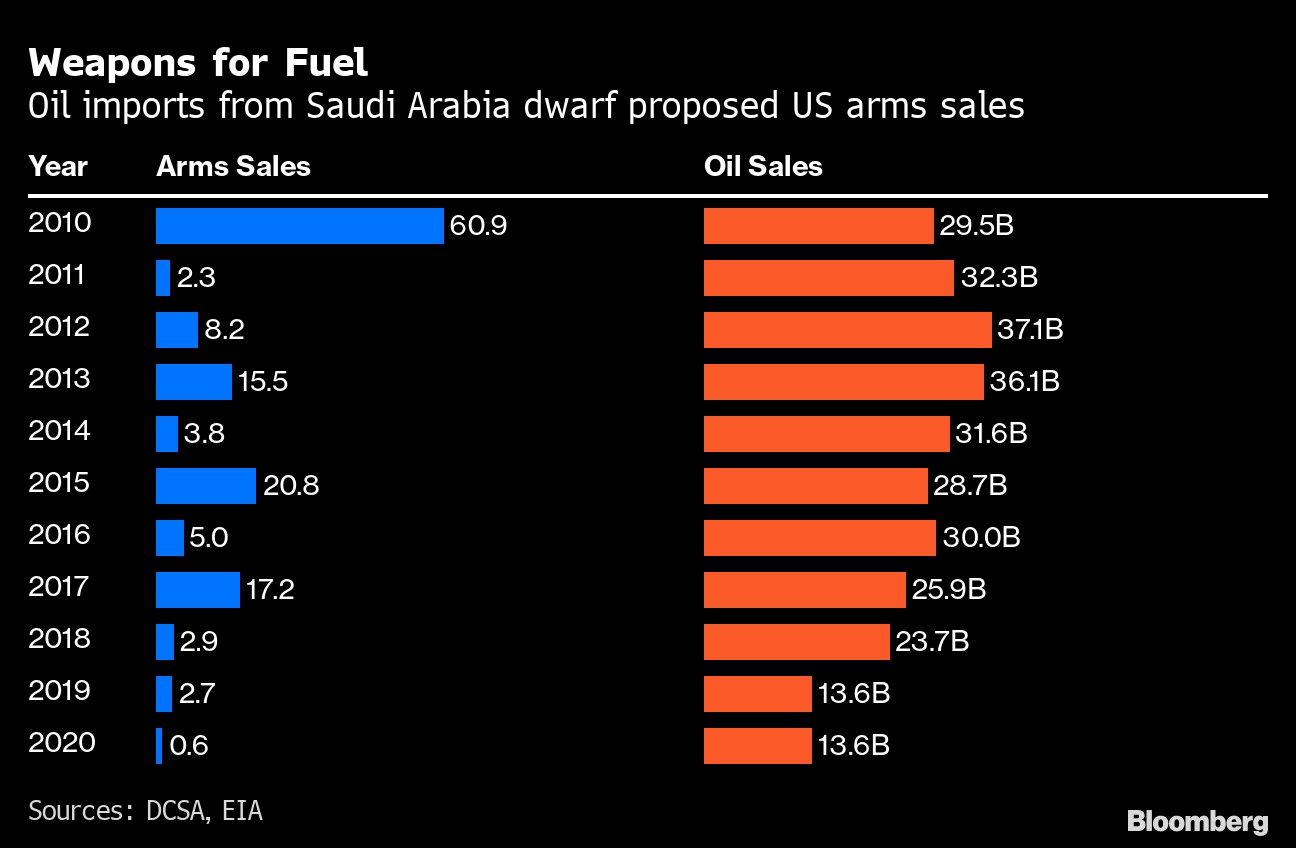
Chart 4: Saudi Portfolio
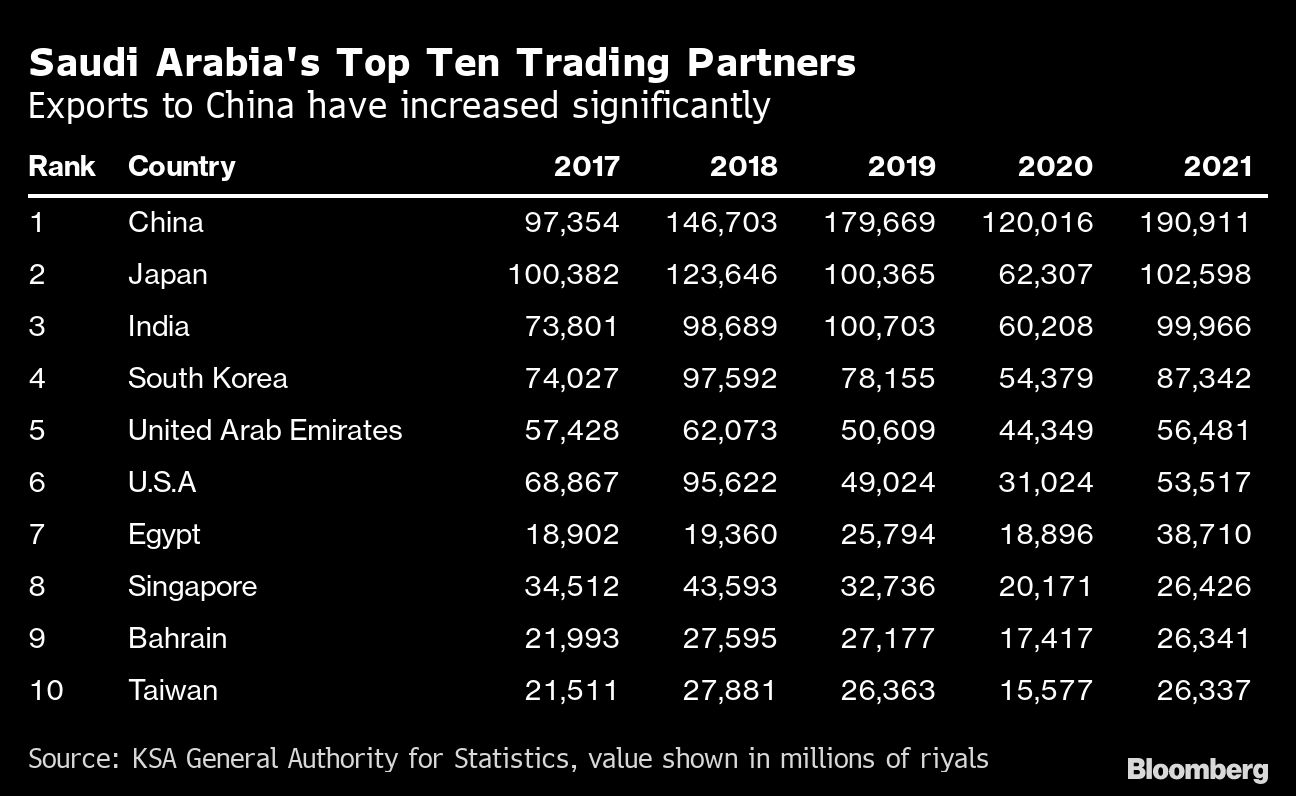
Saudi Arabia is re-balancing its portfolio. China is now the country's top trading partner and the kingdom has also escalated its trade with India. At the recent Future Investment Initiative in Riyadh, Saudi Arabia touted domestic and international investments, which have been funded in part by revenue from the sale of oil at higher prices.
READ MORE: Saudi Swagger Stands Apart in World of Doom-Laden Forecasts
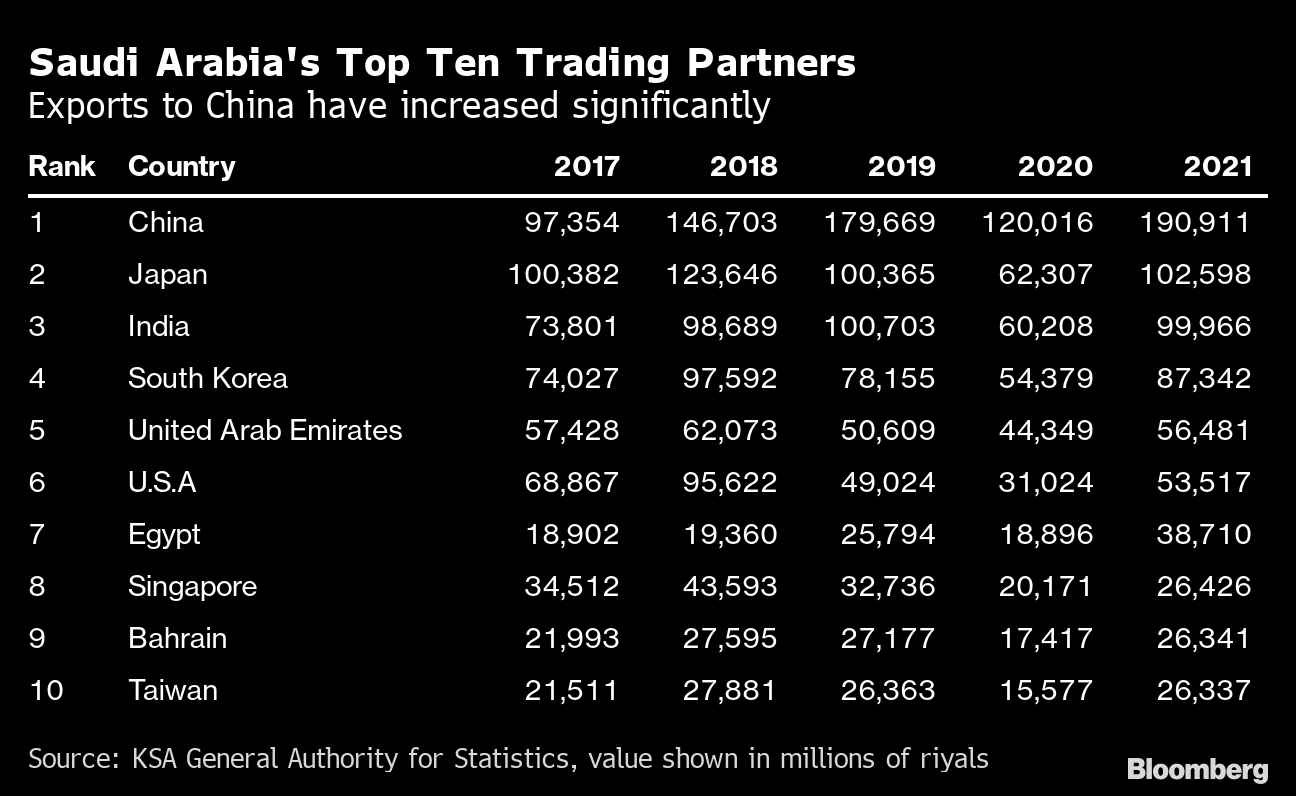
Chart 5: Saudi Investments
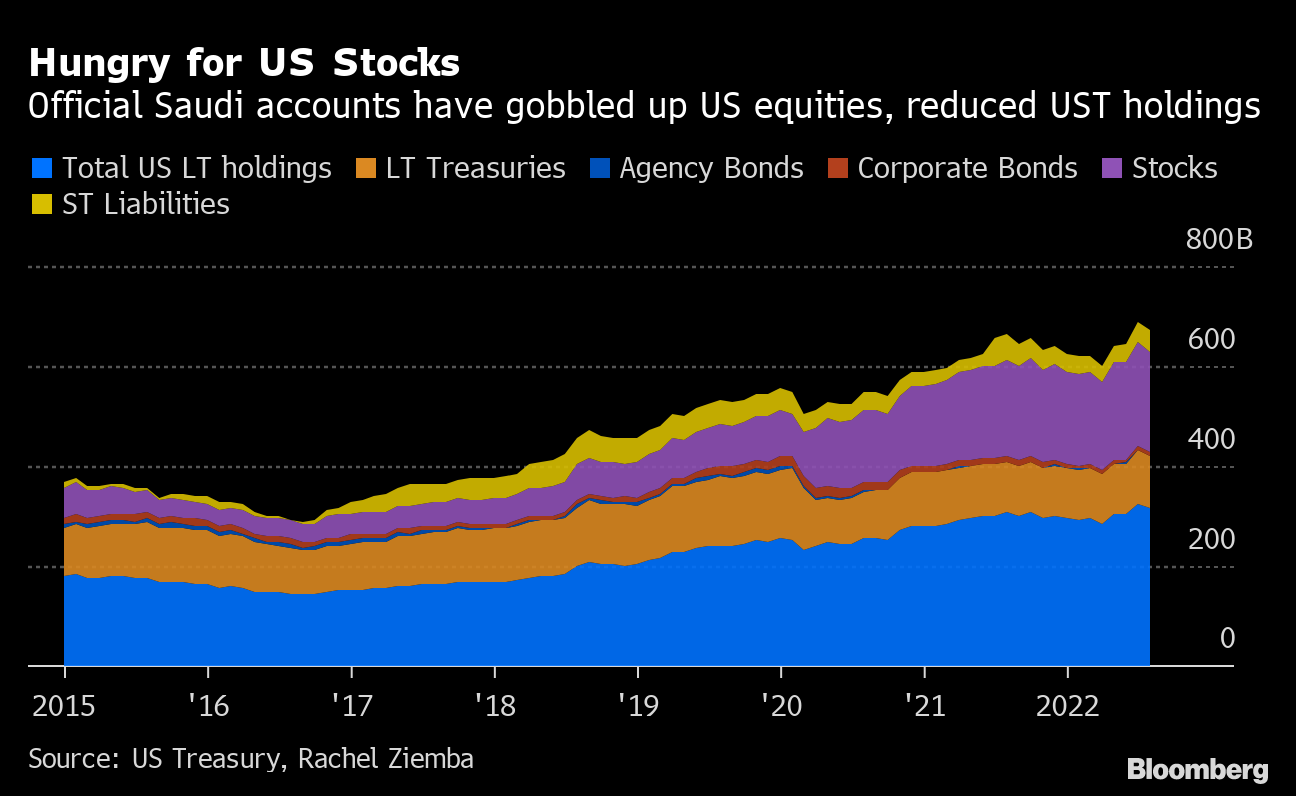
The stock market is one area where Saudi Arabia has increased ties with the US., bolstering holdings of equities while reducing the value of disclosed Treasury holdings.
One of the largest backers of Elon Musk's takeover of Twitter Inc. is Saudi Prince Alwaleed bin Talal, who rolled over nearly 35 million Twitter shares through the Kingdom Holding Company and his private office. That transaction led Senator Chris Murphy, a Connecticut Democrat, to call for a review of Saudi interests in the company by the Committee on Foreign Investment in the US.
Saudi Arabia is emboldened to chart a different course than the previous decades, seeking to diversify its portfolio away from oil, which still makes up about 75% of its exports. That calculation may lead the kingdom away from the US and toward new partners.
“There is a direction of travel which is toward Saudi Arabia -- and some of its peers -- trying to hedge a bit more, be a bit more independent,” said Rachel Ziemba, a senior fellow at the Center for a New American Security. “They may act in ways that are less aligned with the US. Clearly they still see interest in investing in the US. They still see value, for now, in using the US dollar. But they're also looking to other alternatives.”
More stories like this are available on bloomberg.com
©2022 Bloomberg L.P.

-
It's Time To Take The GST Council's Bet On Trust Global

Payment records can prove India's services exports, and clear, proportionate rules can bring foreign digital sellers into the tax net.
-
Opinion | India at 38: From Innovation Overperformer to Innovation Powerhouse
India now has 453 VC-backed deep science startups, 18 of them late-stage, after 117 percent growth since 2020. Laurus Labs, at USD 9.3 billion, is the most valuable deep science company in any middle-income economy outside China.
-
Navigating Energy Crossroads: S Jaishankar's Call For Diversified Supply Chains At G20 Ministerial Meeting
As geopolitical fault lines continue to test maritime trade routes and commodity flows, Jaishankar's message remains pertinent: true economic resilience requires open markets, protected transit lines, and a genuine commitment to multilateral cooperation rather than coercion.
-
Indians Are Travelling, But Not Every Journey Is A Holiday | The Week In Whys
Pilgrims, patients and working women are the real travellers, and the system hasn't quite caught up with them.
-
Getting To Work Costs Women More | The Reason Why
It is not just about women paying more than men. It is about women paying much more in cities than in villages.
-
AI Bias In Investing Cannot Be Eliminated, But It Can Be Governed
Framing is a particularly important example as identical financial information presented in terms of gains rather than losses can lead an LLM to reach a different assessment.
-
Joining The Dots | Dark Skies, Steady Diya: Why Hope Holds This Diwali
With war, a weak rupee and foreign outflows weighing on sentiment, policymakers at the NDTV World Summit and market veterans at NDTV Profit Ignite: Diwali Edition offered the same advice: stay invested and filter out the noise.
-
The Curious Case of Equitas Small Finance Bank And A CEO Who Quit For Stock
PN Vasudevan believes persistent investor concerns over a perceived conflict of interest had become a governance overhang on Equitas Small Finance Bank's stock, even as the lender improved profitability and asset quality.
-
Talking Points This Week: AI Cash Burn, A Tiger Comeback And An India That Still Finds Its Own Path
India is not immune to higher oil or tighter global liquidity, yet its earnings base is broader, its domestic policy levers are still available.










