U.K. Think Tank Attacks Indian IT Firms For Exploiting Visa ‘Loophole’
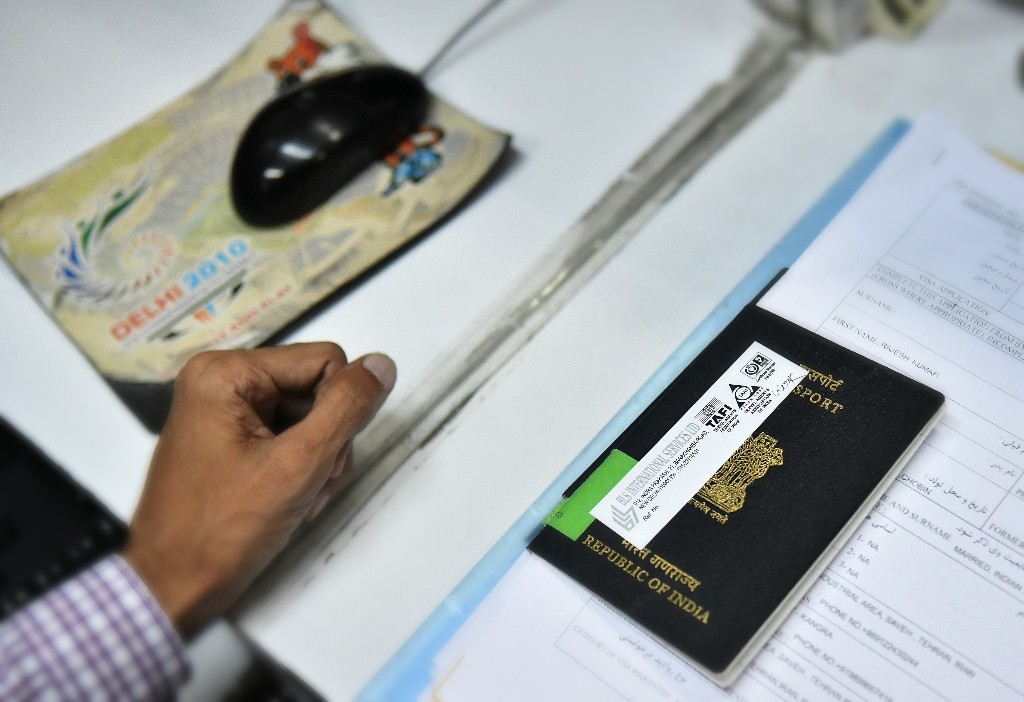
An immigration research think tank accused Indian software services firms of exploiting a “gaping loophole” in the intra-company transfer visa route to bring in thousands of workers from India.
Migration Watch U.K., which lobbies for lower migration levels, said international IT companies, “typically based in India”, obtain a contract to deliver a project or support services to a U.K. entity. They then staff it with workers from the company's home country, a system referred to as third-party contracting.
This practice is almost entirely confined to the IT industry. In fact, even within that sector, it is only a handful of large, mainly Indian, companies that are responsible for sponsoring the vast majority of ICTs in this wayMigration Watch U.K.
Industry experts challenged the report's claims, pointing to more “unfilled vacancies” in the IT sector. “Intra-company transfers hugely benefit the U.K., boosting investment by international companies and creating jobs in the U.K.,” said Matthew Percival, Head of Employment at the Confederation of British Industry.
Under the Tier 2 Intra-Company Transfer route, foreign companies that have a presence in the U.K. can move employees to Britain without having to obtain a visa under the wider Tier 2 provisions for skilled workers. The provision is capped at 20,700 a year. Migration Watch claims the use of the ICT route, which has no restriction on numbers, has grown eight-fold since 1992 to 58,000 last year.
As part of a breakdown of these visa figures, it pointed to Tata Consultancy Services Ltd. as the single-most prolific company which used 6,285 ICTs overall in 2017, of which 6,205 transfers were for third-party contracting.
Others from a total of 16 Indian companies on the list include Infosys (2,030), Wipro Technologies (1,795) and Tech Mahindra (1,020). U.S. companies like Cognizant (2,780) and IBM (1,135), were among the other names featured besides smaller numbers from Ireland, France and Japan.
“Many people are asking why non-EU migration has not been reduced. Here is part of the answer. Those who have lost out are British workers whose opportunities have been diminished,” said Lord Green, Chairman of Migration Watch U.K.
The group claimed the system is being misused to “undercut” British competitors and is going “very much against the spirit” in which it was originally devised for posting senior executives to and from the U.K. The report also recommended significant changes to the ICT route to ensure that it is no longer seen as a mechanism for bringing “unlimited migrant labour” into the country.
TechUK, the IT industry representative body which had struck the U.K.-India Tech Alliance with NASSCOM earlier this year, said it was wrong to suggest that international talent undercuts U.K. domestic skills. It called on a more open approach as Britain is set to leave the European Union.
At a time when many tech firms are already concerned with changes to EU migration, the government should be looking to make it easier to secure international talent to support the needs of a growing digital economy, including by removing the arbitrary cap on Tier 2 visas. That is a far better way to help drive the competitiveness of the U.K. post-Brexit and create jobsAntony Walker, Deputy CEO, TechUK
The U.K. Home Office has pointed to a series of reforms to Tier 2 visas, effective from April 2017, following a review by the Migration Advisory Committee to ensure the ICT route served its purpose.

-
High US Salaries, No Green Card Certainty: The Financial Calculation Facing Indian H-1B Families

The suspension of PERM processing at eight technology employers does not cancel existing H-1B visas. What it does is force a question many Indian families have been avoiding: is the US salary worth tying your career and family plans to one employer?
-
Unhedged Position: Can India See An Indonesia-Style Time Correction?
The Nifty is trading below levels it first clocked in 2024. Is there, then, as I have suggested in the headline, potential that the current time correction drags on painfully for the next three-five, even ten years?
-
Navigating Friction And Energy Realities: An Analysis Of Marco Rubio's October Visit To India
Occurring at a critical juncture marked by stalled trade negotiations and escalating geopolitical pressures over global energy supplies, the visit offers a profound window into modern US-India relations.
-
India Exports Capital. Why Not Export Trusteeship?
The big question, then, is whether India can build an institution that global borrowers, investors, banks, and lawyers can trust, even without an Indian connection.
-
France's Economy & Politics Are In Crisis | The Reason Why
Let's look at how the French economy and politics evolved under Nicolas Sarkozy, Franois Hollande and Emmanuel Macron.
-
You May Inherit The Business. You Must Earn Its Credibility.
Succession tests the founder's ability to share authority as much as it tests the next generation's readiness to assume it.
-
Signing Deals Is One Thing; Making Them Work Is Another | The Week In Whys
Sometimes, things don't turn out as planned. Indian companies have lost some bids to rivals, some projects won't produce until 2030.
-
FOMC Wall, PERM Suspension, Hospital Stocks | Talking Points This Week
A PERM suspension would directly affect green-card sponsorship rather than H-1B visas, so the near-term earnings impact could remain relatively limited. The key question is whether this marks a new phase in US scrutiny of Indian IT.
-
Everything, Everywhere, All At Once: Dalal Street's Week To Forget | Joining The Dots
Visa curbs, a Starlink spat and cancer drug caps: what connects this week's shocks for Indian markets
-
India Is Going Abroad For Critical Minerals. But It May Take Years To Pay Off | The Reason Why
Although India's steps are in the right direction, they remain modest compared with India's growing dependence.









