From Shah Bano’s Fight to SC’s Verdict: a Timeline of Triple Talaq
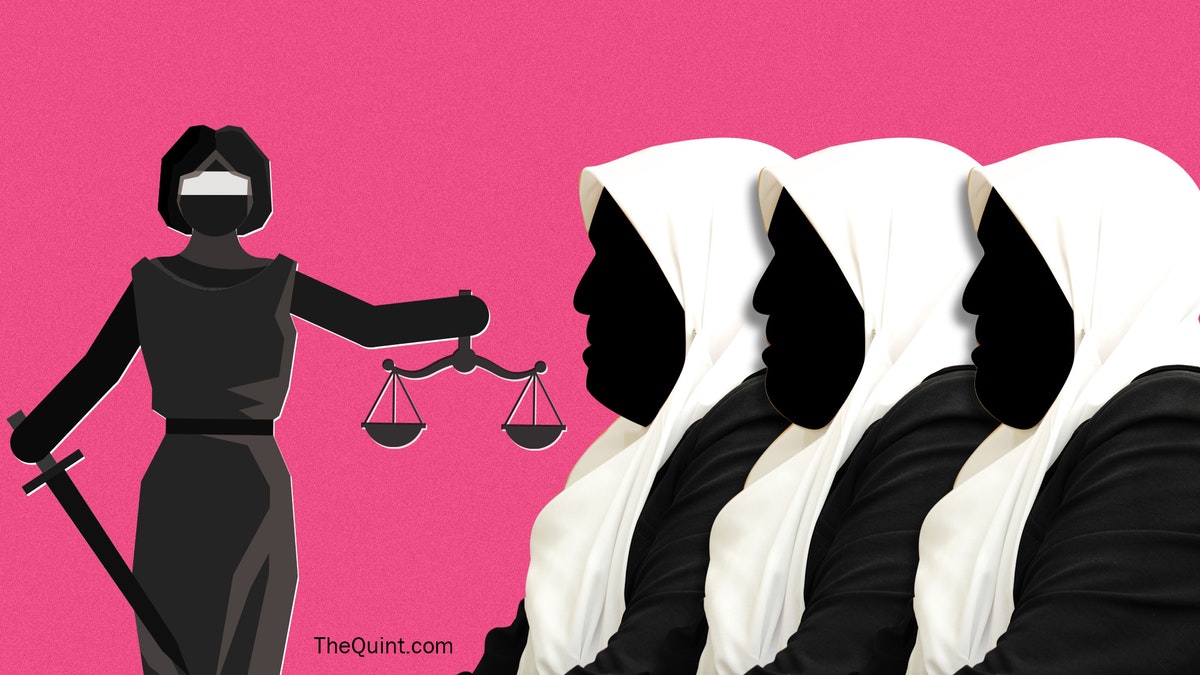
In a landmark judgment on 22 August, the Supreme Court declared the practice of Triple Talaq “unconstitutional” and “un-Islamic”. The decision was reached with a 3:2 split by a five-judge bench of the Supreme Court.
The legal battle, which started with the 1978 Shah Bano case, seems to have reached a conclusion four decades later. Shah Bano was married in 1932 to Mohammed Ahmed Khan, a reputed lawyer in Indore. After 14 years of marriage, Ahmed Khan remarried. He continued to live with both his wives in the same house until 1975 when he forced Shah Bano, along with five of their children, to leave.
Also Read: Triple Talaq Verdict Live: Muslim Women ‘Granted Equality' Says PM
When Bano protested, Ahmed gave her Triple Talaq on 6 November 1978. She then reached out to him for support, to which Ahmed said that the alimony (meher) has already been given to her.
The 62-year-old Bano filed a criminal lawsuit against her husband with the Supreme Court the same year.
The battle to get Triple Talaq abolished gained new momentum in October 2015, when the Supreme Court decided to look into the matter of Muslim women facing gender-based discrimination within the community.
Here's a breakdown of the legal course this battle took in the intervening years.
Also Read: Javed Akhtar Reacts to SC's Landmark Triple Talaq Verdict
16 October 2015: Supreme Court bench asks Chief Justice of India to set up an appropriate bench to examine if Muslim women face gender discrimination in divorce cases, while dealing with a case of Hindu succession.
5 February 2016: Supreme Court asks then Attorney General Mukul Rohatgi to assist it on the pleas challenging constitutional validity of Triple Talaq, Nikah Halala and polygamy.
28 March 2016: Supreme Court asks Centre to file report of a high-level panel on 'Women and the law: An assessment of family laws with focus on laws relating to marriage, divorce, custody, inheritance and succession'. Supreme Court impleads various organisations, including All India Muslim Personal Law Board (AIMPLB), as parties in the suo motu matter.
Also Read: Who Pays the Price of Triple Talaq? Real Women, True Stories
29 June 2016: Supreme Court says Triple Talaq among Muslims will be tested on "touchstone of constitutional framework".
7 October 2016: For the first time in India's constitutional history, Centre opposes in Supreme Court these practices and favours a relook on grounds like gender equality and secularism.
14 February 2017: Supreme Court allows various interlocutory pleas to be tagged along with the main matter.
16 February 2017: Supreme Court says a five-judge constitution bench would be set up to hear and decide the challenge to Triple Talaq, Nikah Halala and polygamy.
27 March 2017: AIMPLB tells Supreme Court pleas were not maintainable as the issues fall outside judiciary's realm.
Also Read: ‘Unconstitutional' Triple Talaq Set Aside: Read SC's Full Judgment
30 March 2017: Supreme Court says these issues are "very important" and involve "sentiments" and says a constitution bench would start hearing it from 11 May.
11 May 2017: Supreme Court says it will examine whether the practice of Triple Talaq among Muslims is fundamental to their religion.
12 May 2017: Supreme Court says the practice of Triple Talaq was the “worst” and “not desirable” form of dissolution of marriages among Muslims.
15 May 2017: Centre tells Supreme Court that it will bring a new law to regulate marriage and divorce among the Muslim community if Triple Talaq is struck down. Supreme Court says it will examine whether Triple Talaq was an essential part of religion under Article 25 of Constitution.
16 May 2017: AIMPLB tells Supreme Court that matters of faith cannot be tested on grounds of constitutional morality, says Triple Talaq a matter of faith for the last 1,400 years. Equates the issue of Triple Talaq with the belief that Lord Rama was born in Ayodhya.
17 May 2017: SC asks AIMPLB whether a woman can be given an option of saying 'no' to Triple Talaq at the time of execution of 'nikahnama'. Centre tells SC Triple Talaq is neither integral to Islam nor a "majority versus minority" issue but rather an "intra-community tussle" between Muslim men and deprived women.
18 May 2017: Supreme Court reserves verdict on Triple Talaq.
Also Read: Civil Code Yes, But One That Celebrates Gender Equality
22 May 2017: AIMPLB files affidavit in Supreme Court saying it would issue an advisory to 'Qazis' to tell bridegrooms that they will not resort to Triple Talaq to annul their marriage. AIMPLB lists out in Supreme Court guidelines for married couples. These include "social boycott" of those Muslims who resort to Triple Talaq and the appointment of an arbitrator to settle marital disputes.
22 August 2017: Supreme Court by a majority verdict of 3:2 rules that divorce through Triple Talaq is void, illegal, unconstitutional and against basic tenets of the Quran.
Also Read: End of Triple Talaq a Start, But Gender Justice Is a Long Way Away
(With inputs from PTI.)
(#TalkingStalking: Have you ever been stalked? Share your experience with The Quint and inspire others to shatter the silence surrounding stalking. Send your stories to editor@thequint.com or WhatsApp @ +919999008335.)

-
High US Salaries, No Green Card Certainty: The Financial Calculation Facing Indian H-1B Families

The suspension of PERM processing at eight technology employers does not cancel existing H-1B visas. What it does is force a question many Indian families have been avoiding: is the US salary worth tying your career and family plans to one employer?
-
Unhedged Position: Can India See An Indonesia-Style Time Correction?
The Nifty is trading below levels it first clocked in 2024. Is there, then, as I have suggested in the headline, potential that the current time correction drags on painfully for the next three-five, even ten years?
-
Navigating Friction And Energy Realities: An Analysis Of Marco Rubio's October Visit To India
Occurring at a critical juncture marked by stalled trade negotiations and escalating geopolitical pressures over global energy supplies, the visit offers a profound window into modern US-India relations.
-
India Exports Capital. Why Not Export Trusteeship?
The big question, then, is whether India can build an institution that global borrowers, investors, banks, and lawyers can trust, even without an Indian connection.
-
France's Economy & Politics Are In Crisis | The Reason Why
Let's look at how the French economy and politics evolved under Nicolas Sarkozy, Franois Hollande and Emmanuel Macron.
-
You May Inherit The Business. You Must Earn Its Credibility.
Succession tests the founder's ability to share authority as much as it tests the next generation's readiness to assume it.
-
Signing Deals Is One Thing; Making Them Work Is Another | The Week In Whys
Sometimes, things don't turn out as planned. Indian companies have lost some bids to rivals, some projects won't produce until 2030.
-
FOMC Wall, PERM Suspension, Hospital Stocks | Talking Points This Week
A PERM suspension would directly affect green-card sponsorship rather than H-1B visas, so the near-term earnings impact could remain relatively limited. The key question is whether this marks a new phase in US scrutiny of Indian IT.
-
Everything, Everywhere, All At Once: Dalal Street's Week To Forget | Joining The Dots
Visa curbs, a Starlink spat and cancer drug caps: what connects this week's shocks for Indian markets
-
India Is Going Abroad For Critical Minerals. But It May Take Years To Pay Off | The Reason Why
Although India's steps are in the right direction, they remain modest compared with India's growing dependence.









