Top Experts Decode India-Pak Relations At The End Of A Tense Week
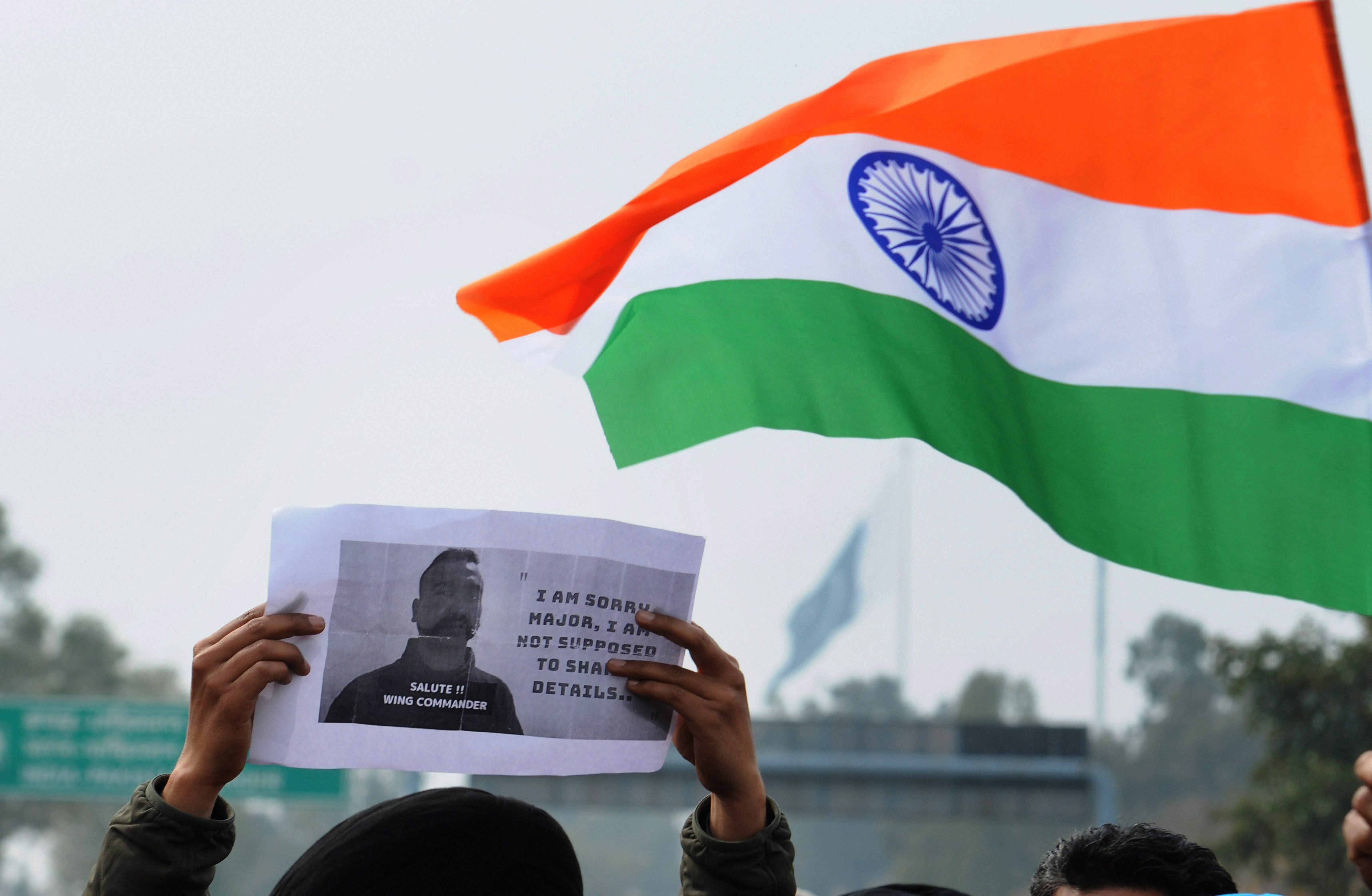
As tensions between India and Pakistan recede, here's a chance to take examine the current situation and future possibilities. BloombergQuint spoke to a host of defence and political analysts, former ambassadors and editors to understand the situation and what it means for bilateral relations.
New Red Lines Drawn In Indo-Pak Conflict
The Indian Air Force strike in Balakot, in the Khyber Pakhtunkhwa region of Pakistan, marked a departure from India's response to armed conflict with her neighbor. Former Foreign Secretary Lalit Mansingh said the air strike marks the end of India's policy of "strategic restraint", signalling that there will be retaliation to cross-border terrorism, even inside Pakistan.
The significance of this strike is it marks the end of India's policy of strategic restraint. India has made it clear strategic restraint should not be regarded as weakness.Lalit Mansingh, Former Foreign Secretary
Pilot Released Due To International Pressure?
Pakistan released captured Indian Air Force pilot, Wing Commander Abhinandan Varthaman, in what Imran Khan called a "gesture of peace". In his Parliament address, Khan appealed for more talks between India and Pakistan. But was Pakistan pressured to return Wing Commander Abhinandan of the IAF? Michael Kugelman, deputy director of The Asia Program and senior associate for South Asia at the Woodrow Wilson Centre, said he wouldn't be surprised if U.S. officials were involved in de-escalating tensions.
I'm not sure if the Pakistanis would unilaterally decide to release, what for them, is a bargaining chip.Michael Kugelman, Woodrow Wilson
U.S. President Donald Trump said he had some “reasonably attractive news from India and Pakistan” as he addressed a press conference at his second summit with North Korean leader Kim Jong-Un in Vietnam.
The pilot's release however shouldn't distract India from maintaining pressure on Pakistan, said National Security analyst Nitin Gokhale. “The end goal was to force Pakistan to act against terror groups in its territory.”
We are not going to repeat the same mistake of treating the release of this pilot as the next step towards de-escalation.Nitin Gokhale, National Security Analyst
Pakistan couldn't afford to escalate the situation any further, according to Former Indian Ambassador Virendra Gupta. Any aggressive move from Pakistan would be against it's own interest, he said.
Lack Of Information
A big talking point from the India-Pakistan border skirmish was the way the two governments handled the dissemination of information. While Pakistan was quick to hold press conferences and national addresses, the Indian government decided to take its time. Three press conferences were held: two by the Ministry of External Affairs and one by officers from the Army, Navy and Air Force. The MEA press conferences were prepared statements and were closed to press questions. The joint armed forces press briefing had more detail and was also open to questions. So could the Indian government have done more?
Political analyst Amitabh Tiwari said India's response was more than adequate.
Just because Imran Khan is speaking constantly doesn't mean that India's Prime Minister also has to speak.Amitabh Tiwari, Political Analyst
Vinod Sharma, political editor of Hindustan Times newspaper, on the other hand, questioned the premier's conduct. The entire political establishment should have been taken into confidence, even calling an emergency session of parliament if needed, he said.
We're a parliamentary democracy. We're not an executive presidency.Vinod Sharma, Political Editor, Hindustan Times
What Next?
Wing Commander Abhinandan's safe return to India doesn't necessarily mean India will change its hard stance against Pakistan. Many security analysts believe India's air strike in Balakot was a big shift in its defence policy with Pakistan. Former Army Chief Bikram Singh said clear timelines have been spelt out by India to Pakistan to act on terror groups. If Pakistan refuses to act, India will continue its multi-pronged approach via diplomatic, economic and defence routes.
This pause does not mark the end of the use of force by India.Bikram Singh, Former Army Chief
Conduct Of Our Politicians
The tensions between India and Pakistan also put the spotlight on the conduct of political leaders. Prime Minster Narendra Modi was seen talking about the IAF air strike in an election rally in Churu. He was also inaugurating a Khelo India event on the same day that IAF pilot Abhinandan was captured by the Pakistani army. Political analysts Neerja Chowdhury called for patience from India's political class and to resist the temptation to get political mileage.
Of course this issue is going to be politicised. We are nearing a very high-stakes election. But you can wait for 8-10 days.Neerja Chowdhury, Political Commntator & Columnist
Manoj Joshi, a distinguished fellow at the Observer Research Foundation's National Security Programme, said political parties are bound to use such situations to gain electoral mileage. However it shouldn't encourage escalatory pressures, he said.

-
Talking Points This Week: Tech Nerves, FII Buying, And A Faraway Banking Shock

The global markets are not shining this Diwali. The exception in the large markets is, India.
-
Midterm Rally Lasted A Day. The Hard Reality Of A Divided US May Last Two Years | Opinion
Between a contested AI boom, a debt ceiling that arrives in 2027 and a president with every incentive to act alone, the next two years may prove more volatile than the first day's rally suggests.
-
Blue Wave Will Derail the AI Trade but Won't Dismantle the AI Era | Unhedged Position
The Democrats' sweep of the US Congress will see politics collide with economic forces both over the long and short term.
-
It's Time To Take The GST Council's Bet On Trust Global
Payment records can prove India's services exports, and clear, proportionate rules can bring foreign digital sellers into the tax net.
-
Opinion | India at 38: From Innovation Overperformer to Innovation Powerhouse
India now has 453 VC-backed deep science startups, 18 of them late-stage, after 117 percent growth since 2020. Laurus Labs, at USD 9.3 billion, is the most valuable deep science company in any middle-income economy outside China.
-
Navigating Energy Crossroads: S Jaishankar's Call For Diversified Supply Chains At G20 Ministerial Meeting
As geopolitical fault lines continue to test maritime trade routes and commodity flows, Jaishankar's message remains pertinent: true economic resilience requires open markets, protected transit lines, and a genuine commitment to multilateral cooperation rather than coercion.
-
Indians Are Travelling, But Not Every Journey Is A Holiday | The Week In Whys
Pilgrims, patients and working women are the real travellers, and the system hasn't quite caught up with them.
-
Getting To Work Costs Women More | The Reason Why
It is not just about women paying more than men. It is about women paying much more in cities than in villages.
-
AI Bias In Investing Cannot Be Eliminated, But It Can Be Governed
Framing is a particularly important example as identical financial information presented in terms of gains rather than losses can lead an LLM to reach a different assessment.









