Third Front Not Possible, Opposition Will Unite Before Lok Sabha Polls, Says Sharad Yadav
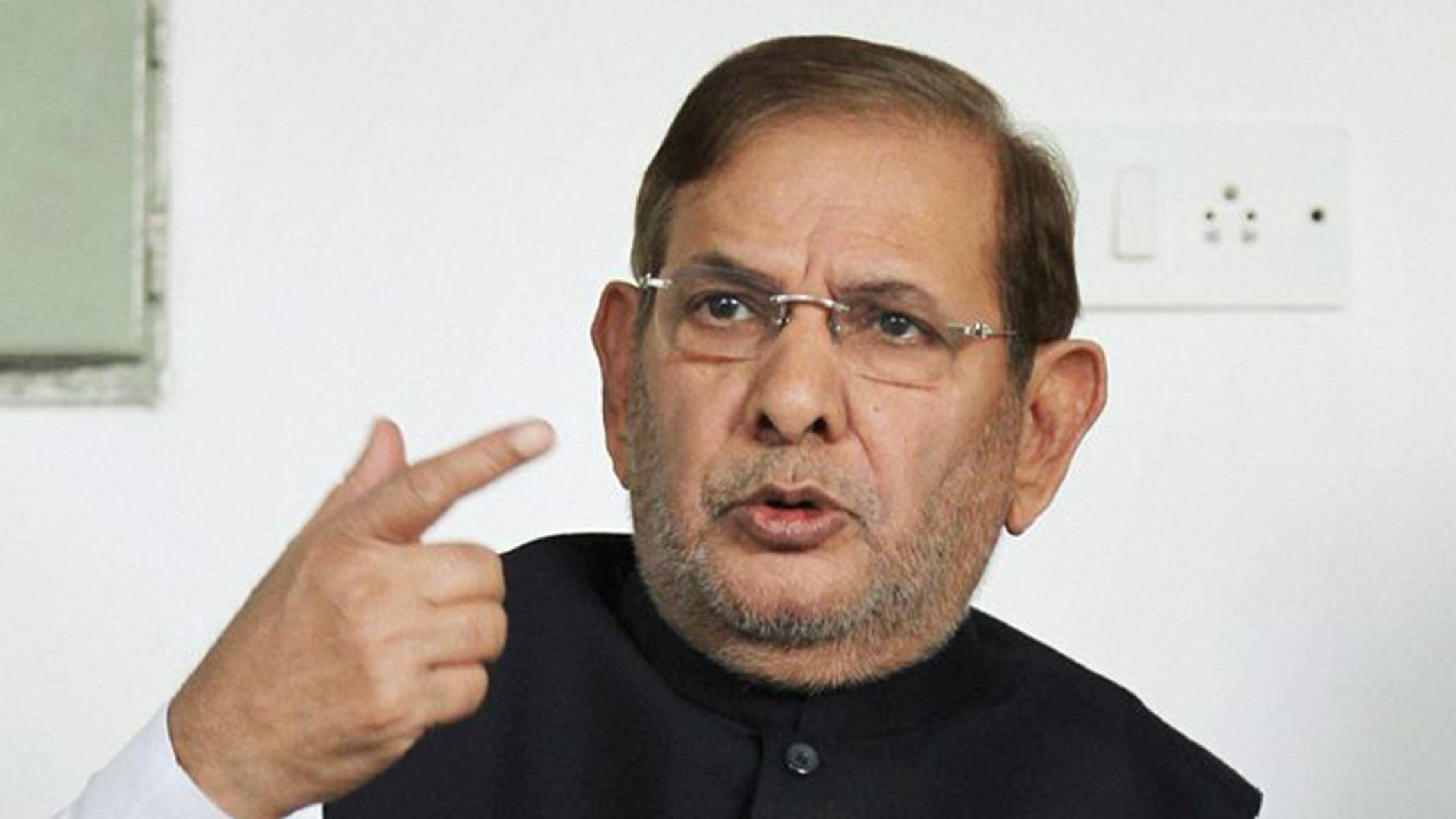
Senior socialist leader Sharad Yadav has said that he does not see any possibility of a third front emerging before the 2019 general elections, and suggested that all opposition parties should unite to fight the ruling Bharatiya Janata Party.
Speaking to PTI-Bhasha, Yadav said efforts by a few political parties to provide an alternative to the BJP and the Congress would not affect the unity among the other opposition parties to put up a formidable front against the saffron party.
Asked whether the efforts by Trinamool Congres chief Mamata Banerjee and Telangana Rashtra Samithi head K Chandrashekar Rao to cobble up a federal front of regional parties would damage the opposition unity, he said: "I don't think the third front will come into existence. Wait for some time, the people trying to form a third front will themselves start talking about a united opposition."
"This time, protecting the Constitution is the challenge. I am satisfied with the success achieved in uniting all parties and organisations on the platform of a 'shared legacy' to bring India out of the trouble the Modi government has pushed it into."
Yadav said he is regularly communicating with all political parties in opposition and will unite them when the time comes.
Stressing that a united opposition is the only option, he said if the parties ignore this fact for narrow and regional gains, the BJP would teach them a lesson in the upcoming elections.
He acknowledged that bringing together parties with similar ideologies is a serious task but said it is not impossible.
Asked if mistakes by young leaders of the Congress, the Samajwadi Party, the Rashtriya Janata Dal and the Rashtriya Lok Dal contributed to the BJP's spectacular rise, he said:
He said the result is before everyone to understand.
Akhilesh Yadav did not listen to Samajwadi Party supremo Mulayam Singh Yadav during the Uttar Pradesh Assembly polls and lost to the BJP, he said, adding that when he corrected that mistake by joining hands with BSP chief Mayawati for the two by polls in Gorakhpur and Phulpur, both of them emerged winners.
Similarly in Bihar, Chief Minister Nitish Kumar walked out of the Grand Alliance with the Congress and the RJD after more than a year of winning the state polls. But soon he lost the assembly bypolls in the state in March, Yadav said.
So those who will not correct (their mistakes) and unite will be taught a lesson by the BJP.Sharad Yadav, Leader, Janata Dal
Citing his political experience over four decades, Yadav said: "Whenever the political, social and economic situation in the country has turned delicate, opposition parties have come together to fight the opportunist forces."
He said the country's social fabric today is under duress, like it was during the Emergency.
The economy is in bad shape following the sudden demonetisation of high-value currency in November 2016 and the implementation of the Goods and Services Tax in July last year, and the constituional provisions are regularly breached, Yadav alleged.
He said his supporters have formed the Loktantrik Janata Dal (LJD) after Nitish Kumar severed ties with the Grand Alliance, but he made it clear that he is not part of the new party. The socialist leader, however, said he will participate in the LJD's first national conference as a special invitee on May 18.
He said the LJD will emerge as an important pillar of the opposition unity in the future.
Asked about comparing the current situation in India to that during the Emergency, Yadav said: "It is for the first time in the country that a central government is running on the recovery made from fuel prices."
Citing government data, he said the central government, which has a total budget of Rs 24 lakh crore, has recovered Rs 19.61 lakh crore by taxing the consumers on petrol and diesel. This data helps understand the amount of stress on the common people, he said.

-
Opinion | India at 38: From Innovation Overperformer to Innovation Powerhouse

India now has 453 VC-backed deep science startups, 18 of them late-stage, after 117 percent growth since 2020. Laurus Labs, at USD 9.3 billion, is the most valuable deep science company in any middle-income economy outside China.
-
Navigating Energy Crossroads: S Jaishankar's Call For Diversified Supply Chains At G20 Ministerial Meeting
As geopolitical fault lines continue to test maritime trade routes and commodity flows, Jaishankar's message remains pertinent: true economic resilience requires open markets, protected transit lines, and a genuine commitment to multilateral cooperation rather than coercion.
-
Indians Are Travelling, But Not Every Journey Is A Holiday | The Week In Whys
Pilgrims, patients and working women are the real travellers, and the system hasn't quite caught up with them.
-
Getting To Work Costs Women More | The Reason Why
It is not just about women paying more than men. It is about women paying much more in cities than in villages.
-
AI Bias In Investing Cannot Be Eliminated, But It Can Be Governed
Framing is a particularly important example as identical financial information presented in terms of gains rather than losses can lead an LLM to reach a different assessment.
-
Joining The Dots | Dark Skies, Steady Diya: Why Hope Holds This Diwali
With war, a weak rupee and foreign outflows weighing on sentiment, policymakers at the NDTV World Summit and market veterans at NDTV Profit Ignite: Diwali Edition offered the same advice: stay invested and filter out the noise.
-
The Curious Case of Equitas Small Finance Bank And A CEO Who Quit For Stock
PN Vasudevan believes persistent investor concerns over a perceived conflict of interest had become a governance overhang on Equitas Small Finance Bank's stock, even as the lender improved profitability and asset quality.
-
Talking Points This Week: AI Cash Burn, A Tiger Comeback And An India That Still Finds Its Own Path
India is not immune to higher oil or tighter global liquidity, yet its earnings base is broader, its domestic policy levers are still available.
-
Foreign Investors Own Half Of HDFC Bank and ICICI Bank. An LTCG Cut Could Matter Most Here
Foreign portfolio investors have US$115 billion parked in HDFC Bank, ICICI Bank. If the government cuts long-term capital gains tax, Jefferies says returning foreign money could land here first.










