The Mistrys Acquired Stake In Tata Sons From JRD Tata’s Siblings
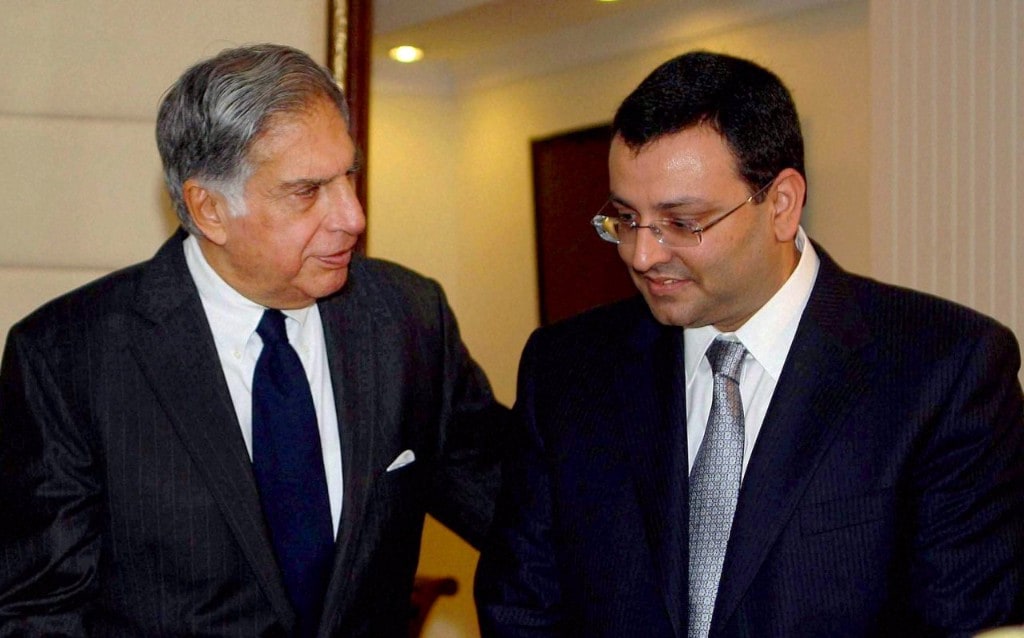
At the heart of Cyrus Mistry's legal battle with Tata Sons Ltd. after his ouster as chairman is his family's stake in the holding company of India's largest conglomerate. Until now, it was said the Mistrys acquired the shares in about five decades starting early 1920s. That, it turns out, is not entirely true.
They didn't buy the stake until 1965, Tata Sons informed the National Company Law Tribunal. The NCLT is hearing the oppression and mismanagement petition filed by two Mistry firms against Tata Sons.
The submission by Tata Sons pertains to a letter addressed to the senior associate editor of Businessworld magazine on Sept. 3, 2003, by Shapoorji Pallonji & Co. Ltd.— also shared with Ratan Tata at the time—clarifying how the Mistrys came to hold a stake in group parent.
Also Read: Tata Sons Vs Mistry Battle Continues At NCLT
The Story As It Was Known So Far
Until now, there was no formal account of how the Mistry family came to be a shareholder in Tata Sons. A Tata Group insider had told BloombergQuint earlier that the story dates back to 1924. Sir Dorabji Tata, a descendant of Jamsetji Tata, and his cousin Ratanji Dadabhoy Tata were running what was then known as Tata & Sons. The business was facing financial difficulties and a friend came to the rescue.
Framroze Edulji Dinshaw, a landowner-lawyer-turned financier, loaned money to the Tatas, and in return the Tatas agreed to share with him 25 percent of the profits from Tata Steel and 12.5 percent of the profits from Tata Hydro-Electric Systems. Those were the two new businesses that the Tatas had entered then. Over time, it was believed, that the Tatas failed to repay Dinshaw and eventually in the early 1930s, the outstanding debt was converted into equity. Reports suggested that Dinshaw received a 12.5 percent stake in Tata & Sons.
Shapoorji Pallonji Mistry, the grandfather of Cyrus Mistry, was a close friend of Dinshaw. Shapoorji had become Bombay's leading realtor by the 1930s. In 1936, when Dinshaw died, his estate was divided between two entities. The land went to a private trust, FE Dinshaw Estate, which is now administered by Nusli Wadia, and Dinshaw's company was acquired by Shapoorji.
The letter to the news magazine, which was submitted before the NCLT, refutes Dinshaw's involvement in the Shapoorji group's stake purchase. According to the letter, the Shapoorji Group did not acquire stake in Tata Sons from the estate of FE Dinshaw nor did FE Dinshaw & Co. hold any stake in Tata Sons when the Mistrys bought shares of the company.
What Pallonji Mistry's Letter Now Clarifies
Instead, the majority of the Mistry family's stake in Tata Sons was acquired from three siblings of Jehangir Ratanji Dadabhoy Tata, or JRD Tata.
RD Tata, who died in 1926, had left his entire estate, mostly the shareholding in Tata & Sons, to his eldest son JRD Tata. JRD shared his inheritance with his siblings – Sylla, Rodabeh, Darab and Jimmy. By the end of the 1970s, the Mistrys had acquired close to 17.5 percent stake in the company. By March 2016, this had inched up to 18.38 percent.
According to the documentary evidence submitted at the NCLT, in June 1965, Shapoorji group bought some shares of Tata Sons from Lady Petit (Sylla) at the request of her brother JRD Tata.
It was suggested to Mr Mistry that he purchase the shares from Lady Petit at the request of Mr JRD Tata as it would be a great investment for the Mistry family.Letter To Businessworld Dated Sept. 3, 2003
In 1970, the Mistry family bought shares from JRD Tata's other sister Rodabeh Sawhny with his approval. In 1974, Darab RD Tata (JRD Tata's brother) approached Mistry to sell his stake in Tata Sons.
An Upset JRD Tata
The Shapoorji group letter says JRD Tata was upset with the last transaction as the Mistry family stake increased in Tata Sons. But the matter was resolved. According to the minutes of a board meeting of June 6, 1980 – also part of the Tata Sons' submissions before the NCLT – JRD informed the board earlier he had a quarrel with Pallonji Mistry, father of Cyrus Mistry, the reasons for which were not disclosed. But this was later settled and JRD invited Mistry on the board of Tata Sons at the June meeting.
What made JRD Tata apprehensive was that the right to vote on shares held by Charity Trusts had been taken away from Trustees and transferred to Public Trustees by a law at that time. This meant Pallonji alone would have the dominant vote whenever Public Trustees were absent or refrained from voting.
JRD Tata asked Pallonji Mistry to consider a voluntary undertaking that in the event of sale of his two investment arms which also held Tata Sons stake, Sterling Investments and Cyrus Investments, Tata Sons shares would be excluded and offered back to the Tatas. “He did not show any positive response, but at least said he would consider the matter,” the board minutes said quoting JRD Tata.

-
High US Salaries, No Green Card Certainty: The Financial Calculation Facing Indian H-1B Families

The suspension of PERM processing at eight technology employers does not cancel existing H-1B visas. What it does is force a question many Indian families have been avoiding: is the US salary worth tying your career and family plans to one employer?
-
Unhedged Position: Can India See An Indonesia-Style Time Correction?
The Nifty is trading below levels it first clocked in 2024. Is there, then, as I have suggested in the headline, potential that the current time correction drags on painfully for the next three-five, even ten years?
-
Navigating Friction And Energy Realities: An Analysis Of Marco Rubio's October Visit To India
Occurring at a critical juncture marked by stalled trade negotiations and escalating geopolitical pressures over global energy supplies, the visit offers a profound window into modern US-India relations.
-
India Exports Capital. Why Not Export Trusteeship?
The big question, then, is whether India can build an institution that global borrowers, investors, banks, and lawyers can trust, even without an Indian connection.
-
France's Economy & Politics Are In Crisis | The Reason Why
Let's look at how the French economy and politics evolved under Nicolas Sarkozy, Franois Hollande and Emmanuel Macron.
-
You May Inherit The Business. You Must Earn Its Credibility.
Succession tests the founder's ability to share authority as much as it tests the next generation's readiness to assume it.
-
Signing Deals Is One Thing; Making Them Work Is Another | The Week In Whys
Sometimes, things don't turn out as planned. Indian companies have lost some bids to rivals, some projects won't produce until 2030.
-
FOMC Wall, PERM Suspension, Hospital Stocks | Talking Points This Week
A PERM suspension would directly affect green-card sponsorship rather than H-1B visas, so the near-term earnings impact could remain relatively limited. The key question is whether this marks a new phase in US scrutiny of Indian IT.
-
Everything, Everywhere, All At Once: Dalal Street's Week To Forget | Joining The Dots
Visa curbs, a Starlink spat and cancer drug caps: what connects this week's shocks for Indian markets
-
India Is Going Abroad For Critical Minerals. But It May Take Years To Pay Off | The Reason Why
Although India's steps are in the right direction, they remain modest compared with India's growing dependence.









