Is the Environment Ministry Putting Business Before Nature?

A series of newly proposed environmental regulations show the Ministry of Environment, Forests and Climate Change (MoEF) is more interested in business matters than in its mandate to protect the environment, activists say.
The rules, which have not yet been passed, would allow construction and other activities to take place in ecologically sensitive and potentially hazardous zones.

Proposed Wetlands Regulation
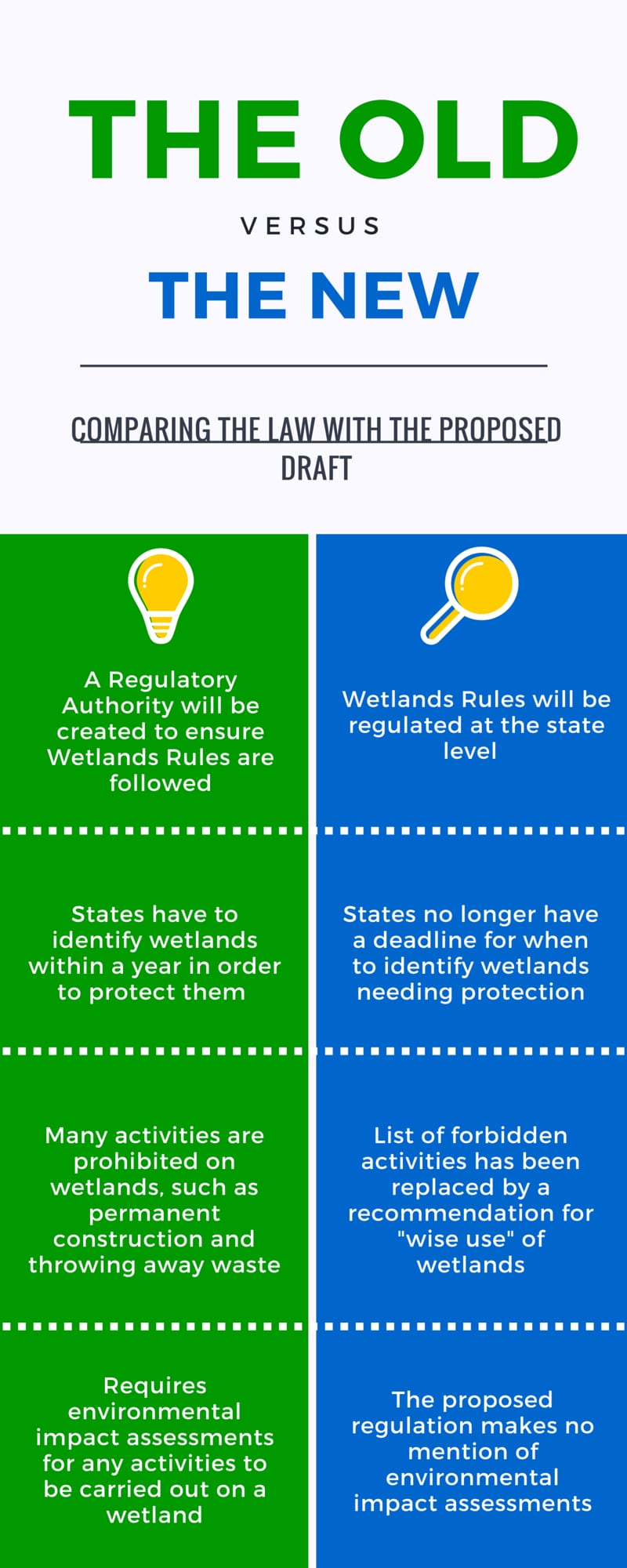
In a proposed overhaul of current wetland rules, the MoEF has taken out language that prevents activities like permanent construction and waste dumping on wetlands. Instead, only “wise use” of wetlands is advised, though what this ‘wise use' would entail remains open to interpretation. Mentions of environmental impact assessments before activities are carried out on wetlands have also been removed.
Wetlands play an important ecological function both for the biodiversity they hold, and the role they play in preventing floods.
Also Read: Our Wetlands Under Threat: Diluted Rules Could Spell Disaster
Proposed Environment Supplement Plan
Another draft regulation, released in May, would allow construction companies to bypass an environmental impact assessment altogether. Violators of the Environmental Impact Assessment Notification of 2006 would be granted an Environment Supplement Plan, within which they would “reduce” the likelihood that they would cause environmental damage in the future, and “reduce” the destruction already caused. Large portions of the draft document appear to be copied from an existing US regulation.
But if companies are encouraged to “reduce” public and environmental issues after they occur, then the draft, as it stands, won't stop them from claiming they don't have the means to repair the damage, legal experts say. This could allow for unregulated pollution on construction sites.
Also Read: Environment Ministry's Copy-Paste Job From US Can Spell Disaster
.png)
For now, neither of the proposed regulations have been approved, and the public still has time to comment on the Environment Supplement Plan.
Environmental lawyers and activists hope the change in leadership in the MoEF will result in a shift towards more environmentally friendly legislation, rather than the business-friendly legislation developed under Prakash Javadekar.

-
Opinion | India at 38: From Innovation Overperformer to Innovation Powerhouse

India now has 453 VC-backed deep science startups, 18 of them late-stage, after 117 percent growth since 2020. Laurus Labs, at USD 9.3 billion, is the most valuable deep science company in any middle-income economy outside China.
-
Navigating Energy Crossroads: S Jaishankar's Call For Diversified Supply Chains At G20 Ministerial Meeting
As geopolitical fault lines continue to test maritime trade routes and commodity flows, Jaishankar's message remains pertinent: true economic resilience requires open markets, protected transit lines, and a genuine commitment to multilateral cooperation rather than coercion.
-
Indians Are Travelling, But Not Every Journey Is A Holiday | The Week In Whys
Pilgrims, patients and working women are the real travellers, and the system hasn't quite caught up with them.
-
Getting To Work Costs Women More | The Reason Why
It is not just about women paying more than men. It is about women paying much more in cities than in villages.
-
AI Bias In Investing Cannot Be Eliminated, But It Can Be Governed
Framing is a particularly important example as identical financial information presented in terms of gains rather than losses can lead an LLM to reach a different assessment.
-
Joining The Dots | Dark Skies, Steady Diya: Why Hope Holds This Diwali
With war, a weak rupee and foreign outflows weighing on sentiment, policymakers at the NDTV World Summit and market veterans at NDTV Profit Ignite: Diwali Edition offered the same advice: stay invested and filter out the noise.
-
The Curious Case of Equitas Small Finance Bank And A CEO Who Quit For Stock
PN Vasudevan believes persistent investor concerns over a perceived conflict of interest had become a governance overhang on Equitas Small Finance Bank's stock, even as the lender improved profitability and asset quality.
-
Talking Points This Week: AI Cash Burn, A Tiger Comeback And An India That Still Finds Its Own Path
India is not immune to higher oil or tighter global liquidity, yet its earnings base is broader, its domestic policy levers are still available.
-
Foreign Investors Own Half Of HDFC Bank and ICICI Bank. An LTCG Cut Could Matter Most Here
Foreign portfolio investors have US$115 billion parked in HDFC Bank, ICICI Bank. If the government cuts long-term capital gains tax, Jefferies says returning foreign money could land here first.










