Tata Mistry Saga Nearing Its End At The NCLT
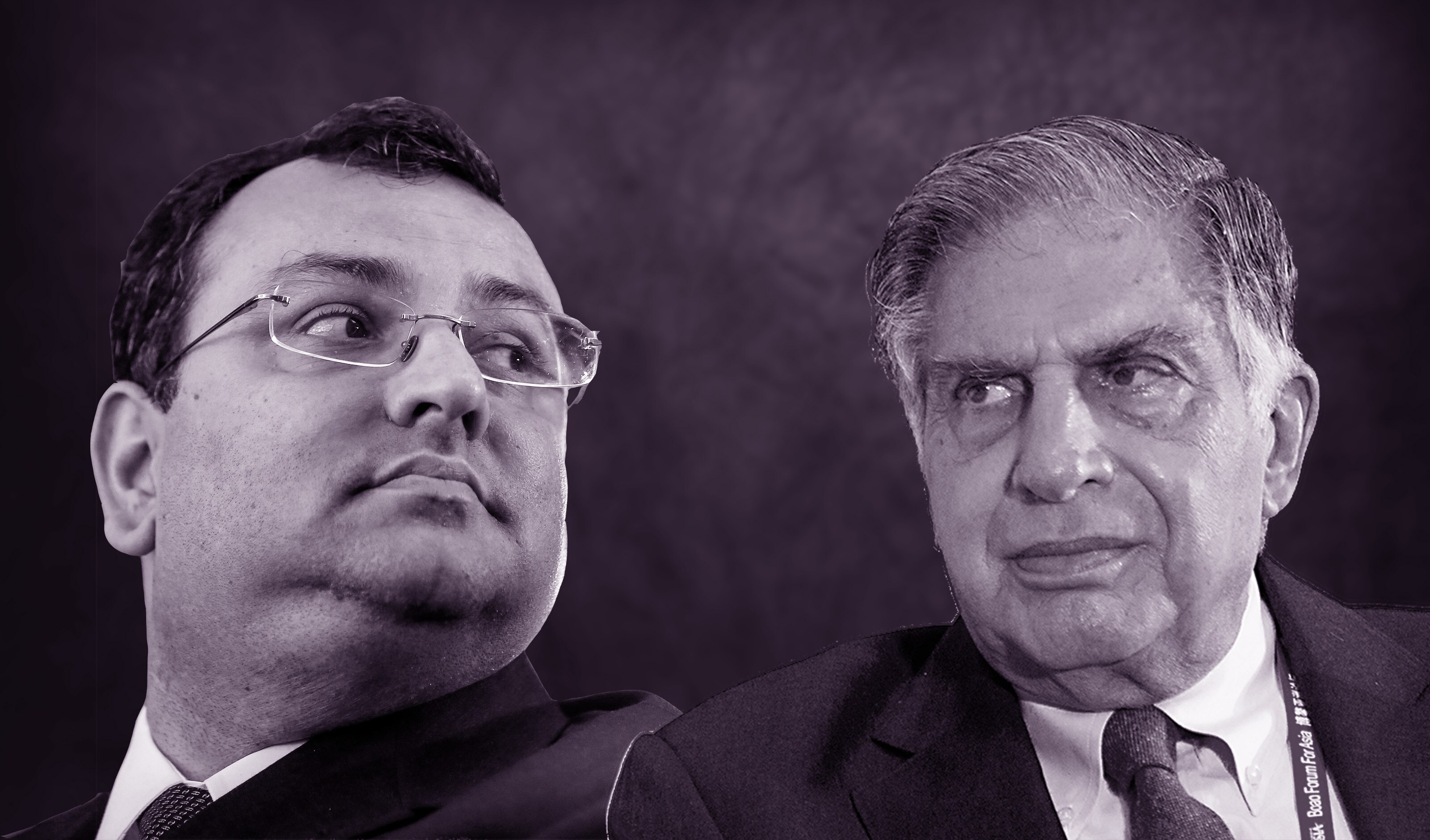
The tone and tenor of Ratan Tata and trustees of the two Tata Trusts turned increasingly “aggressive” over the years since Cyrus Mistry's appointment as chairman of Tata Sons in 2011, the Mistry firms argued at the NCLT today.
Eventually, instead of being considerate, the trustees started threatening breach of Articles of Association and would not tolerate any further questioning by the erstwhile chairman, Somasekhar Sundaresan, counsel for the Mistry firms said.
The manner in which trustees of the two Tata trusts are conducting affairs is prejudicial to the interests of Tata Sons and its shareholders. Arbitrary decisions like those being questioned in the present proceedings can lead to the empire being put to ruin unless remedied by the tribunal.Somasekhar Sundaresan, Counsel For Mistrys
The Mistry side completed their rejoinder and the Tatas picked up their arguments for the surrejoinder today at the National Company Law Tribunal in the oppression and mismanagement plea brought by the two Mistry firms – Cyrus Investments and Sterling Investment – against Tata Trust in relation to affairs of Tata Sons.
The tribunal began hearing this matter in November last year after the appellate tribunal granted the two Mistry firms waiver from 10 percent shareholding requirement to pursue charges. The dispute stems from Mistry's removal as Tata Sons chairman in October 2016 and later as a director.
Also Read: Tata Sons' Dealings With Group Companies Is Oppressive To Mistry Firms, Mistry Counsel Argues
Janak Dwarkadas, also arguing for Cyrus Mistry, stressed on the fact that Tatas have not been able to justify Mistry's removal on grounds of non-performance. He relied on improved the performance of Tata Sons and Tata group companies during Mistry's reign to support this contention. Tata Sons witnessed a 35 percent jump in profit and an increase in the net worth of Tata Sons while market capitalisation of group companies rose, Dwarkadas said.
Reasons cited by the Tatas such as communication with the IT department and release of confidential documents by Cyrus Mistry do not justify Mistry's removal, Dwarkadas said. The real reason for his removal was unwillingness of making the board of Tata Sons pliant to the Tata Trusts, he argued.
He reiterated his earlier argument that due process under the Articles of Association of Tata Sons was not followed. If this process had been followed and a committee had been constituted to decide whether Mistry should be removed, the outcome could have been different. This recommendation would have to be placed before the board of directors for them to take an informed decision, Dwarkadas said. Mistry's removal was undertaken in violation of the process to avoid these steps, he explained.
When a scheme of management has been laid down in the articles and this scheme is not followed to suit someone's convenience then “I am entitled to come before this court to ask for relief in an oppression and mismanagement suit”, he concluded.
Tata Sons' Surrejoinder
On the first day of Mistrys' rejoinder Senior Counsel Aryama Sundaram had explained the difference between the earlier law on oppression and mismanagement and the present law under new Companies Act. He said that “prejudice” was a new category introduced in the section with lower a threshold of proof in relation to harmful acts. Now, petitioners don't have to prove oppression, instead they have to prove that the interest of shareholder, public of the company itself has been prejudiced and this has lower standards than oppression, Sundaram explained.
Also Read: Tata Vs Mistry: What Happened At The NCLT So Far
Tata Son's counsel Abhishek Manu Singhvi today said that this argument came from the Mistry firms as an afterthought in their rejoinder and have not been pleaded and can therefore not be considered by the tribunal. However, to counter Sundaram's argument he took the tribunal through the evolution of the oppression and mismanagement doctrine in India as well in the U.K. He refuted that the term “prejudice” or “prejudicial” implies lower threshold under the applicable laws as compared to what must be proved under “oppression".
He argued that prejudice forms part of the term “oppression” and while providing oppression one must show unfair prejudice. Both terms cannot be read disjointly, he said.
It is impossible that the two words used together can have different threshold. Mistry side has relied on the allegedly lower threshold of prejudice since they have not been able to show oppression, he concluded.
Tata's surrejoinder will continue on Friday and is expected to be completed on the very same day bringing an end to the arguments in this case.

-
Ten Things I Learnt This Samvat

Patience can be a trap. Cheap stocks can stay cheap. Leverage can wipe you out. What did Samvat 2082 teach us? Niraj Shah writes on 10 lessons from the year gone by.
-
Talking Points This Week: Tech Nerves, FII Buying, And A Faraway Banking Shock
The global markets are not shining this Diwali. The exception in the large markets is, India.
-
Midterm Rally Lasted A Day. The Hard Reality Of A Divided US May Last Two Years | Opinion
Between a contested AI boom, a debt ceiling that arrives in 2027 and a president with every incentive to act alone, the next two years may prove more volatile than the first day's rally suggests.
-
Blue Wave Will Derail the AI Trade but Won't Dismantle the AI Era | Unhedged Position
The Democrats' sweep of the US Congress will see politics collide with economic forces both over the long and short term.
-
It's Time To Take The GST Council's Bet On Trust Global
Payment records can prove India's services exports, and clear, proportionate rules can bring foreign digital sellers into the tax net.
-
Opinion | India at 38: From Innovation Overperformer to Innovation Powerhouse
India now has 453 VC-backed deep science startups, 18 of them late-stage, after 117 percent growth since 2020. Laurus Labs, at USD 9.3 billion, is the most valuable deep science company in any middle-income economy outside China.
-
Navigating Energy Crossroads: S Jaishankar's Call For Diversified Supply Chains At G20 Ministerial Meeting
As geopolitical fault lines continue to test maritime trade routes and commodity flows, Jaishankar's message remains pertinent: true economic resilience requires open markets, protected transit lines, and a genuine commitment to multilateral cooperation rather than coercion.
-
Indians Are Travelling, But Not Every Journey Is A Holiday | The Week In Whys
Pilgrims, patients and working women are the real travellers, and the system hasn't quite caught up with them.
-
Getting To Work Costs Women More | The Reason Why
It is not just about women paying more than men. It is about women paying much more in cities than in villages.









