Take Considered View On Allowing GM Mustard Crop, Supreme Court Tells Government
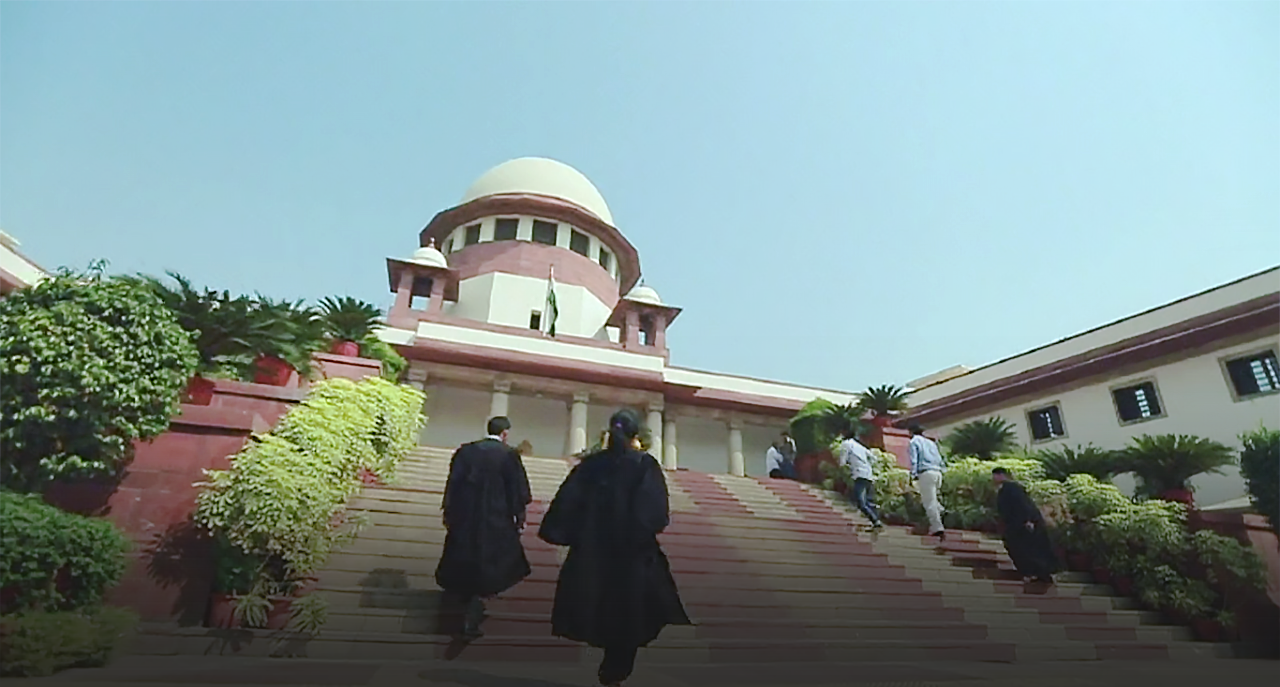
- Supreme Court asked the Centre to take a “considered” and “well-informed” view before taking a policy decision
- The bench granted a week's time to the Centre, represented by Additional Solicitor General (ASG) Tushar Mehta
- The apex court had on October 17 last year extended the stay on the commercial release of GM mustard crop till further orders.
The Supreme Court on Monday told central government to take a considered and well-informed view before taking a policy decision on the commercial release of genetically modified (GM) mustard crop, saying effects of such a move would be “irreversible”.
“It is an extremely, extremely important issue. You (Centre) take a well-informed and considered decision, as once it is allowed then the effect would be irreversible,” a bench of Chief Justice JS Khehar and Justice DY Chandrachud said.
The bench granted a week's time to the Centre, represented by Additional Solicitor General (ASG) Tushar Mehta, to apprise it of by when will it take a policy decision on the roll out.
The ASG, at the outset, said so far, the Centre has not taken any any policy decision on the commercial release of GM mustard crop and was considering various aspects. It has also invited suggestions and objections on the issue.
The bench, which initially granted four weeks time to the Centre, later allowed the plea of the ASG that he would take instruction and come back within a week and inform the court about the time within which a policy decision would be taken.
The apex court had on October 17 last year extended the stay on the commercial release of GM mustard crop till further orders.
It had asked the government to seek public opinion on such seeds before releasing it for cultivation purposes.
Mustard is one of India's most important winter crops which is sown between mid-October and late November.
Advocate Prashant Bhushan, appearing for petitioner Aruna Rodrigues, had alleged that the government was sowing the seeds in various fields and that the bio-safety dossier, which has to be made public by putting it on the website, has not yet been done.
Alleging that field trials were being carried out without the relevant tests, Bhushan had sought a 10-year moratorium on them. A Technical Expert Committee (TEC) report had also said that the entire regulatory system was in “shambles” and a 10- year moratorium should be given.Prashant Bhushan, Senior Advocate
Rodrigues had filed the plea seeking a stay on the commercial release of GM mustard and prohibition of its open field trials.
He had also urged the court to prohibit open field trials and commercial release of Herbicide Tolerant (HT) crops, including HT Mustard DMH 11 and its parent lines/variants as recommended by the TEC in its report.
“Since the claimed yield superiority of HT DMH 11 through the B&B system over Non-GMO varieties and hybrids is quite simply not true, in fact a hoax, ... there is no purpose to this GMO HT mustard for India,” the petition said.
It said the contamination caused by mustard HT DMH 11 and its HT parents would be "irremediable and irreversible".
“The contamination of our seed stock and germ plasm as will happen with mustard HT DMH 11 and its HT parents will be irremediable and irreversible making our food toxic at the molecular level without recourse,” the plea had said.
Also Read: India Panel Recommends Commercial Use of First GM Food Crop

-
Navigating Energy Crossroads: S Jaishankar's Call For Diversified Supply Chains At G20 Ministerial Meeting

As geopolitical fault lines continue to test maritime trade routes and commodity flows, Jaishankar's message remains pertinent: true economic resilience requires open markets, protected transit lines, and a genuine commitment to multilateral cooperation rather than coercion.
-
Indians Are Travelling, But Not Every Journey Is A Holiday | The Week In Whys
Pilgrims, patients and working women are the real travellers, and the system hasn't quite caught up with them.
-
Getting To Work Costs Women More | The Reason Why
It is not just about women paying more than men. It is about women paying much more in cities than in villages.
-
AI Bias In Investing Cannot Be Eliminated, But It Can Be Governed
Framing is a particularly important example as identical financial information presented in terms of gains rather than losses can lead an LLM to reach a different assessment.
-
Joining The Dots | Dark Skies, Steady Diya: Why Hope Holds This Diwali
With war, a weak rupee and foreign outflows weighing on sentiment, policymakers at the NDTV World Summit and market veterans at NDTV Profit Ignite: Diwali Edition offered the same advice: stay invested and filter out the noise.
-
The Curious Case of Equitas Small Finance Bank And A CEO Who Quit For Stock
PN Vasudevan believes persistent investor concerns over a perceived conflict of interest had become a governance overhang on Equitas Small Finance Bank's stock, even as the lender improved profitability and asset quality.
-
Talking Points This Week: AI Cash Burn, A Tiger Comeback And An India That Still Finds Its Own Path
India is not immune to higher oil or tighter global liquidity, yet its earnings base is broader, its domestic policy levers are still available.
-
Foreign Investors Own Half Of HDFC Bank and ICICI Bank. An LTCG Cut Could Matter Most Here
Foreign portfolio investors have US$115 billion parked in HDFC Bank, ICICI Bank. If the government cuts long-term capital gains tax, Jefferies says returning foreign money could land here first.
-
'Never Seen This Level Of Negativity': Sandeep Tandon Says The Next Rally May Be Closer Than You Think
Veteran investor Sandeep Tandon says foreign selling is easing, large-caps are due a comeback and mid-caps are crowded, while he turns positive on gold, power and pharma this Diwali.










