Supreme Court To Hear All Pleas Challenging Retrospective 28% GST On Online Gaming Firms
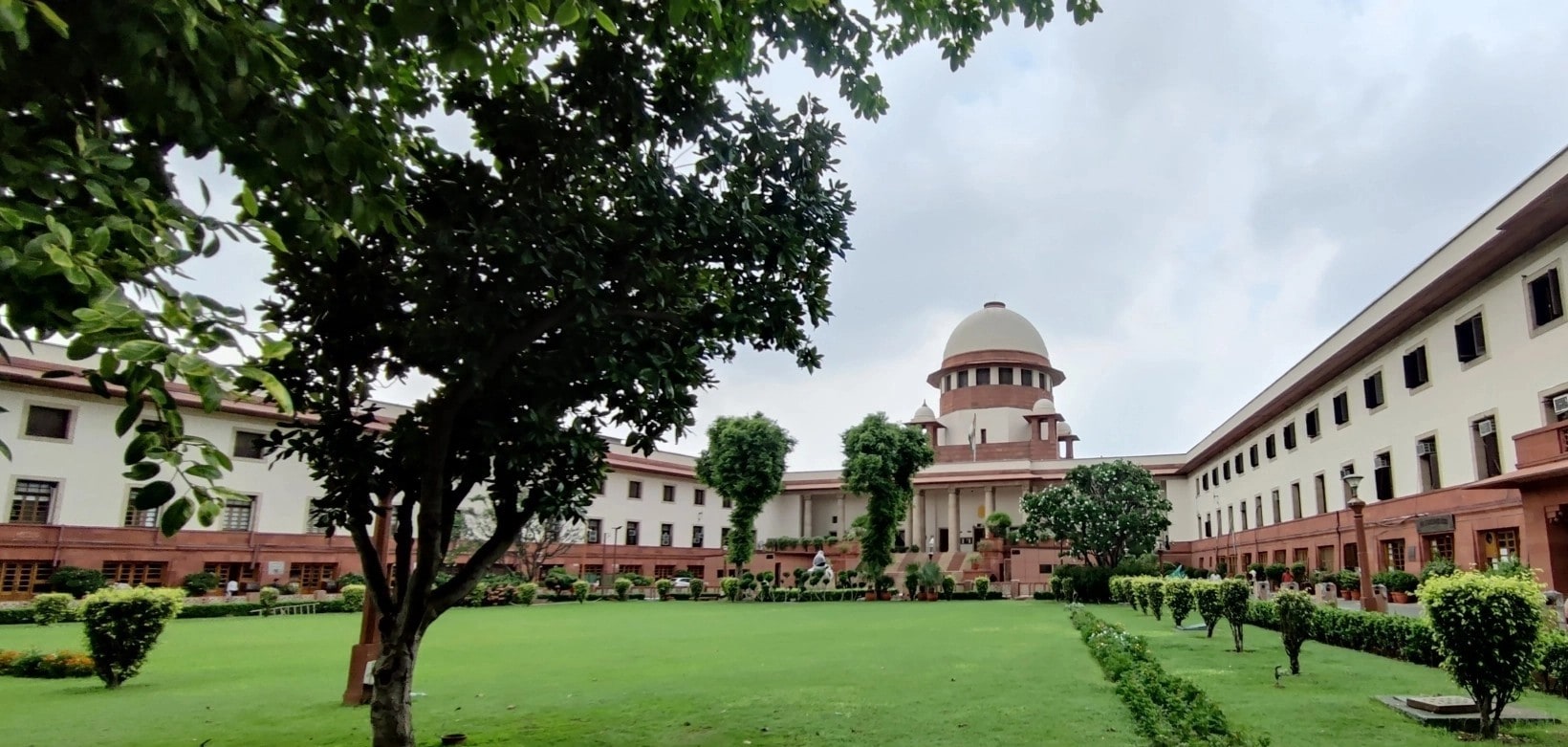
The Supreme Court on Monday agreed to hear a plea challenging the retrospective application of the revised Goods and Services Tax rate of 28% levied against online gaming companies.
Appearing for the gaming companies, Senior Advocate Harish Salve said that the IT department is demanding a tax on the entire churn of the money coming in on the platform or the entire face value of the bets.
What this means is that if a player starts playing with Rs 100 and ends up with Rs 500 after placing multiple bets on the platform, the total betting value could rise up to a few thousand rupees, depending on how many times it has been churned.
This is the value at which the department is demanding the tax, Salve told the court.
Arguing for the tax department, Additional Solicitor General N Venkatraman told the court that the department will be filing a petition to transfer all the matters pending before various high courts to the Supreme Court for an authoritative ruling on this matter.
The top court has agreed to hear all the cases pertaining to the taxation of all the online gaming companies together.
The e-gaming companies are challenging the tax department's stance to impose 28% GST on the full face value of the bets for the period prior to Oct. 1, 2023.
According to the changes introduced by the government in the GST Act in August, online gaming was added to the list of actionable claims—along with lottery, betting and gambling—that attract 28% tax.
This change was to be applicable on Oct. 1, 2023.
It was decided that the tax will be levied at the point when the deposit is made, irrespective of whether the activities are a game of skill or chance, as long as they are played with stakes.
The government has taken the stance that this liability was "pre-existing" and that the law has not been amended in this regard but only "clarified."
Consequently, the tax department has been issuing GST notices for the period prior to Oct. 1 as well. This has led to a battery of GST notices being slapped on these companies, with demands that are running into multiples of their earnings. It has culminated in a huge difficulty for these companies, as they were under the impression that the new rate of tax would be applicable prospectively from Oct. 1, 2023 onwards.
Last year, the top court also issued a stay on a Karnataka High Court ruling that quashed a Rs 21,000-crore show cause notice to Gameskraft Technologies Pvt. by the Directorate General of GST Intelligence.

-
Ten Things I Learnt This Samvat

Patience can be a trap. Cheap stocks can stay cheap. Leverage can wipe you out. What did Samvat 2082 teach us? Niraj Shah writes on 10 lessons from the year gone by.
-
Talking Points This Week: Tech Nerves, FII Buying, And A Faraway Banking Shock
The global markets are not shining this Diwali. The exception in the large markets is, India.
-
Midterm Rally Lasted A Day. The Hard Reality Of A Divided US May Last Two Years | Opinion
Between a contested AI boom, a debt ceiling that arrives in 2027 and a president with every incentive to act alone, the next two years may prove more volatile than the first day's rally suggests.
-
Blue Wave Will Derail the AI Trade but Won't Dismantle the AI Era | Unhedged Position
The Democrats' sweep of the US Congress will see politics collide with economic forces both over the long and short term.
-
It's Time To Take The GST Council's Bet On Trust Global
Payment records can prove India's services exports, and clear, proportionate rules can bring foreign digital sellers into the tax net.
-
Opinion | India at 38: From Innovation Overperformer to Innovation Powerhouse
India now has 453 VC-backed deep science startups, 18 of them late-stage, after 117 percent growth since 2020. Laurus Labs, at USD 9.3 billion, is the most valuable deep science company in any middle-income economy outside China.
-
Navigating Energy Crossroads: S Jaishankar's Call For Diversified Supply Chains At G20 Ministerial Meeting
As geopolitical fault lines continue to test maritime trade routes and commodity flows, Jaishankar's message remains pertinent: true economic resilience requires open markets, protected transit lines, and a genuine commitment to multilateral cooperation rather than coercion.
-
Indians Are Travelling, But Not Every Journey Is A Holiday | The Week In Whys
Pilgrims, patients and working women are the real travellers, and the system hasn't quite caught up with them.
-
Getting To Work Costs Women More | The Reason Why
It is not just about women paying more than men. It is about women paying much more in cities than in villages.









