Supreme Court Orders Eviction Of More Than 10 Lakh Tribals
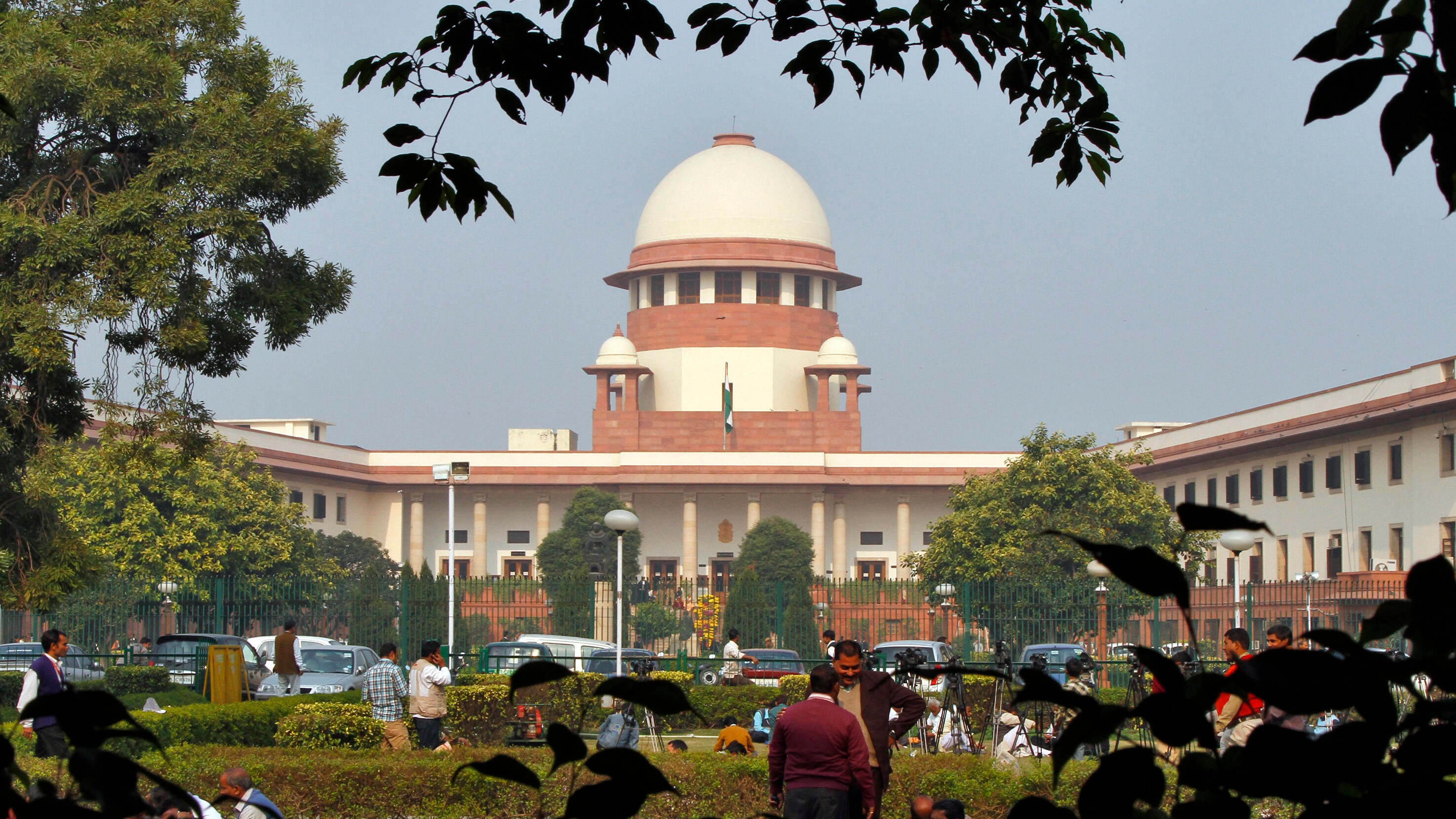
The Supreme Court ordered eviction of at least 10 lakh Scheduled Tribes and Other Traditional Forest Dwellers after their claims on forestlands were rejected in a case pending for a few years.
The order was passed on Feb. 13 by a three-judge bench comprising Justice Arun Mishra, Justice Navin Sinha and Justice Indira Banerjee. Wildlife First, one of the petitioners, had challenged the constitutional validity of the Forest Rights Act and sought review of the rights granted to forest dwellers.
The eviction of rejected claims or encroachers “has to be ensured before July 24, non-compliance of which will be viewed seriously”, the apex court said.
States, including Andhra Pradesh, Uttar Pradesh, Bihar and Chhattisgarh, will have to submit details such as the number of claims rejected and the status of eviction in a written affidavit, the order said. The chief secretaries of these states will have to explain why action has not been taken on claims which have been rejected and ensure eviction before the next date of hearing. Himachal Pradesh, Gujarat, Goa and Manipur will have to update the court on the adjudication status of the claims of forest dwellers.
Here's the state-wise breakup of evictions to be carried out:
- Andhra Pradesh: 66,351 claims rejected
- Assam: 22,398 Scheduled Tribes claims, and 5,136 Other Traditional Forest Dwellers' claims rejected
- Bihar: As many as 4,354 claims rejected
- Chhattisgarh: 20,095 claims rejected; action has been taken against 4,830.
- Jharkhand: 27,809 claims of Scheduled Tribes and 298 claims of Other Traditional Forest Dwellers rejected
- Karnataka: 35,521 claims of Scheduled Tribes and 1,41,019 claims of Other Traditional Forest Dwellers rejected
- Kerala: 894 claims rejected
- Madhya Pradesh: 20,4123 claims of Scheduled Tribes and 1,50,664 claims of Other Traditional Forest Dwellers rejected
- Maharashtra: 13,712 claims of Scheduled Tribes and 8,797 claims of Other Traditional Forest Dwellers rejected
- Odisha: 1,22,250 claims of Scheduled Tribes and 26,620 claims of Other Traditional Forest Dwellers rejected
- Rajasthan: 36,492 claims of Scheduled Tribes and 577 claims of Other Traditional Forest Dwellers rejected
- Tamil Nadu: 7,148 claims of Scheduled Tribes and 1,881 claims of Other Traditional Forest Dwellers rejected.
- Telangana: 82,075 claims of Scheduled Tribes rejected.
- Tripura: 34,483 claims of Scheduled Tribes and 33,774 claims of Other Traditional Forest Dwellers rejected
- Uttar Pradesh: 20,494 claims of Scheduled Tribes and 38,167 claims of Other Traditional Forest Dwellers rejected
- West Bengal: 50,288 claims of Scheduled Tribes and 35,856 claims of Other Traditional Forest Dwellers rejected
In a previous order in 2016, in this long pending case, the Supreme Court had noted the argument made by counsel of Wildlife First that “approximately 44 lakh claims for recognition of the Rights under the above-mentioned Act and grant of Pattas came to be filed before the authorities competent to deal with those claims in various States out of which some of the claims were accepted and some were rejected”.
It had asked each of the states to file an affidavit with data on the number of claims rejected and the extent of land covered by those claims and the consequent action taken up by the states. The matter has since then dragged on awaiting the states' data.
The case dates back to 2008 when Wildlife First challenged the Forest Rights Act, 2006 seeking re-examination of the rights granted to forest dwellers. This included the recovery of forest land from encroachers.

-
High US Salaries, No Green Card Certainty: The Financial Calculation Facing Indian H-1B Families

The suspension of PERM processing at eight technology employers does not cancel existing H-1B visas. What it does is force a question many Indian families have been avoiding: is the US salary worth tying your career and family plans to one employer?
-
Unhedged Position: Can India See An Indonesia-Style Time Correction?
The Nifty is trading below levels it first clocked in 2024. Is there, then, as I have suggested in the headline, potential that the current time correction drags on painfully for the next three-five, even ten years?
-
Navigating Friction And Energy Realities: An Analysis Of Marco Rubio's October Visit To India
Occurring at a critical juncture marked by stalled trade negotiations and escalating geopolitical pressures over global energy supplies, the visit offers a profound window into modern US-India relations.
-
India Exports Capital. Why Not Export Trusteeship?
The big question, then, is whether India can build an institution that global borrowers, investors, banks, and lawyers can trust, even without an Indian connection.
-
France's Economy & Politics Are In Crisis | The Reason Why
Let's look at how the French economy and politics evolved under Nicolas Sarkozy, Franois Hollande and Emmanuel Macron.
-
You May Inherit The Business. You Must Earn Its Credibility.
Succession tests the founder's ability to share authority as much as it tests the next generation's readiness to assume it.
-
Signing Deals Is One Thing; Making Them Work Is Another | The Week In Whys
Sometimes, things don't turn out as planned. Indian companies have lost some bids to rivals, some projects won't produce until 2030.
-
FOMC Wall, PERM Suspension, Hospital Stocks | Talking Points This Week
A PERM suspension would directly affect green-card sponsorship rather than H-1B visas, so the near-term earnings impact could remain relatively limited. The key question is whether this marks a new phase in US scrutiny of Indian IT.
-
Everything, Everywhere, All At Once: Dalal Street's Week To Forget | Joining The Dots
Visa curbs, a Starlink spat and cancer drug caps: what connects this week's shocks for Indian markets
-
India Is Going Abroad For Critical Minerals. But It May Take Years To Pay Off | The Reason Why
Although India's steps are in the right direction, they remain modest compared with India's growing dependence.









