Supreme Court Holds Vijay Mallya Guilty Of Contempt Of Court
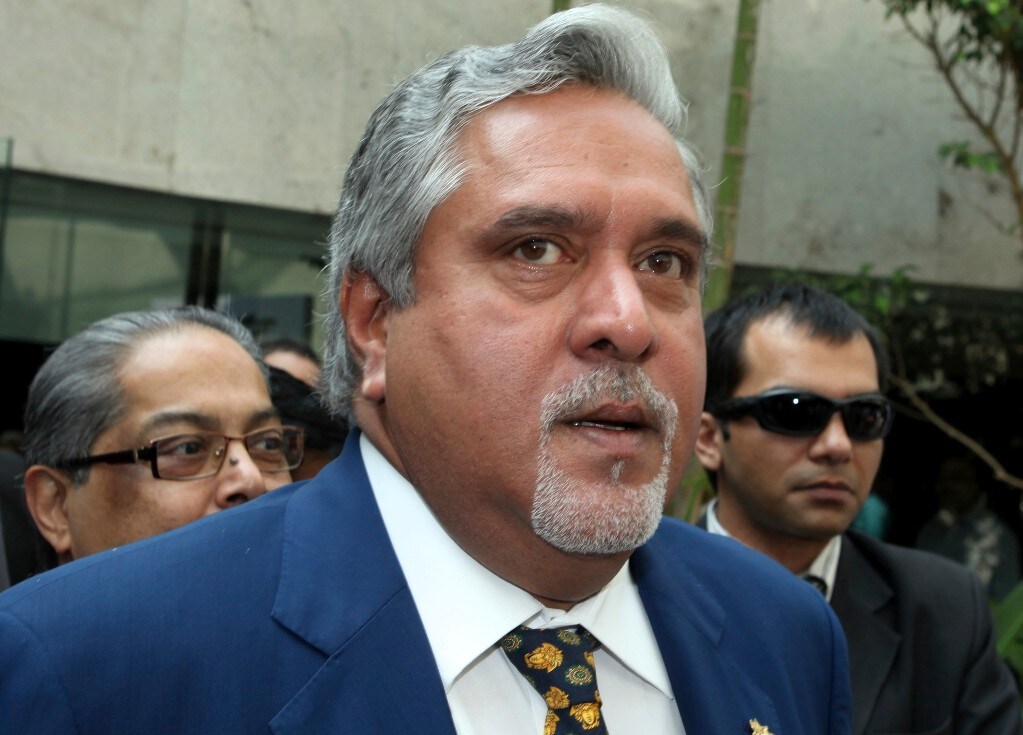
The Supreme Court on Tuesday held businessman Vijay Mallya guilty of contempt of court for transferring $40 million to his children in violation of the court's order.
The apex court directed Mallya, who is presently in the United Kingdom, to appear before it on July 10 to argue on the quantum of punishment in the matter.
India had recently asked Britain to ensure early extradition of Mallya, who is an accused in a bank loan default case of over Rs 9,000 crore involving his defunct Kingfisher Airlines.
"We have found respondent number 3 (Mallya) guilty of contempt of court on two grounds," a bench comprising Justices AK Goel and UU Lalit said.
The order came on a plea by consortium of banks led by the State Bank of India (SBI), which had said that Mallya had allegedly transferred $40 million received from British firm Diageo Plc, to his children in "flagrant violation" of various judicial orders.
The apex court had on March 9 asked the liquor baron about the "truthfulness" of his disclosure of assets and the transfer of money to his children. The bench had reserved its order on two pleas of lending banks seeking contempt action and a direction to Mallya to deposit $40 million received from offshore firm Diageo respectively.
Banks have alleged that Mallya concealed facts and diverted the money to his son Siddharth Mallya and daughters Leanna Mallya and Tanya Mallya in "flagrant violation" of the orders passed by the Karnataka High Court.
The bench had posed several queries to the consortium of banks and asked it whether any criminal proceedings have been initiated against Mallya. The court had also asked Mallya as to why he did not disclose the receipt of $40 million from London-based Diageo and subsequent transfer of money to trusts to which his three children were the beneficiaries.
Attorney General Mukul Rohatgi and senior advocate Shyam Divan, appearing for the banks, had contended that unless Mallya deposits $40 million before this court, he does not deserve to be heard and, moreover, he needed to appear personally as the contempt notice has already been issued.
The AG had also told the court that the government is seeking deportation of Mallya from the U.K.
Divan had referred to various orders passed by the Debt Recovery Tribunal (DRT), the high court and the Supreme Court and said that the DRT has passed a decree in favour of the banks and the amount to be recovered is approximately Rs 9,200 crore.
There was a specific order of the high court that Mallya will not transfer or alienate any movable and immovable assets to any person, he had said.
The bench had asked as to how the decree of the DRT to recover Rs 9,200 crore would be executed, to which the AG had said, "God knows, how will it get the money back," adding that Mallya has taken this court for "a ride".
The bench had also asked CS Vaidyanathan, Mallya's counsel, about the response on the contempt notice. The lawyer had said that an application for recall of the order has been filed and according to him, no contempt is made out and hence, the plea itself can be considered as the reply. The money which came from Diageo belonged to his children and not Mallya, his counsel added.
The bench had shot back: "Somebody who is faced with a default of Rs 6,200 crore and suppose if he gets Rs 3,000 crore, he should have given it to repay the dues". But Vaidyanathan maintained that the $40 million was not covered under the injunction order.
In October last year, the court had rapped Mallya for not making full disclosure of his overseas properties and had asked him to do so within a month.
The bench had also pulled up Mallya for not giving details of $40 million which he had allegedly received from Diageo in February last year, saying it was of the "prima facie view" that proper disclosure as per its earlier order was not made.
The banks had on August 29 last year told the Supreme Court that Mallya had deliberately not made full disclosure of his assets including the $40 million he received on February 25 from Diageo.

-
Love, Sex Aur Dhokha: The Audacious Plot To Spy On Jensen Huang

A Taipei dinner, a Singapore chip buyer and a suspected Chinese asset: inside the alleged spy operation that got close to NVIDIA's Jensen Huang.
-
Ten Things I Learnt This Samvat
Patience can be a trap. Cheap stocks can stay cheap. Leverage can wipe you out. What did Samvat 2082 teach us? Niraj Shah writes on 10 lessons from the year gone by.
-
Talking Points This Week: Tech Nerves, FII Buying, And A Faraway Banking Shock
The global markets are not shining this Diwali. The exception in the large markets is, India.
-
Midterm Rally Lasted A Day. The Hard Reality Of A Divided US May Last Two Years | Opinion
Between a contested AI boom, a debt ceiling that arrives in 2027 and a president with every incentive to act alone, the next two years may prove more volatile than the first day's rally suggests.
-
Blue Wave Will Derail the AI Trade but Won't Dismantle the AI Era | Unhedged Position
The Democrats' sweep of the US Congress will see politics collide with economic forces both over the long and short term.
-
It's Time To Take The GST Council's Bet On Trust Global
Payment records can prove India's services exports, and clear, proportionate rules can bring foreign digital sellers into the tax net.
-
Opinion | India at 38: From Innovation Overperformer to Innovation Powerhouse
India now has 453 VC-backed deep science startups, 18 of them late-stage, after 117 percent growth since 2020. Laurus Labs, at USD 9.3 billion, is the most valuable deep science company in any middle-income economy outside China.
-
Navigating Energy Crossroads: S Jaishankar's Call For Diversified Supply Chains At G20 Ministerial Meeting
As geopolitical fault lines continue to test maritime trade routes and commodity flows, Jaishankar's message remains pertinent: true economic resilience requires open markets, protected transit lines, and a genuine commitment to multilateral cooperation rather than coercion.
-
Indians Are Travelling, But Not Every Journey Is A Holiday | The Week In Whys
Pilgrims, patients and working women are the real travellers, and the system hasn't quite caught up with them.









