Smriti Irani’s I&B Stint – A Term Punctuated With Controversies
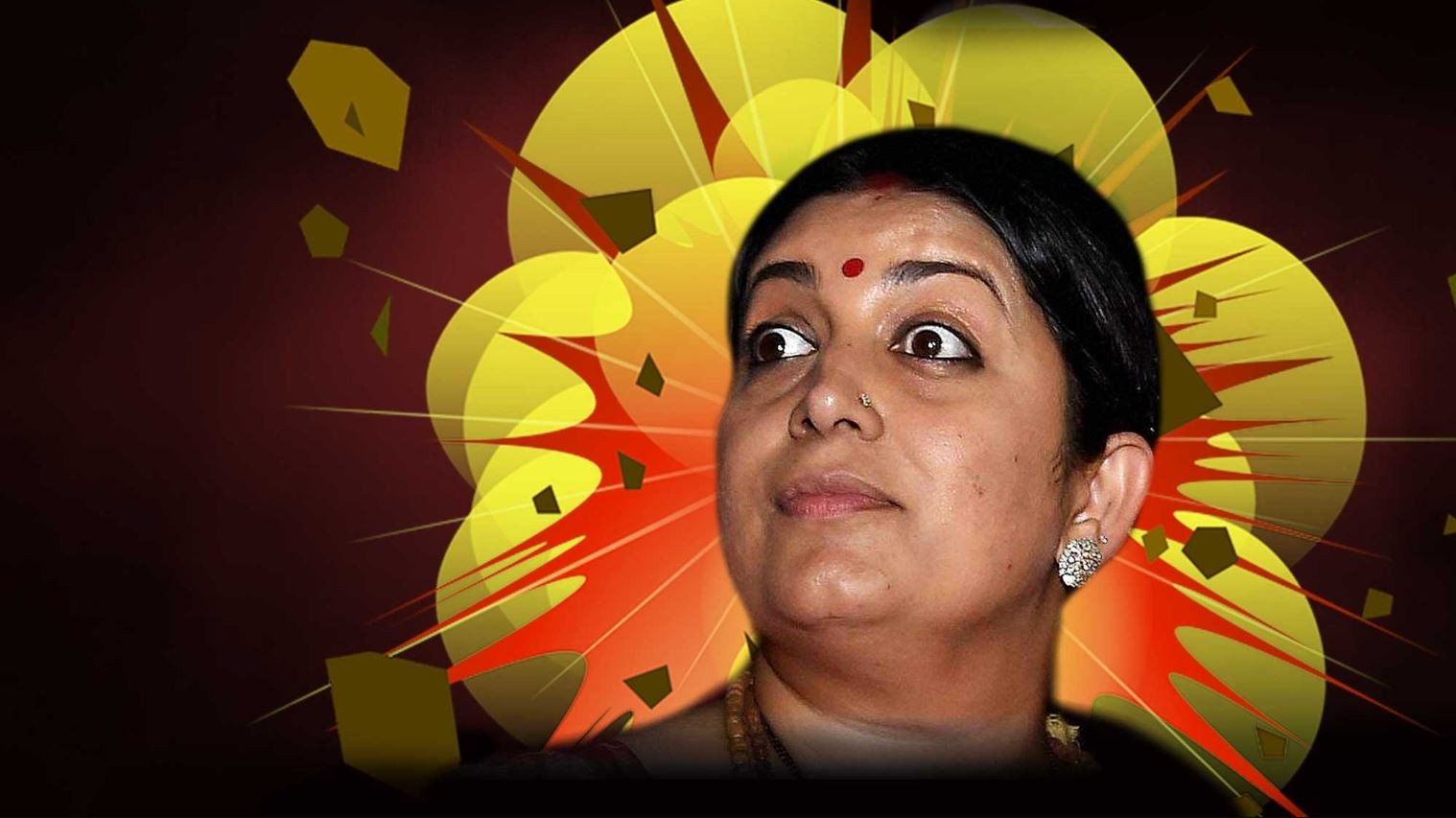
After yet another short tenure as the I&B minister, soap actor-turned-politician Smriti Irani was moved out of the Information and Broadcasting Ministry and left with just the textile ministry portfolio, in a surprise cabinet reshuffle on 14 May.
Irani was assigned the portfolio of the much-coveted Ministry of Human Resources Development after the 2014 general elections – a move that was widely criticised. However, following controversies, the HRD Ministry was wrested out of her control in 2016, and she was moved to helm the Textile Ministry instead.
In 2017, Irani was again awarded the high-profile I&B Ministry. Her appointment as the I&B Minister was the fourth such portfolio offered to her in the then three-year-old Modi government.
Irani's term as an I&B Minister also saw a fair share of controversies. Here is a look at some of the bigger rows that Irani made headlines for.
The National Film Awards Fiasco
The most recent controversy that brought Irani under the spotlight was the change in the tradition of giving away National Film Awards. Irani presented a number of the awards, along with now I&B Minister Rajyavardhan Rathore, instead of the President handing over all the awards to the respective winners.
Following the announcement of departure from tradition a day ahead of the ceremony, over 70 recipients conveyed their intention to not attend the event.
The Rashtrapati Bhavan had meanwhile expressed 'surprise' over the row, stating that the I&B Ministry was aware of the development for several weeks, and had known it all along.
The Fake News Directive
Earlier in April, the Irani-led I&B Ministry issued a 'fake news directive' that drew the ire of the journalism community. The circular said that the government has “amended” the Guidelines for Accreditation of Journalists. On receiving a complaint, the Press Council of India and the News Broadcasters Association were mandated to determine if the news was fake in 15 days, the circular read.
However, immense backlash calling out the circular quickly ensued. From calling it a media gag, to terming it the “death of news”, several journalists expressed their disappointment and anger.
Many journalists were also quick to point out the many times that BJP ministers had themselves endorsed reports that had turned out to be 'fake news'.
Fifteen hours after the directive, Prime Minister Narendra Modi ordered its withdrawal, stating that the matter be addressed by the Press Council of India.
Online News Regulation
Barely out of the 'fake news' row, Irani walked into yet another fresh controversy, when her Ministry issued a circular announcing the formation of a committee that will frame regulations for online media news portals, and online content. This committee is comprised of officials and bureaucrats from the I&B Ministry, National Broadcasting Association, the Press Council of India, and the Indian Broadcasters Federation, among others.
The circular came under fire from various sections of the media, with over a 100 online journalists penning a letter to the Irani, expressing their concerns over the ministry's proposal to extend traditional broadcasting rules and restrictions to the internet.
Prasar Bharati Row
In March, it was revealed that the Prasar Bharati had been paying the salaries of the employees of AIR and DD from its contingency reserves, as the Ministry had not released the funds for January and February.
The perceived strain was due to an alleged stand-off between Irani and the Prasar Bharati over the payment of Rs 2.92 crore as fees to a private firm for the live coverage of the 2017 International Film Festival (IFFI).
However, days later, Irani clarified reports, asserting that the salary funds were not withheld "as a retaliation to Prasar Bharati not obeying certain dictates of the ministry" but because the autonomous body did not sign an MoU with the ministry.
Nude', 'S Durga' Barred from IFFI
The I&B Ministry, in a surprise move, dropped the films 'Nude' and 'S Durga' from the 48th International Film Festival of India (IFFI), despite the two films having featured in the jury's selection. What's more, the jury was kept in the dark over this development, and got to know the change only when the ministry released the final list, sans the two films.
Four months after it was dropped from the IFFI list, ‘S Durga' opened to theatres nationwide on 6 April, after it was cleared by the CBFC Revising Committee. 'Nude' followed suit, with a nation-wide release on 27 April.

-
Ten Things I Learnt This Samvat

Patience can be a trap. Cheap stocks can stay cheap. Leverage can wipe you out. What did Samvat 2082 teach us? Niraj Shah writes on 10 lessons from the year gone by.
-
Talking Points This Week: Tech Nerves, FII Buying, And A Faraway Banking Shock
The global markets are not shining this Diwali. The exception in the large markets is, India.
-
Midterm Rally Lasted A Day. The Hard Reality Of A Divided US May Last Two Years | Opinion
Between a contested AI boom, a debt ceiling that arrives in 2027 and a president with every incentive to act alone, the next two years may prove more volatile than the first day's rally suggests.
-
Blue Wave Will Derail the AI Trade but Won't Dismantle the AI Era | Unhedged Position
The Democrats' sweep of the US Congress will see politics collide with economic forces both over the long and short term.
-
It's Time To Take The GST Council's Bet On Trust Global
Payment records can prove India's services exports, and clear, proportionate rules can bring foreign digital sellers into the tax net.
-
Opinion | India at 38: From Innovation Overperformer to Innovation Powerhouse
India now has 453 VC-backed deep science startups, 18 of them late-stage, after 117 percent growth since 2020. Laurus Labs, at USD 9.3 billion, is the most valuable deep science company in any middle-income economy outside China.
-
Navigating Energy Crossroads: S Jaishankar's Call For Diversified Supply Chains At G20 Ministerial Meeting
As geopolitical fault lines continue to test maritime trade routes and commodity flows, Jaishankar's message remains pertinent: true economic resilience requires open markets, protected transit lines, and a genuine commitment to multilateral cooperation rather than coercion.
-
Indians Are Travelling, But Not Every Journey Is A Holiday | The Week In Whys
Pilgrims, patients and working women are the real travellers, and the system hasn't quite caught up with them.
-
Getting To Work Costs Women More | The Reason Why
It is not just about women paying more than men. It is about women paying much more in cities than in villages.









