Small Successes Are Helping Turn Parched Beed Drought-Resilient
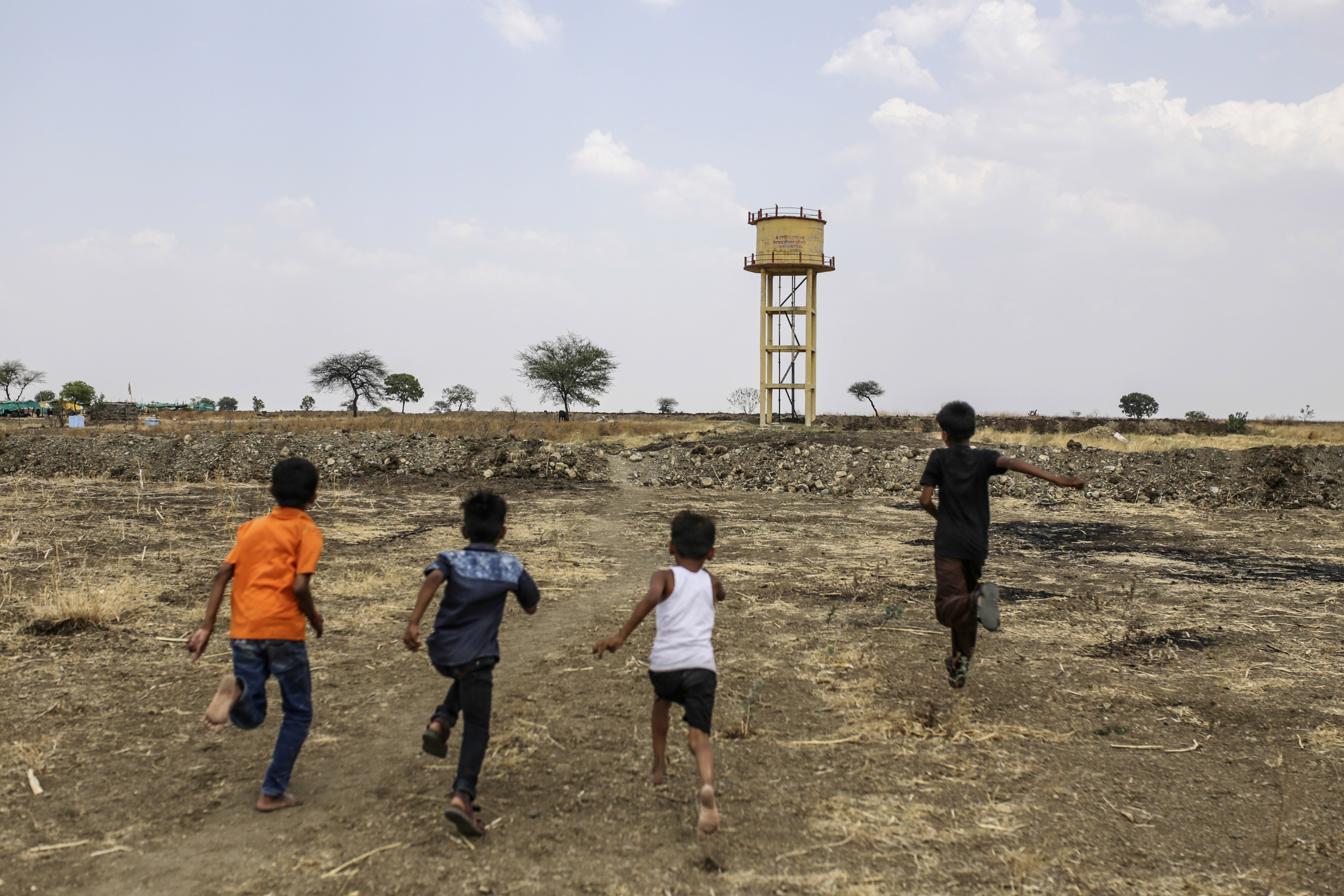
The bed of the Bodhegaon reservoir looks like a playground as the region battles its third drought in five years. The road to the reservoir is lined with tractors waiting to cart the silt away.
“If we put this nutrient-rich silt in our fields, our income will increase,” said Ragunath Gaded, a farmer from local village in Parli taluk of Beed district, about 490 kilometres east of Mumbai. “After using this, we don't need to buy fertilisers. It will help us get a good crop.”
Farmers like Gaded pay Rs 100 a kilometre to carry silt to their farms. Their confidence stems from the success stories of dam desilting projects by Manavlok, a non-government organisation, in 2016. Not only does it provide farmers fertile silt but also increases the capacity of reservoirs so that they retain more water.
That prompted the state to launch the Gaal Mukta Dharan, Gaal Yukt Shivar (silt free dam-silt on farm) scheme last year. The government provides the cost of diesel and NGOs help in the implementation by buying machines for excavation, Astik Kumar Pandey, Beed district collector, told BloombergQuint. Besides Manavlok, the Bharatiya Jain Sanghatana is involved this time, he said.

Beed, where farmers grow cotton, soybean, jowar and pomegranate at the onset of the monsoon, falls in a rain shadow. It received deficient rainfall in the past 10 years, punctuated by three droughts in 2013, 2016 and 2018. Most reservoirs are dry or in dead storage and water can't be drawn. The scheme aims to ensure that there is enough water for irrigation even if monsoon rains are uneven.
The amount of silt excavated from the dam creates three times the storage capacity, said Amit Chandra, managing director of Bain Capital, whose A.T.E Chandra Foundation along with Caring Friends has been working with Manavlok since 2015 for drought relief. “Rather than spending hundreds of crores in building new dams, in less than a few lakh rupees we are creating a huge amount of water storage capacity. This is done in a very environment friendly manner.”
They have adopted seven drought-hit districts in the state through partners like Manavlok. Aniket Lohia, Secretary at the NGO, said they desilted 8,64,584 cubic meters of silt from 36 dams in 14 blocks of six districts of Marathwada last year under the scheme. “In 2019, we have plans to adopt Beed district and excavate more than 4 million cubic metres.”
Lohia said the initiative has helped cart out more than 2 million cubic metres of silt from 50 dams over the last four years. One of Manavlok's success stories is the dam at Moha village in Parali Taluka of Beed, from where the NGO helped remove about 50,000 cubic metres of silt. That helped increase the water storage capacity of the reservoir and farmers who carted the silt to their farms reported a better produce.
“My 2.5-acre farm produced under 20 quintals of cotton. After using the silt, it jumped to 60 quintals,” said Mahadev Tavre, a farmer in Moha. “My income jumped threefold.”
As the dam now provides more water, Tavre has started planting bananas—a crop that needs high amounts of water.

The Moha dam desilting project led to the Gaal Mukta Dharan, Gaal Yukt Shivar.
The desilting in Beed aims to replicate that success. But the real benefit, said Lohia, will be visible once the region gets good rains.

-
Navigating Energy Crossroads: S Jaishankar's Call For Diversified Supply Chains At G20 Ministerial Meeting

As geopolitical fault lines continue to test maritime trade routes and commodity flows, Jaishankar's message remains pertinent: true economic resilience requires open markets, protected transit lines, and a genuine commitment to multilateral cooperation rather than coercion.
-
Indians Are Travelling, But Not Every Journey Is A Holiday | The Week In Whys
Pilgrims, patients and working women are the real travellers, and the system hasn't quite caught up with them.
-
Getting To Work Costs Women More | The Reason Why
It is not just about women paying more than men. It is about women paying much more in cities than in villages.
-
AI Bias In Investing Cannot Be Eliminated, But It Can Be Governed
Framing is a particularly important example as identical financial information presented in terms of gains rather than losses can lead an LLM to reach a different assessment.
-
Joining The Dots | Dark Skies, Steady Diya: Why Hope Holds This Diwali
With war, a weak rupee and foreign outflows weighing on sentiment, policymakers at the NDTV World Summit and market veterans at NDTV Profit Ignite: Diwali Edition offered the same advice: stay invested and filter out the noise.
-
The Curious Case of Equitas Small Finance Bank And A CEO Who Quit For Stock
PN Vasudevan believes persistent investor concerns over a perceived conflict of interest had become a governance overhang on Equitas Small Finance Bank's stock, even as the lender improved profitability and asset quality.
-
Talking Points This Week: AI Cash Burn, A Tiger Comeback And An India That Still Finds Its Own Path
India is not immune to higher oil or tighter global liquidity, yet its earnings base is broader, its domestic policy levers are still available.
-
Foreign Investors Own Half Of HDFC Bank and ICICI Bank. An LTCG Cut Could Matter Most Here
Foreign portfolio investors have US$115 billion parked in HDFC Bank, ICICI Bank. If the government cuts long-term capital gains tax, Jefferies says returning foreign money could land here first.
-
'Never Seen This Level Of Negativity': Sandeep Tandon Says The Next Rally May Be Closer Than You Think
Veteran investor Sandeep Tandon says foreign selling is easing, large-caps are due a comeback and mid-caps are crowded, while he turns positive on gold, power and pharma this Diwali.
-
Indians Stay With Family, Not In Hotels | The Reason Why
India still lacks enough clean, reliable and affordable hotels for budget-conscious travellers.










