Did Shujaat Bukhari’s Peace Bid at A Dubai Conference Prove Fatal?
Early last Sunday morning, Shahid Khan headed out to his father's small paddy field outside the village of Chrengpora Banyari, to watch over the ripening crop. Three men were waiting for him in the woods on the edge of the fields, armed with knives and an assault rifle. Khan would have known he'd walked to his death: in the weeks since Ramzan began last month, other men charged with collaborating with the Indian state have had their throats slit by a local Lashkar-e-Taiba unit.
But then, something unusual happened: dozens of villagers mobbed the attackers, forcing them to release Khan.
The Chrengpora Banyari protests were exactly the kind of event New Delhi and Chief Minister Mehbooba Mufti hoped to catalyse when they ordered a suspension of counter-terrorism combat through the month of Ramzan. The idea was to build a constituency against violence, giving space to politicians and the administration to operate normally.
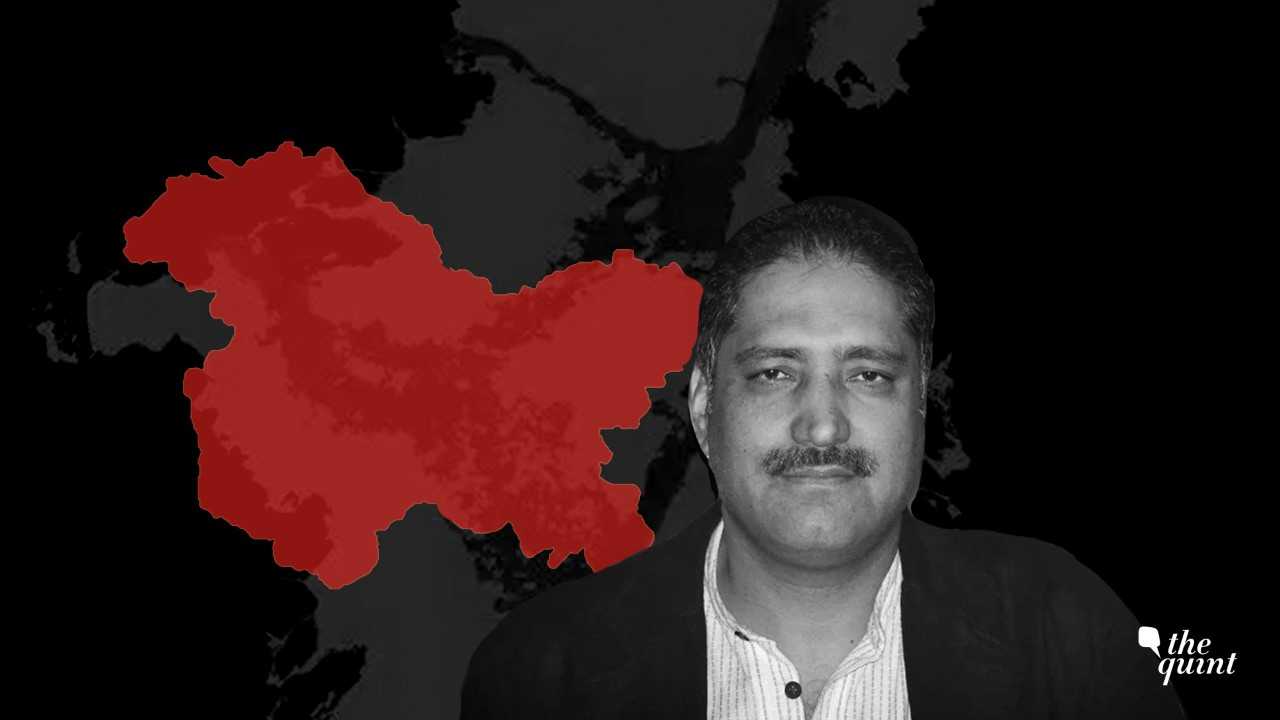
On the last day of Ramzan, Shujaat Bukhari was assassinated in broad public view.
Bukhari's Assassination and PDP's Changed Politics
Now, as Indians struggle to comprehend the assassination of Shujaat Bukhari, the less-than-roseate reality of the Ramzan ceasefire is impossible to ignore – a ceasefire the Rising Kashmir editor was a key advocate of.
Behind the killing is a paradox: the ceasefire which peace advocates like Bukhari sought, comes with a price; a price in blood higher than the war it seeks to end.
To understand Bukhari's assassination, one needs to comprehend efforts by Kashmir's political class to rein-in the Islamist-leaning jacquerie that erupted in 2016. Faced with the desertion of its core constituency among South Kashmir's small-town bourgeoisie – a consequence of its decision to ally with the Bharatiya Janata Party – the People's Democratic Party found its political empire crumbling. In 2002, the party had profited from the Hizb-ul-Mujahideen's targeted assassination of National Conference workers; now, it was at the receiving end.
Faced with this crisis, the PDP, along with elements of Kashmiri civil society concerned with the near-anarchy that had descended on the state, sought to quietly build a way forward.
Fateful Dubai Conference
Late in July last year, British NGO Conciliation Resources invited Kashmiri leaders from both sides of the Line of Control to attend a conference in Dubai, which ended with an unanimous call that “cessation of hostilities be ensured on all sides”. It also called for India and Pakistan to end shelling on the Line of Control, by reviving the ceasefire agreement arrived at by Prime Minister Atal Bihari Vajpayee and General Pervez Musharraf.
The conference included a wide spectrum of opinion on both sides of Kashmir. Apart from journalists Bukhari, Zahir-ud-Din and Iftikhar Geelani, the pro-secession human rights activist Khurram Parvez, National Conference leader Nasir Aslam Wani, the Congress' GN Monga, and Bharatiya Janata Party's Vikram Randhawa were participants.
From the Pakistani side of Kashmir, Islamist politician Abdul Rashid Turabi, All Parties Hurriyat Conference leader Syed Faiz Naqashbandi and the secessionist-leaning commentator Irshad Mehmood.
The core of the PDP's agenda had been the idea that ethnic Kashmiri jihadists could be brought back into democratic politics with the right kind of incentives — an objective which had led the party to tacitly engage with Hizb-ul-Mujahideen operatives after 2002.
Now, the PDP hoped it could get the deal going again, and in New Delhi many were willing to take the chance, hoping it could still the protests in Kashmir.
Hizb & Lashkar Jointly Condemn ‘Traitors'
Like its many earlier variants, the peace bid was fated to fail. In an interview, the Hizb-ul-Mujahideen supremo Muhammad Yusuf Shah – who prefers to use the pseudonym Syed Salahuddin – lashed out at the participants, saying while “funerals were being held in Kashmir, they were backstabbing the tehreek [movement] in the back”.
“Those who participated in the conference,” the Hizb chief railed, “are working on someone's payrolls.”
The Lashkar-e-Taiba joined in, warning “humanitarian mission workers to not get themselves played in the hands of perpetrators but to the righteous cause”.
There was more than some irony to these claims of treachery: Shah's oldest son, as I had first reported back in 2002, had been illegally given admission to a medical school with the help of the state government and Intelligence Bureau; the other four sons were all government servants, too.
But for younger Kashmiri jihadists, driven by the conviction that the 2016 uprising marked an inexorable turning point in their struggle, Bukhari's peace bid was betrayal.
In pro-jihadist blogs, Bukhari was reviled. In a series of incendiary articles, one blog charged him with accepting Indian government funding for his newspapers, conspiring with National Security Advisor Ajit Doval, and being among a group of “touts who are betraying the Kashmir struggle”.
Little evidence exists that any of these allegations was true. Former Chief Minister Omar Abdullah's government squeezed Bukhari's newspaper's advertising for years, seeing it as pro-secessionist. Indeed, Bukhari was reviled by Hindutva groups for religious chauvinism and secessionist sympathies.
Peace? Back Off!
To the credit of its advocates, the threats didn't end the peace bid. In early May, Bukhari met with ex-members of the jihadist group al-Jihad in an effort to drum up support for a ceasefire, government sources familiar with the discussions told The Quint. Faced with the slaughter of record numbers of district-level commanders in one of the most successful Kashmir Police counter-offensives in recent years, some local Hizb-ul-Mujahideen leadership also began to reach out
Like in 2000, when Shah resiled on a ceasefire deal when faced with Inter-Services Intelligence anger and the prospect his subordinates in the field might cut independent deals, the jihadist leadership didn't want politicians in their play-pen.
The brother of an influential PDP politician, well connected to the ruling party, Bukhari's assassination was an obvious – and easy – medium to send a “back-off” message to the chief minister.
Not Just Shujaat
The case of the Hajin farmer who narrowly escaped death illustrates that such messages have been widespread during the Ramzan ceasefire, helped along by the fact that the cessation of offensive operations have let perpetrators embed themselves in rural communities. In Hajin, much of the killing is attributed by the Kashmir Police to the Lashkar-e-Taiba's Salim Parrey. Local resident Parrey, villagers say, has spent Ramzan with relatives in the area; his victims have had to flee.
Parrey's story also helps understand why terrorist recruitment in Kashmir won't be helped by simplistic appeals to peace. The soldiers of the jihad, unlike politicians, do not see violence as a means for tactical gain. Instead, they nurse deep commitment to the idea that killing is the building block for a new, religious-utopian order.
The son of a government sericulture department employee, and a member of a family with substantial landholdings, Parrey dropped out of school after the tenth grade to set up a small truck mechanic's business in Hajin. Parrey was, family sources say, something of a disappointment to the family: his younger brother, Muhammad Azhar, holds a master's degree in Economics, and is studying to become a civil servant.
Even as he worked at his mechanic's shop – and occasionally hatched plans to find a job in Dubai – he began to find respect and agency in political Islam. The mechanic's journey into the Lashkar, friends say, began with religious studies, and the exploration of jihadist texts online. The violence of 2016 led him to finally join the Lashkar, but he was committed to the jihadist ideal long before then.
Finding means to engage a generation of alienated youth cohort is less easy—especially given Kashmir's dysfunctional political leadership, much of it in office for no other reason than their fathers' careers. It may well be that there is no short-term fix, especially given the lack of means New Delhi has to coerce Pakistan into terminating the activities of jihadist groups across the Line of Control.
In 2007, the Hizb's Shah told the newspaper Jasarat that Kashmir will “only be freed through jihad, not dialogue.” Ten years on, he continues to be able to impose that belief. The Ramzan ceasefire demonstrated that the god of war cannot be appeased with showy rituals and sacrifices. New Delhi needs genuinely new strategies in Kashmir, not endless iterations of its past journeys to failure.
(The writer is a senior journalist and author. He can be reached at @praveenswami. This is an opinion piece and the views expressed are the author's own. The Quint neither endorses nor is responsible for the same)

-
High US Salaries, No Green Card Certainty: The Financial Calculation Facing Indian H-1B Families

The suspension of PERM processing at eight technology employers does not cancel existing H-1B visas. What it does is force a question many Indian families have been avoiding: is the US salary worth tying your career and family plans to one employer?
-
Swiggy vs Eternal: Food Delivery's Two Rivals Are No Longer In The Same Race
Eternal is building a private AI assistant, dark.ai. Swiggy is still working out how to make Instamart pay, with an operating loss of Rs 895 crore in the July-September quarter while Blinkit stayed profitable.
-
Where You Live Shapes How You Get To Work | The Reason Why
Two-wheelers are the most popular way to get to work in India, accounting for nearly 43% of workplace commutes.
-
Unhedged Position: Can India See An Indonesia-Style Time Correction?
The Nifty is trading below levels it first clocked in 2024. Is there, then, as I have suggested in the headline, potential that the current time correction drags on painfully for the next three-five, even ten years?
-
Navigating Friction And Energy Realities: An Analysis Of Marco Rubio's October Visit To India
Occurring at a critical juncture marked by stalled trade negotiations and escalating geopolitical pressures over global energy supplies, the visit offers a profound window into modern US-India relations.
-
India Exports Capital. Why Not Export Trusteeship?
The big question, then, is whether India can build an institution that global borrowers, investors, banks, and lawyers can trust, even without an Indian connection.
-
France's Economy & Politics Are In Crisis | The Reason Why
Let's look at how the French economy and politics evolved under Nicolas Sarkozy, Franois Hollande and Emmanuel Macron.
-
You May Inherit The Business. You Must Earn Its Credibility.
Succession tests the founder's ability to share authority as much as it tests the next generation's readiness to assume it.
-
Signing Deals Is One Thing; Making Them Work Is Another | The Week In Whys
Sometimes, things don't turn out as planned. Indian companies have lost some bids to rivals, some projects won't produce until 2030.
-
FOMC Wall, PERM Suspension, Hospital Stocks | Talking Points This Week
A PERM suspension would directly affect green-card sponsorship rather than H-1B visas, so the near-term earnings impact could remain relatively limited. The key question is whether this marks a new phase in US scrutiny of Indian IT.









