Sarfaesi Act Applicable To Cooperative Banks, Rules Supreme Court
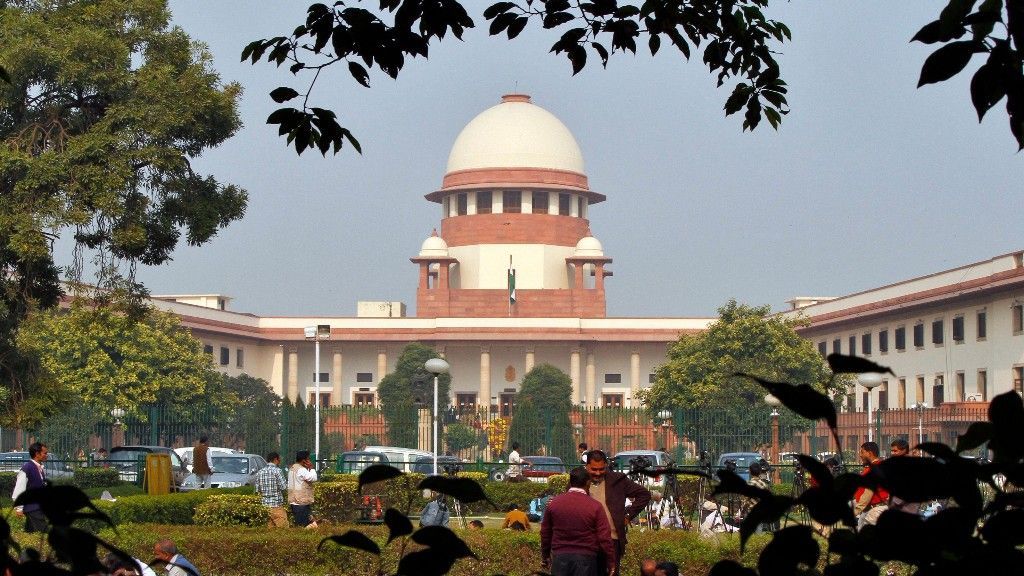
A five-judge constitution bench of the Supreme Court of India today ruled that the provisions of the Securitisation and Reconstruction of Financial Assets and Enforcement of Security Interest Act, 2002, will be applicable to state and multi-state cooperative banks.
The ruling by a bench headed by Justice Arun Mishra came in a case that challenged the Parliament's decision to amend Section 2(c) of the Sarfaesi Act—which allows banks and financial institutions to seize and auction properties of defaulters to recover their dues—and include cooperative banks among those who can exercise powers under the Act.
With this judgment, state and multi-state cooperative banking societies can now seize and sell assets to recover their dues. The top court bench in its judgment also held that state and multi-state cooperative banks will fall under the definition of banks under the provisions of the Banking Regulation Act.
“The cooperative banks under the state legislation and multi-state cooperative banks are ‘banks' under section 2(1)(c) of Securitisation and Reconstruction of Financial Assets and Enforcement of Security Interest Act, 2002,” the judgment said. “The recovery is an essential part of banking; as such, the recovery procedure prescribed under section 13 of the SARFAESI Act, a legislation relatable to Entry 45 List I of the Seventh Schedule to the Constitution of India, is applicable.”
The case had been referred to the constitution bench after earlier conflicting decisions on this issue emerged in the cases of Greater Bombay Coop. Bank Ltd. v. United Yarn Tex (P) Ltd and Union of India and Anr. v. Delhi High Court Bar Association.
In today's judgment, the top court upheld the 2003 notification which brought co-operative banks under the ambit of banks entitled to seek recourse under the Sarfaesi Act.
Prior to this, cooperative banks had to approach civil court or tribunals for recovery of dues. The Sarfaesi Act brought a procedure through which recoveries could be made by banks without the intervention of the court/tribunal.
The apex court's judgment notes that the aim behind this move was to remove the delays caused by going through the civil court or summary procedure under the Cooperative Societies Act.
“It's permissible for the Parliament to enact the law to provide recovery procedures for bank dues that have been done by providing speedy recovery of secured interest without intervention of the court/tribunal,” it said.
The other judges on the bench that delivered today's judgment include Justice Indira Banerjee, Justice Vineet Saran, Justice MR Shah and Justice Aniruddha Bose.

-
Ten Things I Learnt This Samvat

Patience can be a trap. Cheap stocks can stay cheap. Leverage can wipe you out. What did Samvat 2082 teach us? Niraj Shah writes on 10 lessons from the year gone by.
-
Talking Points This Week: Tech Nerves, FII Buying, And A Faraway Banking Shock
The global markets are not shining this Diwali. The exception in the large markets is, India.
-
Midterm Rally Lasted A Day. The Hard Reality Of A Divided US May Last Two Years | Opinion
Between a contested AI boom, a debt ceiling that arrives in 2027 and a president with every incentive to act alone, the next two years may prove more volatile than the first day's rally suggests.
-
Blue Wave Will Derail the AI Trade but Won't Dismantle the AI Era | Unhedged Position
The Democrats' sweep of the US Congress will see politics collide with economic forces both over the long and short term.
-
It's Time To Take The GST Council's Bet On Trust Global
Payment records can prove India's services exports, and clear, proportionate rules can bring foreign digital sellers into the tax net.
-
Opinion | India at 38: From Innovation Overperformer to Innovation Powerhouse
India now has 453 VC-backed deep science startups, 18 of them late-stage, after 117 percent growth since 2020. Laurus Labs, at USD 9.3 billion, is the most valuable deep science company in any middle-income economy outside China.
-
Navigating Energy Crossroads: S Jaishankar's Call For Diversified Supply Chains At G20 Ministerial Meeting
As geopolitical fault lines continue to test maritime trade routes and commodity flows, Jaishankar's message remains pertinent: true economic resilience requires open markets, protected transit lines, and a genuine commitment to multilateral cooperation rather than coercion.
-
Indians Are Travelling, But Not Every Journey Is A Holiday | The Week In Whys
Pilgrims, patients and working women are the real travellers, and the system hasn't quite caught up with them.
-
Getting To Work Costs Women More | The Reason Why
It is not just about women paying more than men. It is about women paying much more in cities than in villages.









