Firebrand Ex-Premier Wins In Slovakia In Fresh Blow To EU Unity
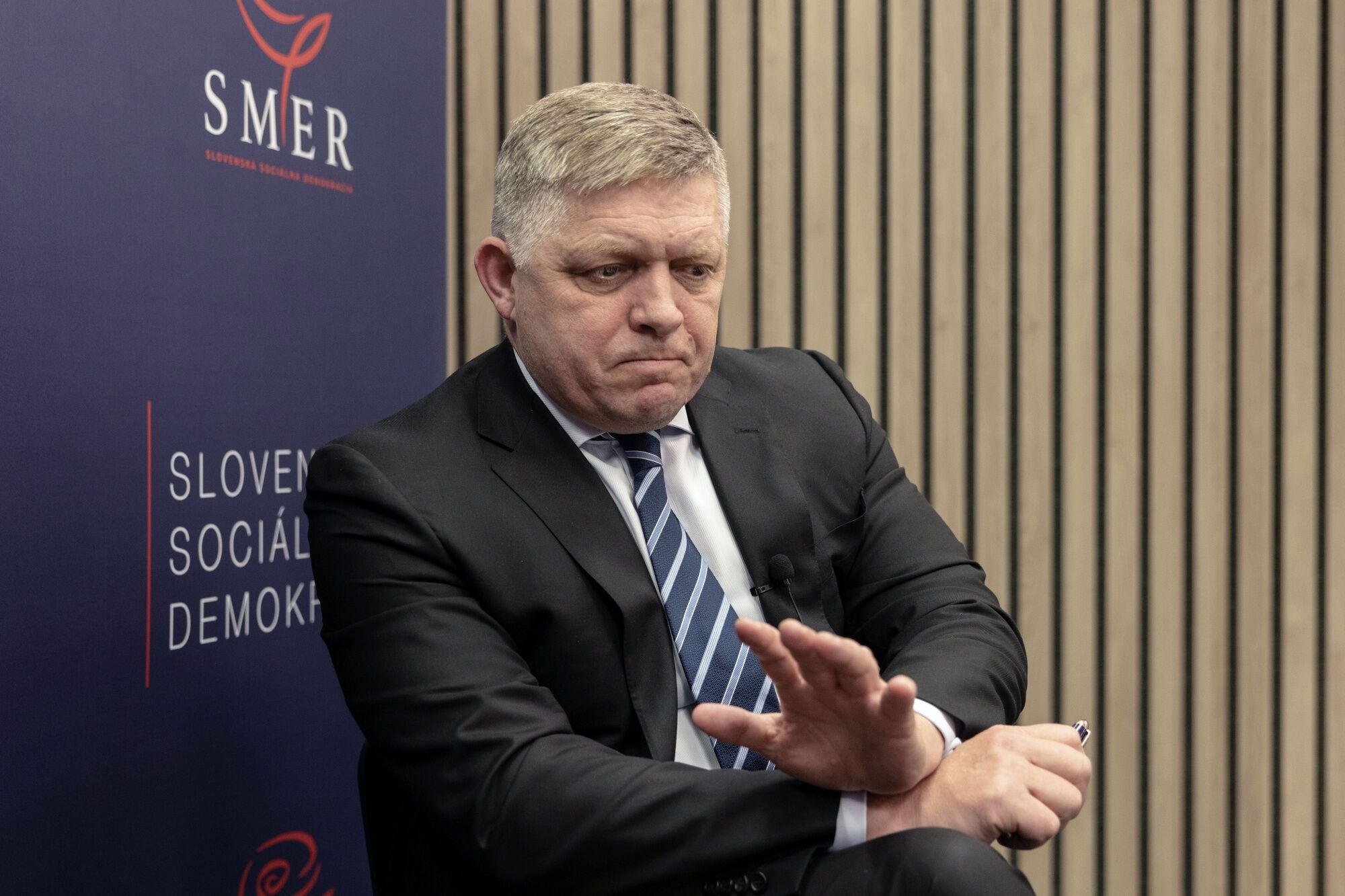
(Bloomberg) -- A former prime minister who's derided the European Union's sanctions against Russia and pledged to end military aid to Ukraine won Slovakia's election, delivering a fresh blow to Western unity.
Robert Fico looked on track to return to the eastern EU nation's premiership after Saturday's vote, adding to the tide of nationalist and populist forces in Europe. The parties have have gained traction by tapping into voters' frustration over the lingering impact of Covid pandemic, the region's cost-of-living crisis, and fatigue over the war in Ukraine.
The result especially deepens the wedge among allies on assistance to Kyiv. As the votes were counted in Slovakia, US lawmakers omitted some $6 billion in Ukrainian aid as part of a last-minute bid to avoid a government shutdown — showing that funding more US support is becoming harder. Hungary, which has blocked EU military aid, balked this weekend at Ukrainian overtures to unlock funds.
“Robert Fico is a complication for the EU — they won't have it easy with him,” said Mikulas Hanes, head of research at pollster NMS Slovakia.
Fico's Smer party secured 22.9% of the vote, well ahead of main rival Progressive Slovakia, which had 18%, according to the Statistics Office. The next EU test will be in Poland on Oct. 15, when the nationalist Law & Justice party seek a third term.
The dominant political figure in the eastern European nation of 5.4 million since the fall of communism, 59-year-old Fico made his pitch with a pledge to boost social spending and challenge EU policy on issues ranging from migration to security to climate.
He resigned in 2018 after a burst of public outrage following the killing of an investigative reporter who probed corruption in Slovakia. The Smer leader served for a decade over three terms after first elected in 2006.
Fico's return dashed the hopes of Progressive Slovakia, a pro-EU party that campaigned to preserve the country's trans-Atlantic orientation. Polls in the final weeks of the campaign showed them closing the gap, while exit polls late Saturday had the party with a slim edge.
‘Guess Who's Back!'
Fico will still need to find partners to form a government. Although Slovakia's fractious politics makes coalition building a challenge, Smer has potential partners in Voice, led by his successor as premier, Peter Pellegrini, and the Slovak National Party, which has opposed migration and LGBTQ rights. The three parties would have a majority.
Progressive Slovakia also has a path to a majority, but it would involve a potentially unwieldy coalition of multiple parties.
An ally of Hungarian Prime Minister Viktor Orban, Fico has tapped into anxiety in an electorate that is among the most pro-Russian in the 27-member bloc. He was abetted by a social media campaign that included several false claims, making the election a test case for new EU legislation that aims to staunch the spread of illegal or harmful online content.
“Guess who's back!” Orban posted on social media platform X, formerly Twitter, early Sunday, congratulating Fico: “Always good to work together with a patriot.”
In his previous stints as premier, Fico's rhetoric was stronger than his actions when it came to the EU — taking a hard line with a domestic audience, while showing a measure of pragmatism in Brussels.
“He'll pick up his battles carefully, because he'll need European funds,” said Milan Nic, a senior research fellow at the German Council on Foreign Relations.
Slovakia has a track record of political tumult and fractious coalitions, with nine governments since it entered the EU in 2004. Party infighting helped bring down the cabinet of Prime Minister Eduard Heger late last year, an alliance that was elected in 2020 to tackle corruption.
A new government will have to grapple with a widening budget deficit in Slovakia's $115 billion economy. The euro-area member will need to secure as much as €10 billion ($10.6) from financial markets next year.
Once a Social Democratic reformer, Fico has embraced a populist wave that's swept Europe — denouncing asylum seekers, opposing Ukraine's NATO aspirations, and deriding Slovakia's reformist president, Zuzana Caputova, as an “American agent.”
More stories like this are available on bloomberg.com
©2023 Bloomberg L.P.

-
Ten Things I Learnt This Samvat

Patience can be a trap. Cheap stocks can stay cheap. Leverage can wipe you out. What did Samvat 2082 teach us? Niraj Shah writes on 10 lessons from the year gone by.
-
Talking Points This Week: Tech Nerves, FII Buying, And A Faraway Banking Shock
The global markets are not shining this Diwali. The exception in the large markets is, India.
-
Midterm Rally Lasted A Day. The Hard Reality Of A Divided US May Last Two Years | Opinion
Between a contested AI boom, a debt ceiling that arrives in 2027 and a president with every incentive to act alone, the next two years may prove more volatile than the first day's rally suggests.
-
Blue Wave Will Derail the AI Trade but Won't Dismantle the AI Era | Unhedged Position
The Democrats' sweep of the US Congress will see politics collide with economic forces both over the long and short term.
-
It's Time To Take The GST Council's Bet On Trust Global
Payment records can prove India's services exports, and clear, proportionate rules can bring foreign digital sellers into the tax net.
-
Opinion | India at 38: From Innovation Overperformer to Innovation Powerhouse
India now has 453 VC-backed deep science startups, 18 of them late-stage, after 117 percent growth since 2020. Laurus Labs, at USD 9.3 billion, is the most valuable deep science company in any middle-income economy outside China.
-
Navigating Energy Crossroads: S Jaishankar's Call For Diversified Supply Chains At G20 Ministerial Meeting
As geopolitical fault lines continue to test maritime trade routes and commodity flows, Jaishankar's message remains pertinent: true economic resilience requires open markets, protected transit lines, and a genuine commitment to multilateral cooperation rather than coercion.
-
Indians Are Travelling, But Not Every Journey Is A Holiday | The Week In Whys
Pilgrims, patients and working women are the real travellers, and the system hasn't quite caught up with them.
-
Getting To Work Costs Women More | The Reason Why
It is not just about women paying more than men. It is about women paying much more in cities than in villages.









