Reliance Capital Insolvency: NCLT Rejects Axis Bank's Application
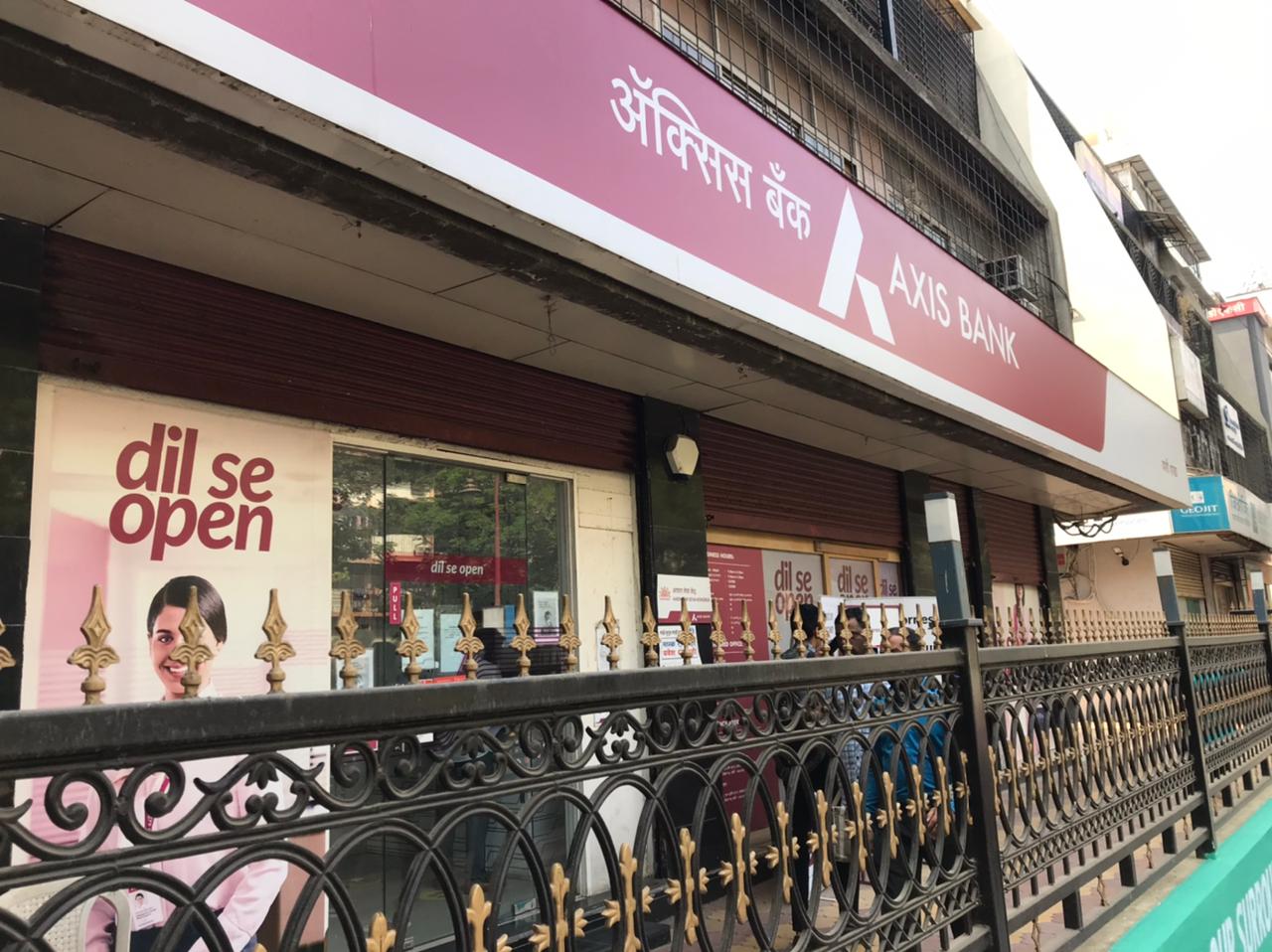
National Company Law Tribunal on Friday rejected Axis Bank Ltd.'s claim to be recognised as a financial creditor of Reliance Capital Ltd.
An indemnity wouldn't constitute financial debt, the order said. The bank has failed to prove any disbursement of money to the corporate debtor and, therefore, the question of default on their part does not arise, says the order.
Disbursement is a sine qua non for any debt to fall within the ambit of the definition of financial debt.NCLT Mumabi Order
Reliance Capital, on its failure to repay its lenders, went into insolvency in 2021. These include 1,670 financial creditors and 18 operational creditors with major names such as Reliance Home Finance Ltd., and IndusInd Bank Ltd. The superseded the proceedings and Nageswar Rao Y was appointed as the administrator.
Axis Bank approached the administrator for recognition of their claim as financial debt in December 2021 and again in February 2022, which was rejected by the administrator. The bank approached the National Company Law Tribunal, Mumbai seeking recognition as a financial creditor for its claim of Rs 145 crore.
The claim arose from a tripartite obligor undertaking between the bank, Reliance Capital and Reliance Housing Finance Ltd. Reliance Capital had agreed to utilise its stake in Nippon Life Asset Management Ltd. for the repayment of commercial paper issued by RHFL. The bank was a subscriber to a part of the commercial paper worth Rs 124 crore. Reliance Housing Finance had failed to meet the redemption schedule despite several extensions.
The insolvent company, despite diluting its stake in Nippon Life Management, failed to redeem it. Then, Reliance Capital was admitted to insolvency and Axis Bank filed an application seeking recognition of the claim, which the administrator rejected calling it a mere "undertaking".
The court order said the insolvent company had no commercial interest in the commercial paper and Axis Bank's claim that the undertaking constitutes a financial debt does not hold. As the indemnity guaranteed under the undertaking relates to a breach of agreement and not the issue of commercial paper, such an indemnity can't be recognised as financial debt, the order said.
The court also pointed out that the insolvent company has not acknowledged the "undertaking" as a liability in any of its books and, therefore, it cannot be construed as financial debt as per the code.

-
Love, Sex Aur Dhokha: The Audacious Plot To Spy On Jensen Huang

A Taipei dinner, a Singapore chip buyer and a suspected Chinese asset: inside the alleged spy operation that got close to NVIDIA's Jensen Huang.
-
Ten Things I Learnt This Samvat
Patience can be a trap. Cheap stocks can stay cheap. Leverage can wipe you out. What did Samvat 2082 teach us? Niraj Shah writes on 10 lessons from the year gone by.
-
Talking Points This Week: Tech Nerves, FII Buying, And A Faraway Banking Shock
The global markets are not shining this Diwali. The exception in the large markets is, India.
-
Midterm Rally Lasted A Day. The Hard Reality Of A Divided US May Last Two Years | Opinion
Between a contested AI boom, a debt ceiling that arrives in 2027 and a president with every incentive to act alone, the next two years may prove more volatile than the first day's rally suggests.
-
Blue Wave Will Derail the AI Trade but Won't Dismantle the AI Era | Unhedged Position
The Democrats' sweep of the US Congress will see politics collide with economic forces both over the long and short term.
-
It's Time To Take The GST Council's Bet On Trust Global
Payment records can prove India's services exports, and clear, proportionate rules can bring foreign digital sellers into the tax net.
-
Opinion | India at 38: From Innovation Overperformer to Innovation Powerhouse
India now has 453 VC-backed deep science startups, 18 of them late-stage, after 117 percent growth since 2020. Laurus Labs, at USD 9.3 billion, is the most valuable deep science company in any middle-income economy outside China.
-
Navigating Energy Crossroads: S Jaishankar's Call For Diversified Supply Chains At G20 Ministerial Meeting
As geopolitical fault lines continue to test maritime trade routes and commodity flows, Jaishankar's message remains pertinent: true economic resilience requires open markets, protected transit lines, and a genuine commitment to multilateral cooperation rather than coercion.
-
Indians Are Travelling, But Not Every Journey Is A Holiday | The Week In Whys
Pilgrims, patients and working women are the real travellers, and the system hasn't quite caught up with them.









