Get Ready For A Global Geopolitical Depression

2018 will be the geopolitical equivalent of the 2008 financial meltdown, forecasts Eurasia Group, a political risk consulting firm.
Its president and well-known political scientist, Ian Bremmer, had correctly forecast some eight years ago that we'd be living in a G-Zero world. A world characterised by a decline in Western power and a leadership vacuum.
This year Bremmer teams up with the firm's chairman Cliff Kupchan to warn that the “global order is unraveling”.
The report starts with a comment that presents an uncomfortably real picture of our world.
“The scale of the world's political challenges is daunting. Liberal democracies have less legitimacy than at any time since World War II, and most of their structural problems don't appear fixable. Today's strongest leaders show little interest in civil society or common values.”
It then warns that the decline of U.S. influence in the world will accelerate in 2018.
After nearly a decade of a slowly destabilising G-Zero framework, the election of Donald Trump as U.S. president has accelerated the descent into a Hobbesian state of international politics. The world is now closer to geopolitical depression than to a reversion to past stability.Top Risks 2018 - Eurasia Group
Top 10 Risks In 2018
The Eurasia Group reports lists them as
- China loves a vacuum
- Accidents
- Global tech cold war
- Mexico
- U.S.-Iran relations
- The erosion of institutions
- Protectionism 2.0
- United Kingdom
- Identity politics in southern Asia
- Africa's security
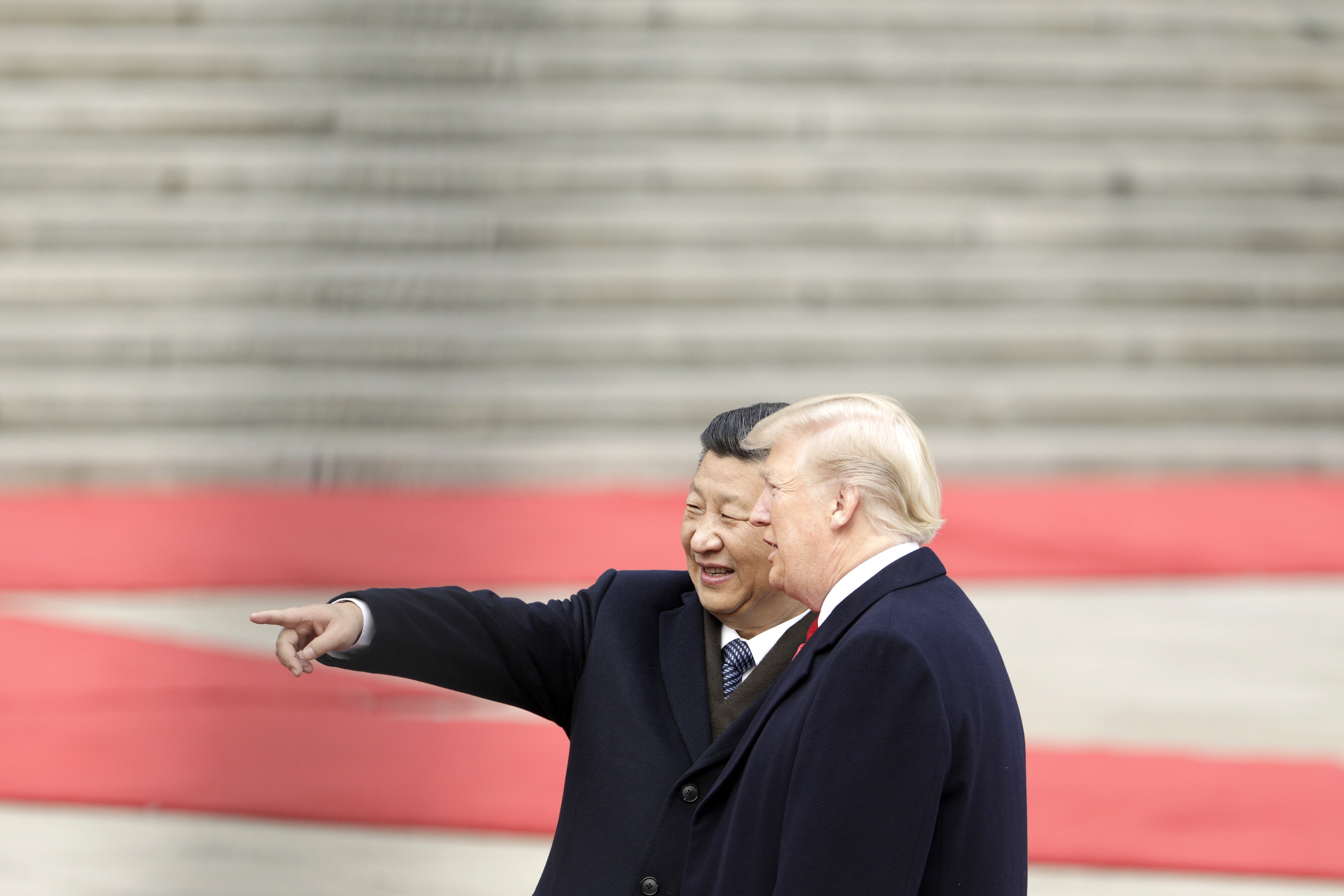
Unsurprisingly China, its economic might and its hunger for political and technological might, permeates almost all ten risks.
The Most Interesting Bits
China Loves A Vacuum
In describing the very first (or topmost) risk the report points to an inversion that has crept up on the world.
“For decades, many in the West have assumed that the emergence of a Chinese middle class would force China's leaders to liberalize the country's politics in order to survive. Instead, China's political model, despite its domestic challenges, is now perceived as stronger than it has ever been - and at a moment when the U.S. political model is weakened.”
Thus resulting in the opportunity for China to set international standards in global trade, technology and exporting the political value of “non-interference in other countries' affairs”. But that very same last point could also limit it to being a regional power. And, that China plays no role in fighting global terrorism.
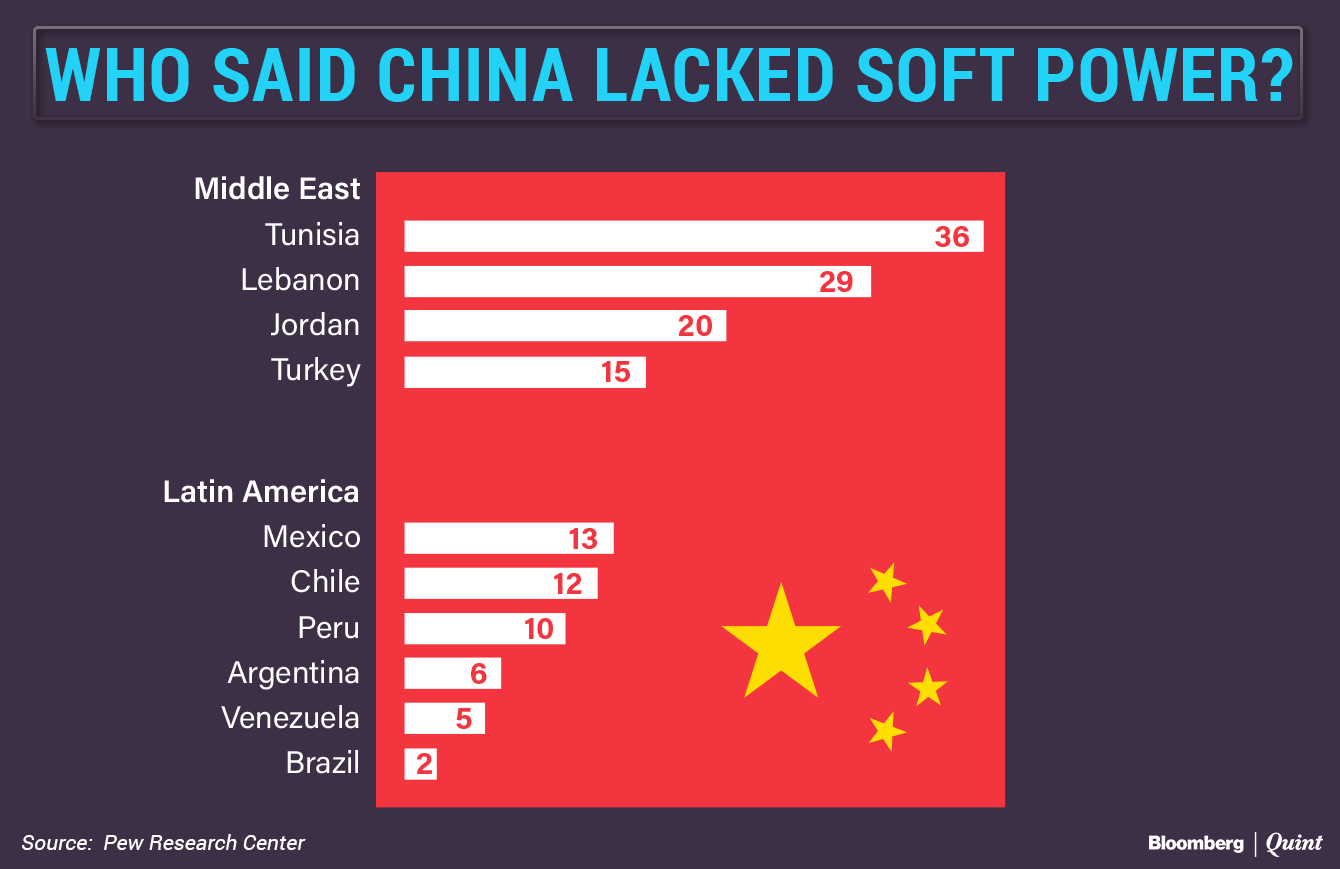
These countries view China more favourably than they view the U.S. (difference shown in percentage points)
Asia's largest and most developed countries—Japan, India, Australia, and to a lesser extent South Korea -- will see Xi's agenda as a threat to their democratic-capitalist model. This dynamic could lead to a lot more friction in the South China Sea, over North Korea, and in U.S.-Chinese trade relations.Top Risks 2018 - Eurasia Group
Global Tech Cold War
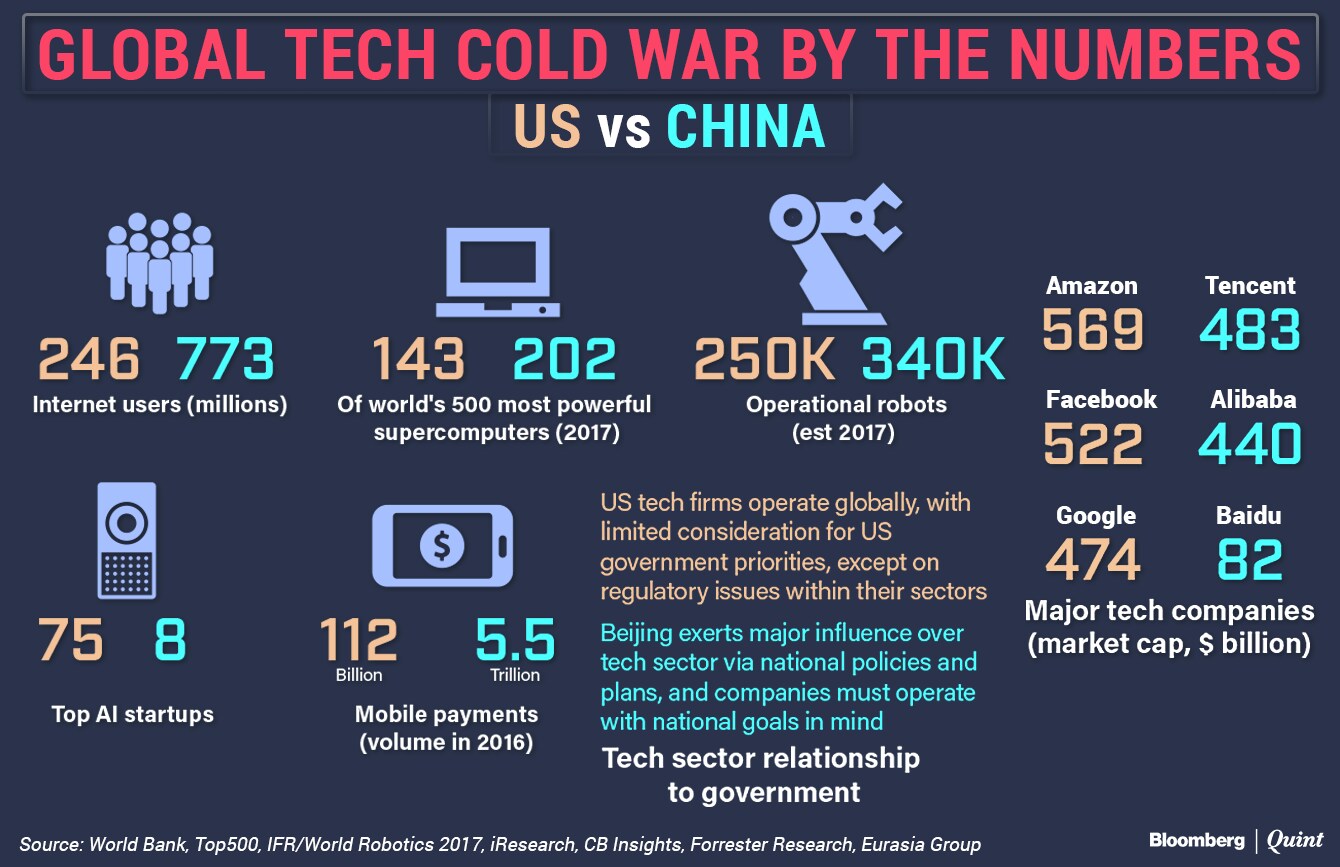
These shifting political sands also impact the biggest global economic fight - technology.
It's being fought on three fronts, says the report.
- A race for breakthrough technology
- A struggle for market dominance
- Fragmentation of the tech commons
The key contenders are the U.S. and China but the report doesn't quite detail how China might outdo the U.S. here despite rivaling it in spends, technologists and using hard state power versus softer private-sector technology leadership in the U.S.
U.S.-Iran Relations
This could be the other big flash point this year. The report warns that “If the nuclear agreement fails, the world will enter a new and dangerous dynamic”.
In detailing the impact of such a failure the report raises the “most-likely scenario” of secondary sanctions. But at a time of rising crude prices China and India may not play along.
The Erosion Of Institutions
Risk number 6 in the report is the most dispersed, amorphous and yet toxic one.
“Ever-larger segments of the public and their representatives have lost faith in the exercise of bureaucratic functions, inviting the political capture of more organs of the state.”
While it speaks mostly of the decline of institutions in developed countries the mentions of politicised media, fake news, rigged elections could so easily apply across the world.
Institutions are guardrails; strong courts and media lessen dependence for stability on powerful (sometimes erratic) individuals.Top Risks 2018 - Eurasia Group
Protectionism 2.0
In reiterating the rise of protectionism, the report makes two noteworthy points. That “new rules are being written for the global economy without any overseer or shared norms, so checks and balances against a surge in protectionism are lacking”.
Due to this the “global regulatory environment will become more complex and contradictory”.
Eventually this could not just stem but reverse the gains of globalisation.
Identity Politics In Southern Asia
On Southern Asia, risk number 9, the report forecasts identity politics “threatens the future of these increasingly prosperous regions”.
It lists as key concerns
- Islamism
- Aversion toward Chinese and other minorities
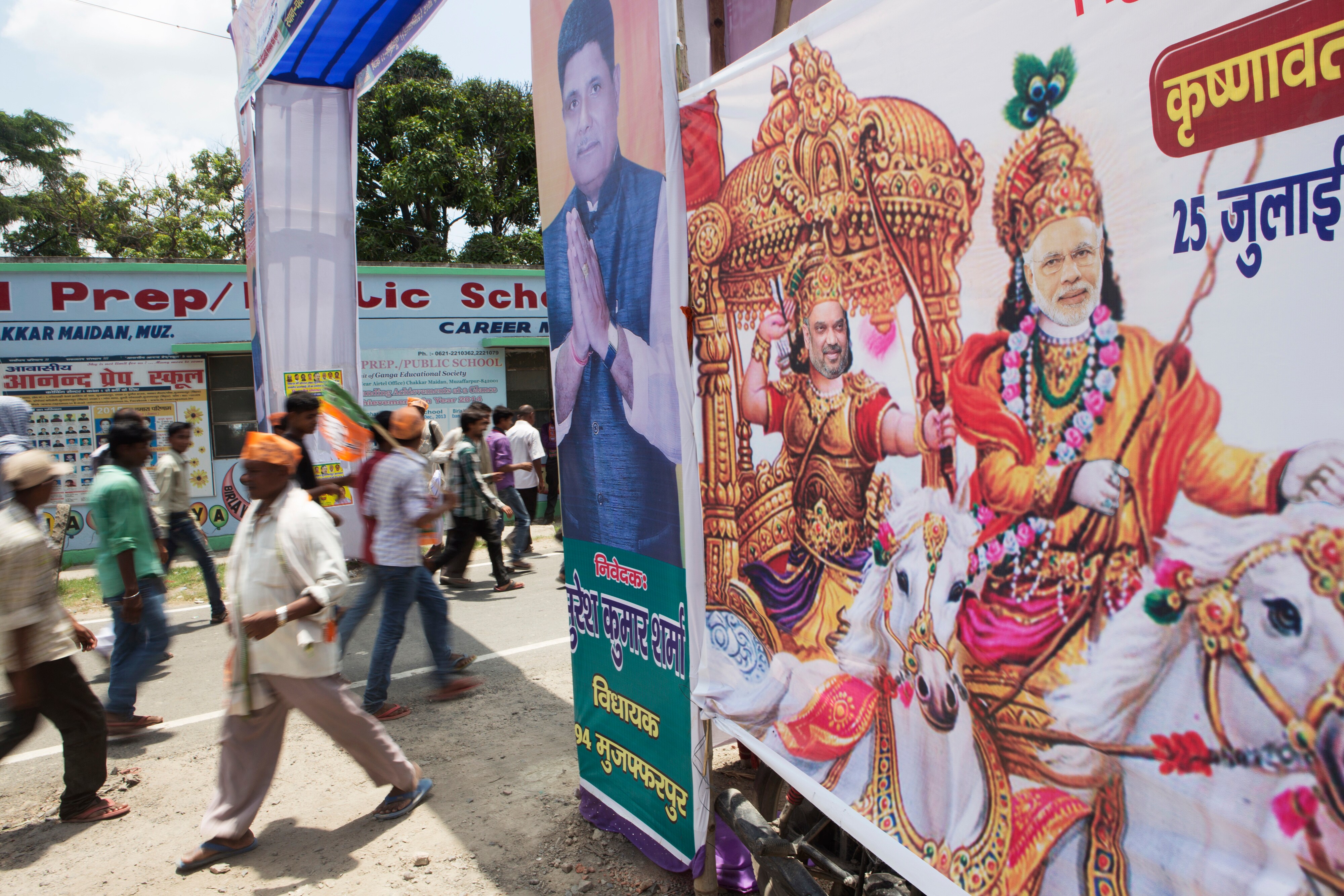
- An intensifying Indian nationalism
“Hinduism (or Hindutva) will increasingly form the basis on which the BJP seeks to unite a majority of Indians,” says Eurasia.
In India, the danger is that Modi's use of nationalism to consolidate his support ahead of the 2019 election could give cover to radicalized elements of society that want to target Muslims and lower caste Hindus, leading to risks of localized instability.Top Risks 2018 - Eurasia Group

-
Why Amazon And Flipkart Are Struggling To Beat Meesho In India's Smaller Cities

With 274 million users and lowest-cost logistics, Meesho is defending its value commerce crown against giants like Amazon and Flipkart.
-
High US Salaries, No Green Card Certainty: The Financial Calculation Facing Indian H-1B Families
The suspension of PERM processing at eight technology employers does not cancel existing H-1B visas. What it does is force a question many Indian families have been avoiding: is the US salary worth tying your career and family plans to one employer?
-
Swiggy vs Eternal: Food Delivery's Two Rivals Are No Longer In The Same Race
Eternal is building a private AI assistant, dark.ai. Swiggy is still working out how to make Instamart pay, with an operating loss of Rs 895 crore in the July-September quarter while Blinkit stayed profitable.
-
Where You Live Shapes How You Get To Work | The Reason Why
Two-wheelers are the most popular way to get to work in India, accounting for nearly 43% of workplace commutes.
-
Unhedged Position: Can India See An Indonesia-Style Time Correction?
The Nifty is trading below levels it first clocked in 2024. Is there, then, as I have suggested in the headline, potential that the current time correction drags on painfully for the next three-five, even ten years?
-
Navigating Friction And Energy Realities: An Analysis Of Marco Rubio's October Visit To India
Occurring at a critical juncture marked by stalled trade negotiations and escalating geopolitical pressures over global energy supplies, the visit offers a profound window into modern US-India relations.
-
India Exports Capital. Why Not Export Trusteeship?
The big question, then, is whether India can build an institution that global borrowers, investors, banks, and lawyers can trust, even without an Indian connection.
-
France's Economy & Politics Are In Crisis | The Reason Why
Let's look at how the French economy and politics evolved under Nicolas Sarkozy, Franois Hollande and Emmanuel Macron.
-
You May Inherit The Business. You Must Earn Its Credibility.
Succession tests the founder's ability to share authority as much as it tests the next generation's readiness to assume it.
-
Signing Deals Is One Thing; Making Them Work Is Another | The Week In Whys
Sometimes, things don't turn out as planned. Indian companies have lost some bids to rivals, some projects won't produce until 2030.










