Supreme Court Reserves Order On Pleas Seeking Probe In Rafale Deal
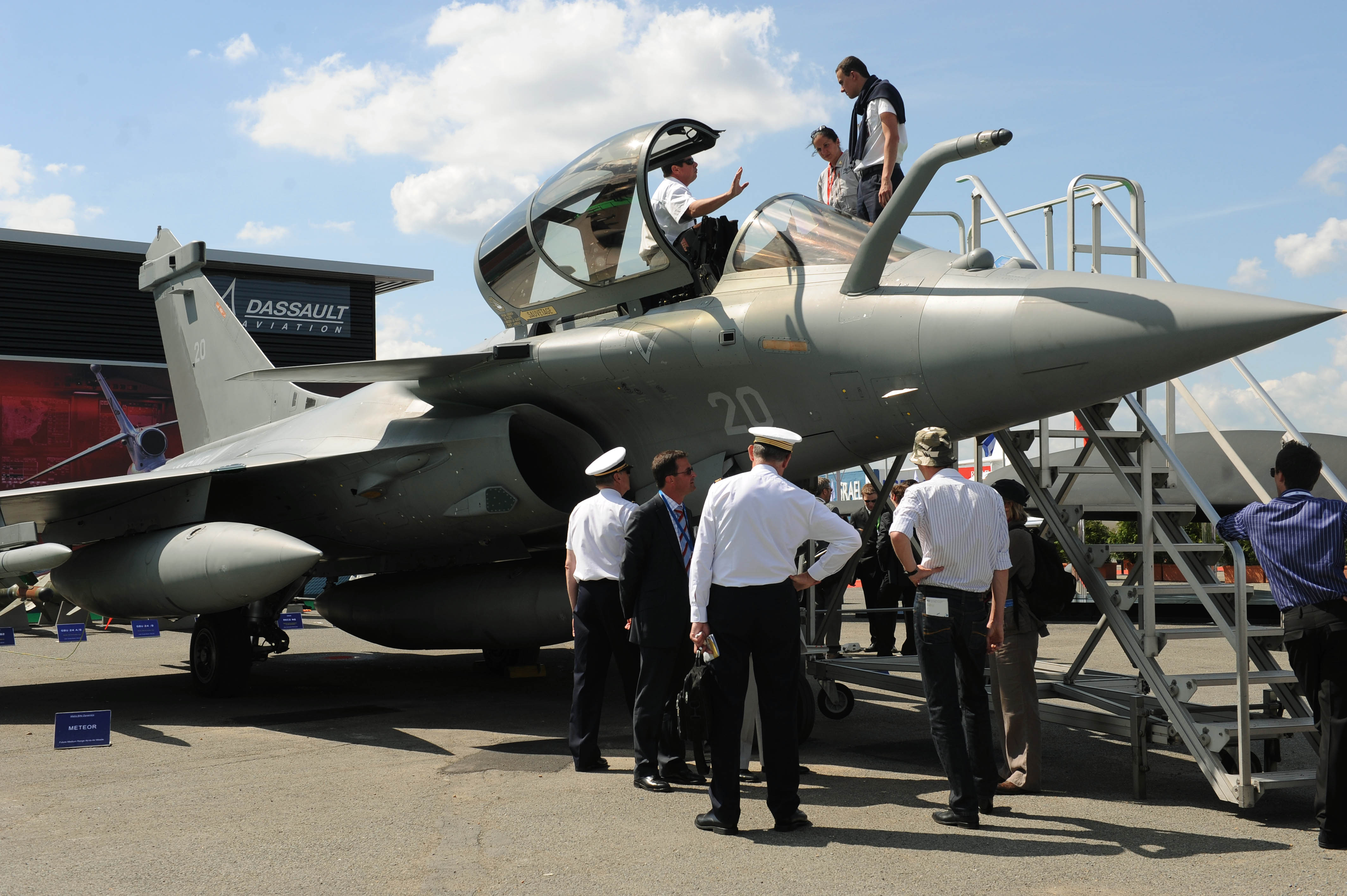
The Supreme Court on Wednesday reserved its order on pleas seeking a court-monitored probe in procurement of the 36 Rafale fighter jets from France.
A bench comprising Chief Justice Ranjan Gogoi and Justices SK Kaul and KM Joseph concluded the arguments advanced by various parties which have also sought registration of FIR in connection with the alleged irregularities in the deal..
The apex court, which began its hearing on the pleas, also said it was dealing with the requirements of the Air Force and would like to hear from an Air Force officer and “not the official of the Defence Ministry.”
“The decision we need to take is whether to bring the fact on pricing in public domain or not,” a bench headed by Chief Justice Ranjan Gogoi said.
The bench, also comprising Justice SK Kaul and Justice KM Joseph, told Attorney General KK Venugopal that there was no question of any debate on pricing without making the facts public.
In his arguments, Venugopal defended the secrecy clause relating to the pricing of the Rafale jets, saying adversaries may get an advantage if the entire details are disclosed. Refusing to divulge details on the pricing aspect, he said he would not be able to assist the court further on the pricing issue.
“I decided not to peruse it myself as in a case of any leak, my office would be held responsible," Venugopal said.
He also said these matters were for experts to deal with. “We have been saying that even Parliament has not been told about the complete cost of the jets,” he said. At the exchange rate of November 2016, the cost of a bare fighter jet was Rs 670 crore, he said.
India signed an agreement with France for the purchase of 36 Rafale fighter aircraft in a fly-away condition as part of the upgrading process of Indian Air Force equipment. The estimated cost of the deal is Rs 58,000 crore.
The Rafale fighter is a twin-engine medium multi-role combat aircraft manufactured by French aerospace company Dassault Aviation. Venugopal said the earlier jets were not intended to be loaded with the requisite weapons system and the government had reservations as it did not want to violate the Inter Government Agreement and the secrecy clause.
The hearing saw Venugopal opposing advocate Prashant Bhushan who wanted to submit information on the secrecy clause of the Rafale agreement. “The secrecy agreement has to be secret and how is he producing it in court?” Venugopal asked when Bhushan raised the issue.
Bhushan, appearing on behalf of himself and former Union ministers Yashwant Sinha and Arun Shourie, alleged that the government was hiding behind the secrecy clause and had not disclosed the price of the fighter jets.
The Chief Justice of India told Bhushan, “We are giving you full hearing. Use this opportunity carefully and cite only those things which are necessary.” Bhushan said the price per aircraft was 155 million euros and was now 270 million euros. This shows that there was hike of 40 percent in its price, the advocate said. He said the Central Bureau of Investigation was bound to register an FIR in this case.
The lawyer alleged that there was a conspiracy with French company Dassault, which granted the offset right to Reliance Defence. He said Reliance had no competence in executing the offset contract.
Bhushan said they filed the petition after the CBI did not register the FIR under the Prevention of Corruption Act. He also quoted former French president François Hollande and other Dassault officials to impute criminal motives in granting the offset contract to Reliance.
The activist-lawyer submitted that the NDA government had “short circuited” the acquisition process by taking the Inter Government Agreement route. He said there was no sovereign guarantee from the French government in the deal and argued that the Law Ministry initially flagged the issue and later gave in to the proposal of entering into an Inter Government Agreement.
Six foreign companies had applied and two firms were shortlisted during the earlier process, Bhushan said. Later, the deal went to Dassault and state-owned Hindustan Aeronautics Ltd. was part of it. Suddenly, a statement was issued which said there will be no technology transfer, and only 36 jets would be procured, the lawyer told the court.
Bhushan submitted that nobody knows about the alleged change in the deal done by the prime minister. Even the defence minister was not aware about the change, he said. Advocates ML Sharma, Vineet Dhanda and Aam Aadmi Party's Member of Parliament Sanjay Singh, also advanced their arguments.
Reliance, in its previous statements, said the Indian government, French government, Dassault and Reliance have clarified on multiple occasions there was no offset contract for Rs 30,000 crore to Reliance as alleged by the Congress.

-
Talking Points This Week: Tech Nerves, FII Buying, And A Faraway Banking Shock

The global markets are not shining this Diwali. The exception in the large markets is, India.
-
Midterm Rally Lasted A Day. The Hard Reality Of A Divided US May Last Two Years | Opinion
Between a contested AI boom, a debt ceiling that arrives in 2027 and a president with every incentive to act alone, the next two years may prove more volatile than the first day's rally suggests.
-
Blue Wave Will Derail the AI Trade but Won't Dismantle the AI Era | Unhedged Position
The Democrats' sweep of the US Congress will see politics collide with economic forces both over the long and short term.
-
It's Time To Take The GST Council's Bet On Trust Global
Payment records can prove India's services exports, and clear, proportionate rules can bring foreign digital sellers into the tax net.
-
Opinion | India at 38: From Innovation Overperformer to Innovation Powerhouse
India now has 453 VC-backed deep science startups, 18 of them late-stage, after 117 percent growth since 2020. Laurus Labs, at USD 9.3 billion, is the most valuable deep science company in any middle-income economy outside China.
-
Navigating Energy Crossroads: S Jaishankar's Call For Diversified Supply Chains At G20 Ministerial Meeting
As geopolitical fault lines continue to test maritime trade routes and commodity flows, Jaishankar's message remains pertinent: true economic resilience requires open markets, protected transit lines, and a genuine commitment to multilateral cooperation rather than coercion.
-
Indians Are Travelling, But Not Every Journey Is A Holiday | The Week In Whys
Pilgrims, patients and working women are the real travellers, and the system hasn't quite caught up with them.
-
Getting To Work Costs Women More | The Reason Why
It is not just about women paying more than men. It is about women paying much more in cities than in villages.
-
AI Bias In Investing Cannot Be Eliminated, But It Can Be Governed
Framing is a particularly important example as identical financial information presented in terms of gains rather than losses can lead an LLM to reach a different assessment.









