Prime Minister Modi Meets Finance Minister For Second Economic Relief Package
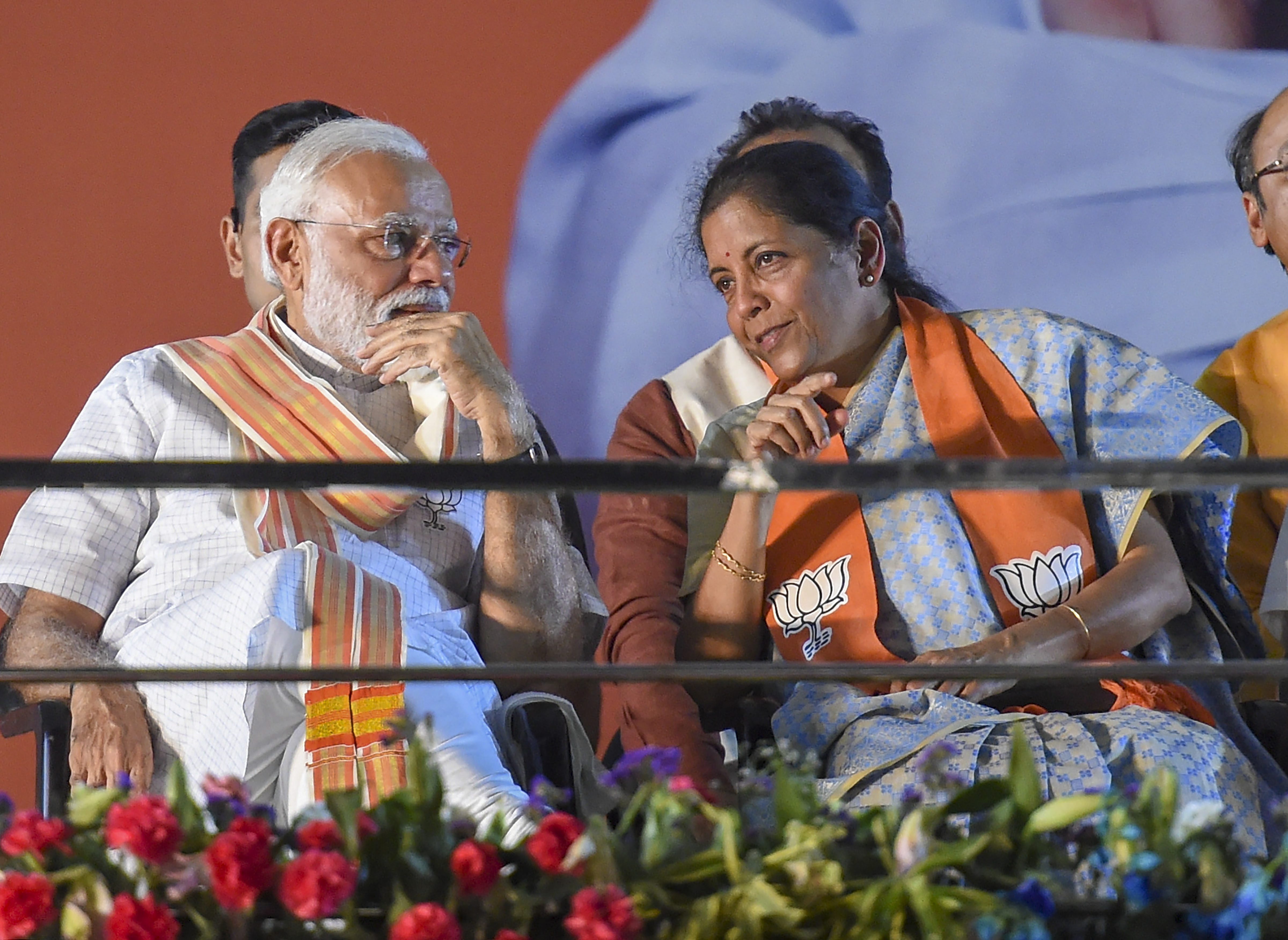
Prime Minister Narendra Modi on Saturday held a series of meetings with key ministers, including Home Minister Amit Shah and Finance Minister Nirmala Sitharaman, and officials of economic ministries to firm up the second stimulus package for sectors impacted by lockdown to curb spread of coronavirus, sources said.
The prime minister held discussions with Shah and Sitharaman and would have follow up meetings with ministers of key economic ministries such as Micro, Small and Medium Enterprises (MSME), sources said.
The finance ministry, which deferred release of monthly GST collection numbers on Friday, is also scheduled to make a detailed presentation to the prime minister later in the day on the state of economy and several initiatives that it plans to undertake to stimulate Indian economy.
The Prime Minister already had meetings with different ministries including Civil Aviation, Labour and Power on Friday. He had detailed deliberation with Commerce and MSME ministries among others on Thursday with focus on attracting both domestic and overseas investment and revival of small businesses in the country so that the recovery process is hastened.
During these meetings both the home minister and the finance minister were present.
To mitigate hardships faced by the bottom of the pyramid, the government in late March had announced a Rs 1.7 lakh crore stimulus package comprising free foodgrains and cooking gas to poor and cash doles to poor women and elderly.
Sources said the government is considering to announce a second dose of relief measures for the segment and a stimulus package for India Inc shortly.
The government had first imposed a 21-day nationwide lockdown beginning March 25 and later extended it till May 3.
The lockdown shut businesses, stopped air and rail travel and restricted movement of people and goods.
Beginning May 4, the government has decided to ease certain restrictions including opening of industries for green and orange districts which either have nil or low number of cases. The easing of restriction in specified districts is till May 17 with strict vigil by local administration.

-
Ten Things I Learnt This Samvat

Patience can be a trap. Cheap stocks can stay cheap. Leverage can wipe you out. What did Samvat 2082 teach us? Niraj Shah writes on 10 lessons from the year gone by.
-
Talking Points This Week: Tech Nerves, FII Buying, And A Faraway Banking Shock
The global markets are not shining this Diwali. The exception in the large markets is, India.
-
Midterm Rally Lasted A Day. The Hard Reality Of A Divided US May Last Two Years | Opinion
Between a contested AI boom, a debt ceiling that arrives in 2027 and a president with every incentive to act alone, the next two years may prove more volatile than the first day's rally suggests.
-
Blue Wave Will Derail the AI Trade but Won't Dismantle the AI Era | Unhedged Position
The Democrats' sweep of the US Congress will see politics collide with economic forces both over the long and short term.
-
It's Time To Take The GST Council's Bet On Trust Global
Payment records can prove India's services exports, and clear, proportionate rules can bring foreign digital sellers into the tax net.
-
Opinion | India at 38: From Innovation Overperformer to Innovation Powerhouse
India now has 453 VC-backed deep science startups, 18 of them late-stage, after 117 percent growth since 2020. Laurus Labs, at USD 9.3 billion, is the most valuable deep science company in any middle-income economy outside China.
-
Navigating Energy Crossroads: S Jaishankar's Call For Diversified Supply Chains At G20 Ministerial Meeting
As geopolitical fault lines continue to test maritime trade routes and commodity flows, Jaishankar's message remains pertinent: true economic resilience requires open markets, protected transit lines, and a genuine commitment to multilateral cooperation rather than coercion.
-
Indians Are Travelling, But Not Every Journey Is A Holiday | The Week In Whys
Pilgrims, patients and working women are the real travellers, and the system hasn't quite caught up with them.
-
Getting To Work Costs Women More | The Reason Why
It is not just about women paying more than men. It is about women paying much more in cities than in villages.









