Activists’ Arrests: Plan Was To Target ‘Higher Political Functionaries’, Says Pune Police
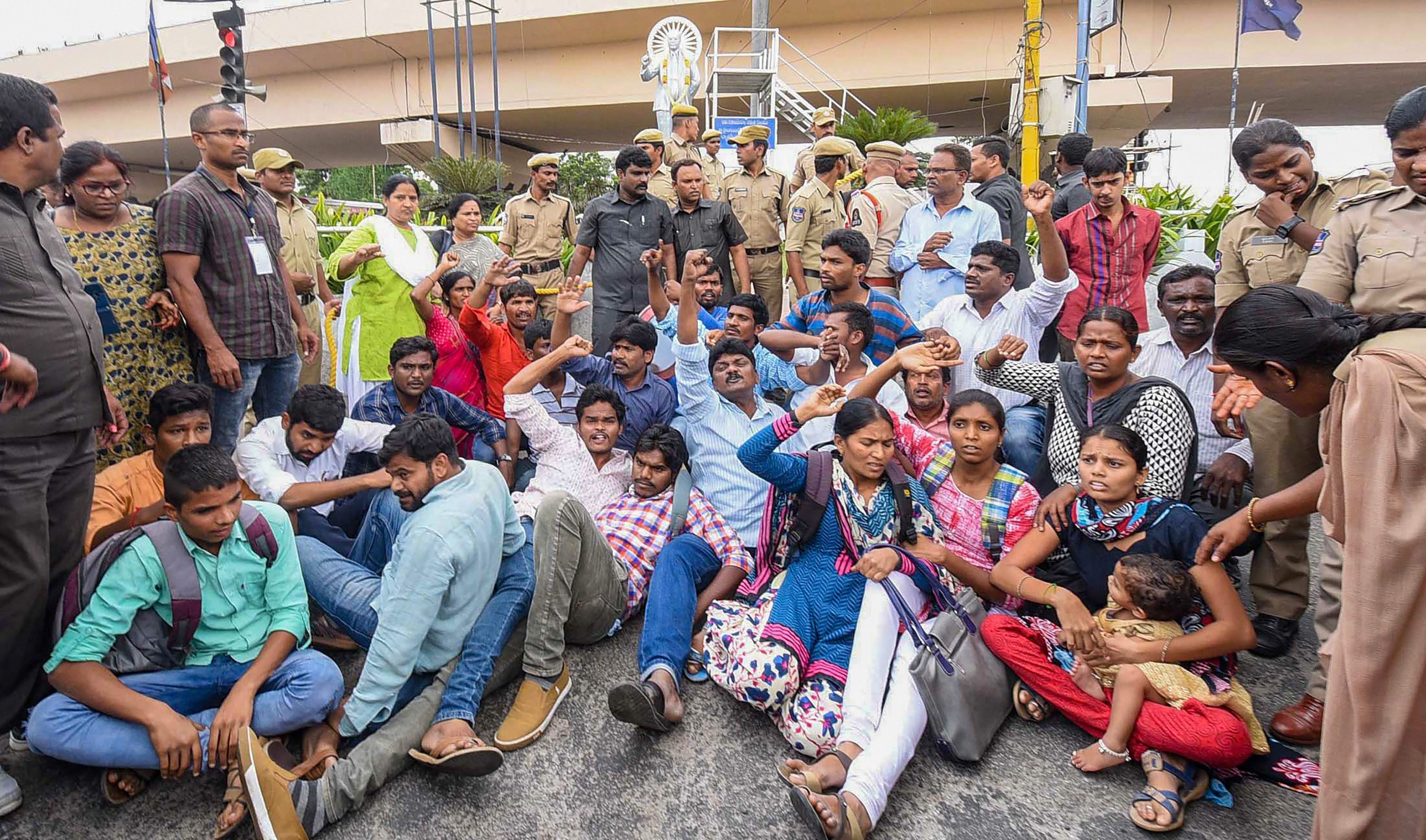
A day after arresting five human rights activists for their alleged Maoist links, the Pune Police said today it had "evidence" which suggested that there was a plan to target "higher political functionaries".
The police also claimed to have evidence to suggest that the arrested people had links with Kashmiri separatists.
Pune Police yesterday raided the homes of prominent Left-wing activists in several states and arrested five of them—poet Varavara Rao in Hyderabad, activists Vernon Gonsalves and Arun Ferreira in Mumbai, trade unionist and lawyer Sudha Bhardwaj in Faridabad and Chhattisgarh and civil liberties activist Gautam Navalakha in Delhi.
The raids were carried out as part of a probe into a conclave—Elgar Parishad—held in Koregaon-Bhima near Pune on December 31 last year, which had allegedly triggered violence the next day.
"The arrested activists were part of a conspiracy to target higher political functionaries," Joint Commissioner of Pune Police Shivajirao Bodkhe said without elaborating. “The arrested accused had communicated about the plan within themselves.”
Some of the evidence collected suggests that they had planned to target "higher political functionaries", Deputy Commissioner of Police Shirish Sardeshpande said.
The police officials, while addressing a press conference in Pune today, said the Elgar Parishad had been funded by Maoists.
"They also have a strong intolerance to the present political system and decided to target organisations, functionaries and they even were thinking of targeting highest political functionaries,” Sardeshpande said.
Police have retrieved communication and strong evidence that the arrested persons were planners and abettors, he said. “Some evidence suggests that they (those arrested) appear to be mixed up with other unlawful organisations.”
“The evidence conclusively points to the deliberate involvement and major role played by Varavara Rao, Arun Ferreira, Vernon Gonsalves, Sudha Bhardwaj and Gautam Navlakha in the larger conspiracy hatched by the banned organisation CPI (Maoist)," Sardeshpande said.
The "evidence" also involves details like provision of funds, responsibilities given to these “urban naxals” in radicalising the youth and students, provision of arms and other details, and training from senior comrades of Central Committee of CPI Maoist, he added.
"Also, they were actively and deliberately involved in unlawful activities, which led to the violence and killings of a large number of security personnel and even some civilians," he said.
‘Incriminating Documents Recovered'
Altogether, nine places were searched yesterday, he said. “Hard disks, laptops, memory cards, mobile phones and other "incriminating" documents were recovered from these places.”
Some prominent people today approached the Supreme Court, challenging the arrests.
The Supreme Court ordered that all the five people would have to be kept under house arrest till Sept. 6. The Pune police had brought Rao, Gonsalves and Ferreira here last night and produced them in a court in Pune today.

-
Where You Live Shapes How You Get To Work | The Reason Why

Two-wheelers are the most popular way to get to work in India, accounting for nearly 43% of workplace commutes.
-
High US Salaries, No Green Card Certainty: The Financial Calculation Facing Indian H-1B Families
The suspension of PERM processing at eight technology employers does not cancel existing H-1B visas. What it does is force a question many Indian families have been avoiding: is the US salary worth tying your career and family plans to one employer?
-
Unhedged Position: Can India See An Indonesia-Style Time Correction?
The Nifty is trading below levels it first clocked in 2024. Is there, then, as I have suggested in the headline, potential that the current time correction drags on painfully for the next three-five, even ten years?
-
Navigating Friction And Energy Realities: An Analysis Of Marco Rubio's October Visit To India
Occurring at a critical juncture marked by stalled trade negotiations and escalating geopolitical pressures over global energy supplies, the visit offers a profound window into modern US-India relations.
-
India Exports Capital. Why Not Export Trusteeship?
The big question, then, is whether India can build an institution that global borrowers, investors, banks, and lawyers can trust, even without an Indian connection.
-
France's Economy & Politics Are In Crisis | The Reason Why
Let's look at how the French economy and politics evolved under Nicolas Sarkozy, Franois Hollande and Emmanuel Macron.
-
You May Inherit The Business. You Must Earn Its Credibility.
Succession tests the founder's ability to share authority as much as it tests the next generation's readiness to assume it.
-
Signing Deals Is One Thing; Making Them Work Is Another | The Week In Whys
Sometimes, things don't turn out as planned. Indian companies have lost some bids to rivals, some projects won't produce until 2030.
-
FOMC Wall, PERM Suspension, Hospital Stocks | Talking Points This Week
A PERM suspension would directly affect green-card sponsorship rather than H-1B visas, so the near-term earnings impact could remain relatively limited. The key question is whether this marks a new phase in US scrutiny of Indian IT.
-
Everything, Everywhere, All At Once: Dalal Street's Week To Forget | Joining The Dots
Visa curbs, a Starlink spat and cancer drug caps: what connects this week's shocks for Indian markets









