Pakistan Picks Shehbaz Sharif As PM For A Second Term
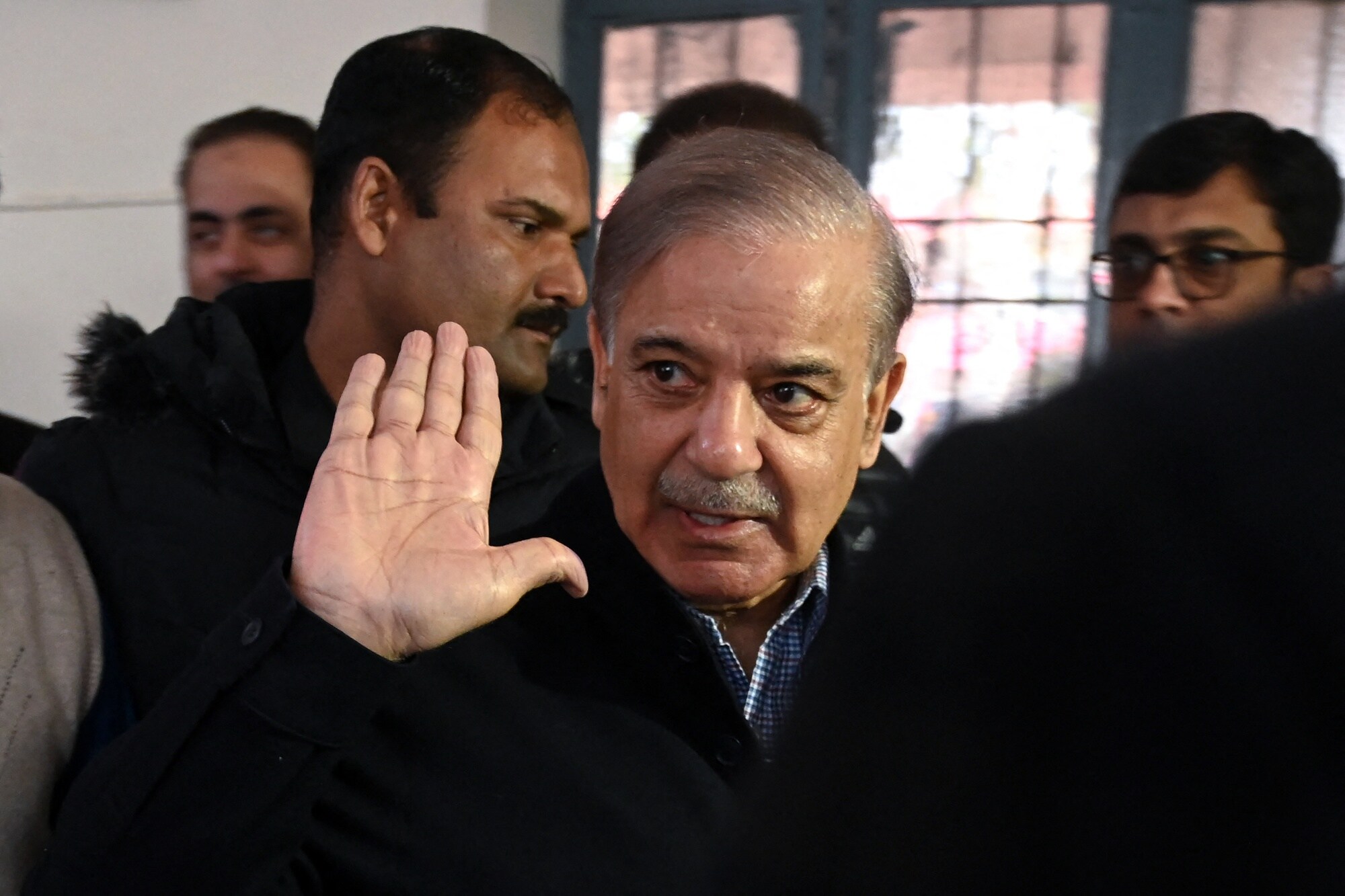
(Bloomberg) -- Shehbaz Sharif was selected as Pakistan's prime minister for a second term after two old-guard parties formed a coalition to keep jailed politician Imran Khan's party out of power.
Lawmakers voted for the next premier in the National Assembly on Sunday with Sharif securing 201 votes. His opponent Omar Ayub Khan, who is backed by jailed leader Imran Khan, got 92 votes.
Sharif is expected to be sworn in on Monday. The 72-year-old was prime minister until parliament was dissolved in August in the lead-up to elections. Last month's polls provided an inconclusive result with no group winning a clear mandate, prompting two family-controlled parties — the Pakistan Muslim League-N and the Pakistan Peoples Party — to eventually nominate Sharif as their candidate.
The Pakistan Muslim League-N is led by Nawaz Sharif, the elder brother of Shehbaz and a three-time prime minister, while the Pakistan Peoples Party is co-chaired by former foreign minister Bilawal Bhutto Zardari.
However former premier Khan's independent candidates defied the odds and secured the most seats in the election but refused to form a coalition government with other main parties. Khan's loyalists have accused authorities of widespread rigging in the poll, an allegation denied by the Election Commission and the caretaker government that supervised the polls.
Pakistan's Sharif Faces an Even Tougher Task Second Time Around
The new government will seek a fresh loan of at least $6 billion from the International Monetary Fund with the current program ending in April, highlighting the fragile state of the economy. Sharif said last month that Pakistan will need to secure a new loan at the earliest.
Pakistan needs to “carry out a deep surgery to bring revolutionary changes in the system and reform various sectors,” Sharif said in parliament on Sunday after he was named prime minister, speaking at length about the nation's debt. Sharif plans to gradually reduce the size of its debt, described by the IMF as “borderline” manageable.
Pakistan dollar bonds handed investors a gain of almost 15% this year, the biggest in Asia. The currency is up about 1%.
Sharif helped Pakistan avoid default last year by securing its current $3 billion loan program. He took unpopular steps including removing fuel subsidies and raising energy prices to meet the IMF's conditions.
He plans to set targets for banks to disburse more loans and will discourage lenders from investing in government securities. The government also plans to give subsidies to farmers and import high-quality seeds to boost farm yields, Sharif said.
His nomination for the top position came as a surprise as Nawaz was widely expected to become prime minister when he returned from exile in London to contest the election. Shehbaz is seen to have maintained good ties with the military that is expected to influence key decisions from behind the scenes.
The house on Friday elected Sharif's candidate Ayaz Sadiq as speaker of the National Assembly. Sadiq has called for a joint sitting of the upper and lower houses on March 9 to select the country's president, according to a statement. Members of the two federal houses and four provincial assemblies elect the president for five years.
Sharif's alliance has agreed to nominate Asif Ali Zardari, the father of Bilawal, for president. Imran Khan's supporters have picked a Pashtun nationalist, Mahmood Khan Achakzai, as their contender.
--With assistance from Khalid Qayum and Karl Lester M. Yap.
(Updates from second paragraph, adds market trend.)
More stories like this are available on bloomberg.com
©2024 Bloomberg L.P.

-
Love, Sex Aur Dhokha: The Audacious Plot To Spy On Jensen Huang

A Taipei dinner, a Singapore chip buyer and a suspected Chinese asset: inside the alleged spy operation that got close to NVIDIA's Jensen Huang.
-
Ten Things I Learnt This Samvat
Patience can be a trap. Cheap stocks can stay cheap. Leverage can wipe you out. What did Samvat 2082 teach us? Niraj Shah writes on 10 lessons from the year gone by.
-
Talking Points This Week: Tech Nerves, FII Buying, And A Faraway Banking Shock
The global markets are not shining this Diwali. The exception in the large markets is, India.
-
Midterm Rally Lasted A Day. The Hard Reality Of A Divided US May Last Two Years | Opinion
Between a contested AI boom, a debt ceiling that arrives in 2027 and a president with every incentive to act alone, the next two years may prove more volatile than the first day's rally suggests.
-
Blue Wave Will Derail the AI Trade but Won't Dismantle the AI Era | Unhedged Position
The Democrats' sweep of the US Congress will see politics collide with economic forces both over the long and short term.
-
It's Time To Take The GST Council's Bet On Trust Global
Payment records can prove India's services exports, and clear, proportionate rules can bring foreign digital sellers into the tax net.
-
Opinion | India at 38: From Innovation Overperformer to Innovation Powerhouse
India now has 453 VC-backed deep science startups, 18 of them late-stage, after 117 percent growth since 2020. Laurus Labs, at USD 9.3 billion, is the most valuable deep science company in any middle-income economy outside China.
-
Navigating Energy Crossroads: S Jaishankar's Call For Diversified Supply Chains At G20 Ministerial Meeting
As geopolitical fault lines continue to test maritime trade routes and commodity flows, Jaishankar's message remains pertinent: true economic resilience requires open markets, protected transit lines, and a genuine commitment to multilateral cooperation rather than coercion.
-
Indians Are Travelling, But Not Every Journey Is A Holiday | The Week In Whys
Pilgrims, patients and working women are the real travellers, and the system hasn't quite caught up with them.









