Padmaavat Uproar: Did The State Embolden The Fringe?
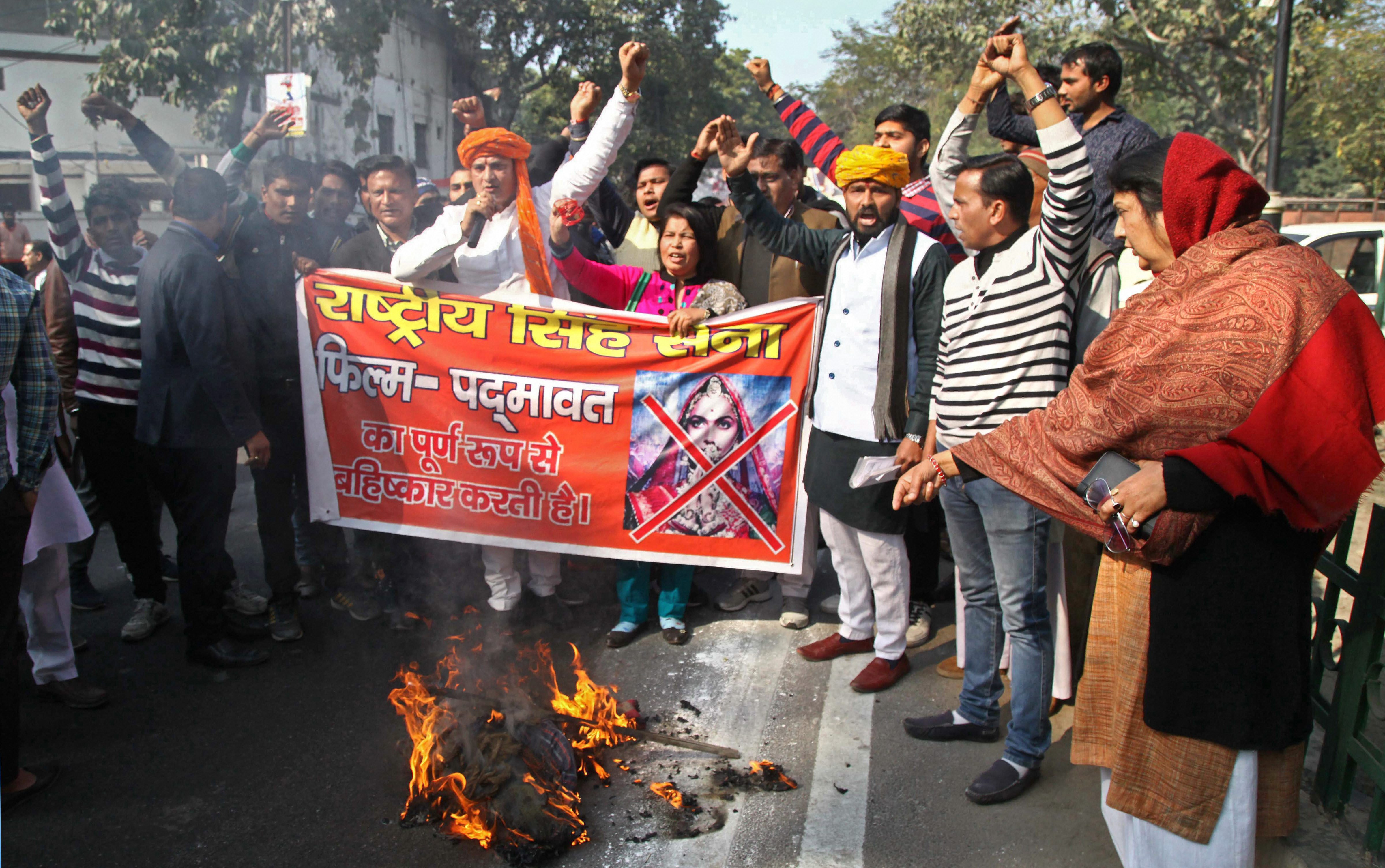
Two attempts to stop the screening of movie Padmaavat despite a clearance from the censor board have failed in the Supreme Court. Yet, protests continue. Filmmakers, actors and others connected to the industry are perturbed as various groups threaten to burn down cinema halls that screen the movie scheduled to be released on Jan. 25.
“I place the blame firmly at the door of the state,” veteran actor Shabana Azmi told BloombergQuint in an interview. She pointed to the lack of action when the first attacks took place on the sets of the movie in March last year. “If we had stemmed it right at the beginning, we would not have to face this day.”
Even today, people who have threatened Deepika Padukone and Sanjay Leela Bhansali are roaming free.Shabana Azmi, Actor
The Karni Sena that claims to represent the Rajput community has been at the forefront of protests against Bhansali's period film Padmavaat (earlier Padmavati). They claim the movie hurts sentiments of the community. The protests have often turned violent.
Also Read: Padmavati Becomes Padmavat, Gets Censor Board Certificate
Protesters were given a free hand ahead of the state elections in Gujarat in December last year where the Rajput community is influential, ad guru Prahlad Kakkar said. “Now that you have let the worms out of the can, how are you going to put them back in the can?”
No politician looks long-term at the kind of damage that they do when they decide arbitrarily that they have to appease a vote bank.Prahlad Kakkar, Ad Film Director
For film critic Mayank Shekhar, the attacks on the movie and threats of physical violence despite the censor board clearance sets a dangerous precedent. “People were let off for saying things like, ‘I will cut the actor's nose'. The moment you begin to bend, you will be asked to crawl.”
With the movie set to release next week, all eyes will be on the state governments of Gujarat, Rajasthan, Haryana and Chhattisgarh to see if they ensure it's screened smoothly. The states had banned the film after the censor board cleared it.
“Criminals are allowed to go scot-free with impunity. Is that how we want the world to see us? If not, then surely the state has an action to take.”

-
Ten Things I Learnt This Samvat

Patience can be a trap. Cheap stocks can stay cheap. Leverage can wipe you out. What did Samvat 2082 teach us? Niraj Shah writes on 10 lessons from the year gone by.
-
Talking Points This Week: Tech Nerves, FII Buying, And A Faraway Banking Shock
The global markets are not shining this Diwali. The exception in the large markets is, India.
-
Midterm Rally Lasted A Day. The Hard Reality Of A Divided US May Last Two Years | Opinion
Between a contested AI boom, a debt ceiling that arrives in 2027 and a president with every incentive to act alone, the next two years may prove more volatile than the first day's rally suggests.
-
Blue Wave Will Derail the AI Trade but Won't Dismantle the AI Era | Unhedged Position
The Democrats' sweep of the US Congress will see politics collide with economic forces both over the long and short term.
-
It's Time To Take The GST Council's Bet On Trust Global
Payment records can prove India's services exports, and clear, proportionate rules can bring foreign digital sellers into the tax net.
-
Opinion | India at 38: From Innovation Overperformer to Innovation Powerhouse
India now has 453 VC-backed deep science startups, 18 of them late-stage, after 117 percent growth since 2020. Laurus Labs, at USD 9.3 billion, is the most valuable deep science company in any middle-income economy outside China.
-
Navigating Energy Crossroads: S Jaishankar's Call For Diversified Supply Chains At G20 Ministerial Meeting
As geopolitical fault lines continue to test maritime trade routes and commodity flows, Jaishankar's message remains pertinent: true economic resilience requires open markets, protected transit lines, and a genuine commitment to multilateral cooperation rather than coercion.
-
Indians Are Travelling, But Not Every Journey Is A Holiday | The Week In Whys
Pilgrims, patients and working women are the real travellers, and the system hasn't quite caught up with them.
-
Getting To Work Costs Women More | The Reason Why
It is not just about women paying more than men. It is about women paying much more in cities than in villages.









