Only Delhi And Chandigarh Meet Infrastructure Guidelines For Lower Judiciary: Survey
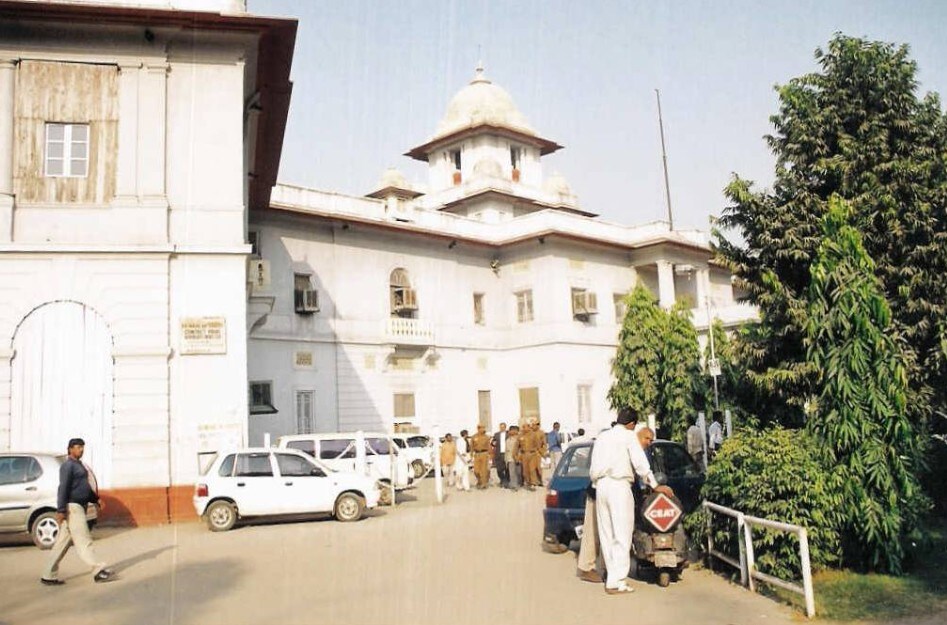
More than half of the district court complexes lack basic amenities such as fully functional washrooms, ramps or lifts and baggage scan facility, while the rest don't have a waiting area for litigants, according to a survey.
The survey—conducted by Vidhi Centre for Legal Policy, a think tank for legal research—accessed 665 district court complexes across the country. The report, authored by Vidhi Centre fellows Sumanthi Chandrashekaran, Diksha Sanyal and Reshma Sekhar, said the National Court Management System has drawn a link between judicial infrastructure and administration of justice. The NCMS has laid down key benchmarks, including hygiene, accessibility via public transport, security, disabled-friendly and waiting area for litigants, that court complexes must follow.
The sanctioned strength of district judges in Delhi at one point was 660 but only 450 court rooms were available. So, around 210 judges could not be appointed due to the lack of court rooms, Justice BD Ahmed, former Chief Justice of Jammu & Kashmir High Court, said during the launch of the report to explain the mismatch in planning of infrastructure for lower judiciary.
No Washroom For Women
Around 15 percent of the total 665 court complexes do not have a washroom for women, the survey said. Andhra Pradesh, Odisha and Assam are the worst-performing states where 69 percent, 60 percent and 50 percent court complexes, respectively, do not have washrooms for women.
According to the survey, while 88 percent of the court complexes have a washroom for litigants, only 40 percent of them have water and provisions for regular cleaning. The NCMS guidelines mandate that washrooms should be present on each floor of the courtrooms but only 53 percent complexes meet the criteria.
Most litigants suggested that ensuring running water supply, flush facility and soap will help to improve the condition of washrooms in court complexes, the survey said.
The lower judiciary is grappling with the issue of maintaining court complexes as there is no separate budget for this, said Justice Ahmed. He also suggested that there should be a 10-year maintenance budget at the planning stage for a new court complex.
Senior Advocate Vijay Hansaria said lack of fully functional washrooms is an issue for not only lawyers and litigants but also judges as some of the district court complexes do not have hygienic washrooms in the judges complex. Hansaria is assisting the Supreme Court in a public interest litigation against infrastructure issues in the lower judiciary.

Security Parameters
The NCMS guidelines mandate security features such as baggage scan, fire safety measures and emergency exit routes. But almost all court complexes lack the security measures, the survey said. None of the court complexes in Andhra Pradesh, Bihar, Manipur and Odisha have a baggage scan facility. While around 70 percent of the court complexes have a fire extinguisher, more than half do not have emergency exit signs.

Not Disabled Friendly
The court complexes should be accessible to people with disabilities and senior citizens, including washrooms for them, according to the NCMS guidelines. Still, most court complexes are far away from being disabled-friendly, the survey said.
Of the 665 court complexes surveyed, only 180 are fully accessible through ramps or lifts and 73 courtrooms have washrooms for persons with disabilities. Only 2 percent court complexes have the visual aid facility. Chandigarh is the only state where court complexes have all the three facilities, the survey said.

Helping Litigants To Navigate
For litigants and general public visiting the court complexes, it is important to assist them to find their way and also have a designated waiting area to prevent overcrowding in courtrooms.
But only 20 percent court complexes have guide maps and more than 50 percent do not have a help desk to address queries of the litigants. Most litigants depend on lawyers and vendors to find their way in court complexes, the survey said.
Advocate Hansaria said the facilities for litigants are lacking not just in lower judiciary but also at the topmost court.
Space Allocation
Fifty percent of the area in a courtroom is occupied one judge and two court masters and 45 percent by lawyers, Hansaria said, adding it barely leaves any space for litigants to sit.
“Even in the Supreme Court, not even 10 chairs are available exclusively for the litigants in the entire courtroom,” he said. “The seats, which are supposed to be allocated to the litigants, are sometimes occupied by the lawyers.”
Only 54 percent of the complexes having a waiting area for litigants, the survey said. Rajasthan and Bihar have less than 15 percent of the complexes with waiting areas for the litigants.

Connectivity Via Public Transport
Most court complexes have performed well in this area, according to the survey. More than 80 percent of the courtrooms can be accessed by public transport and another 80 percent have parking facilities.
In Gujarat, however, only 15 percent of the court complexes are accessible by public transport. While in Sikkim, only one of the four court complexes are accessible via public transport, in Tripura none have this facility.
Only Delhi and Chandigarh, according to the survey, meet all the NCMS standards. Bihar, Manipur, West Bengal, Jharkhand have the poorest judicial infrastructure. The court complexes in the eastern regions are also among the worst performers.
Justice Ahmed said the infrastructure in lower judiciary differs from state to state because administration of lower courts come under respective high courts. The economic condition of the state also plays a role. Citing the example of West Bengal, Justice Ahmed said the state used to be “very stingy” with funds for the judiciary compared to Delhi which has always allocated higher funds for judicial infrastructure.

-
A New Samvat Wishlist: Inclusive Prosperity And Human Development

India has strengthened its economic foundations through infrastructure, digital access and enterprise. Its next growth chapter must deepen productivity, create better livelihoods and widen participation in prosperity.
-
Love, Sex Aur Dhokha: The Audacious Plot To Spy On Jensen Huang
A Taipei dinner, a Singapore chip buyer and a suspected Chinese asset: inside the alleged spy operation that got close to NVIDIA's Jensen Huang.
-
Ten Things I Learnt This Samvat
Patience can be a trap. Cheap stocks can stay cheap. Leverage can wipe you out. What did Samvat 2082 teach us? Niraj Shah writes on 10 lessons from the year gone by.
-
Talking Points This Week: Tech Nerves, FII Buying, And A Faraway Banking Shock
The global markets are not shining this Diwali. The exception in the large markets is, India.
-
Midterm Rally Lasted A Day. The Hard Reality Of A Divided US May Last Two Years | Opinion
Between a contested AI boom, a debt ceiling that arrives in 2027 and a president with every incentive to act alone, the next two years may prove more volatile than the first day's rally suggests.
-
Blue Wave Will Derail the AI Trade but Won't Dismantle the AI Era | Unhedged Position
The Democrats' sweep of the US Congress will see politics collide with economic forces both over the long and short term.
-
It's Time To Take The GST Council's Bet On Trust Global
Payment records can prove India's services exports, and clear, proportionate rules can bring foreign digital sellers into the tax net.
-
Opinion | India at 38: From Innovation Overperformer to Innovation Powerhouse
India now has 453 VC-backed deep science startups, 18 of them late-stage, after 117 percent growth since 2020. Laurus Labs, at USD 9.3 billion, is the most valuable deep science company in any middle-income economy outside China.
-
Navigating Energy Crossroads: S Jaishankar's Call For Diversified Supply Chains At G20 Ministerial Meeting
As geopolitical fault lines continue to test maritime trade routes and commodity flows, Jaishankar's message remains pertinent: true economic resilience requires open markets, protected transit lines, and a genuine commitment to multilateral cooperation rather than coercion.









