Nirav Modi Cannot Return To India, Afraid Of Getting Lynched: Lawyer Tells Court
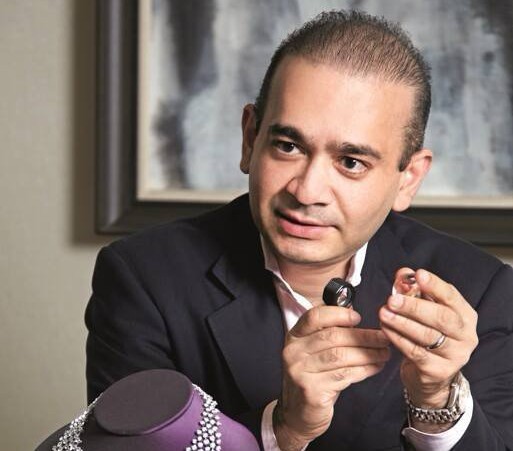
Fugitive Nirav Modi, a key accused in the $2 billion PNB fraud case, cannot return to India as he is afraid of "getting lynched" and is being compared to demon 'Ravan', his lawyer told a special court Saturday.
The Enforcement Directorate, however, dismissed the claim saying if he felt there were "security threats", he should have filed a police complaint.
Nirav Modi's lawyer Vijay Agarwal stated this while arguing before Prevention of Money Laundering Act court Judge MS Azmi against the ED's application to declare Modi a fugitive under the Fugitive Economic Offenders Act.
Countering the ED plea, Nirav Modi also said through his lawyer that he had no record or data with him about his finances.
Referring to Nirav Modi's claims of "security threats" in India, the ED said these points are "irrelevant" to the case.
The ED has claimed that Nirav Modi had refused to join the probe despite acknowledging mails and summons issued to him and that he doesn't want to return to India.
Agarwal, however, said the diamond trader had responded to the emails sent by the investigating agencies and expressed his inability to return due to "security threats".
"In a letter addressed to both the CBI and the ED, Modi had stated that he was not able to join the probe because of security threats (in India) from private persons, the families of those who have been detained (in the PNB case), landlords, the creditors who have not been paid and the customers whose jewellery was taken away by the ED," he said.
"My (Modi's) 50-ft tall effigy was burnt in India. There was evidence of a mob lynching (against me) and I (Modi) was being compared with 'Ravan'. I have been projected as evil and being made the poster boy of the bank fraud," said Agarwal.
He also claimed that Modi cannot be declared a fugitive as various legal requirements stipulated by the Fugitive Economic Offenders Act have not been met by the investigating agency.
"The main reason the ED is seeking to declare Nirav Modi a fugitive is that he left India under suspicious circumstances on Jan. 1, 2018. However, there was no criminal case (against him) when he had left the country," Agarwal said.
"They cannot just say that he left the country under suspicious circumstances. They need to specify what those suspicions were. Also there is no material on record to say that he is refusing to return to India," he said.
Unlike liquor baron Vijay Mallya, who is accused of a loan default of over Rs 9,000 crore, Modi had no Non-Performing Assets when he left the country, Agarwal argued.
He said that being a (jewellery) designer, Modi is a sort of an "artist" who cannot provide any financial information as desired by the ED.
"All my (Modi) finances were taken care of by my employees who are already in the custody of the investigating agency. I have no record or data. What are they going to investigate with me, as they have taken away all my source of information," Agarwal said.
Countering Agarwal's submission, ED counsel Hiten Venegaonkar said all these arguments have nothing to do with the Fugitive Act.
"As far as security threats are concerned, any prudent person who is fearing threats to his life needs to file a police complaint. Until now, there is no material before the ED or the court (about any such complaint). So these points are irrelevant," he said.
As per the investigating agencies, Modi and his uncle Mehul Choksi, in connivance with certain bank officials, allegedly cheated the Punjab National Bank to the tune of Rs 14,000 crore through issuance of fraudulent Letters of Undertaking.
These LoUs were allegedly issued in a fraudulent manner by a Mumbai branch of the PNB to the group of companies belonging to Modi since March 2011 till the case came to light.

-
High US Salaries, No Green Card Certainty: The Financial Calculation Facing Indian H-1B Families

The suspension of PERM processing at eight technology employers does not cancel existing H-1B visas. What it does is force a question many Indian families have been avoiding: is the US salary worth tying your career and family plans to one employer?
-
Swiggy vs Eternal: Food Delivery's Two Rivals Are No Longer In The Same Race
Eternal is building a private AI assistant, dark.ai. Swiggy is still working out how to make Instamart pay, with an operating loss of Rs 895 crore in the July-September quarter while Blinkit stayed profitable.
-
Where You Live Shapes How You Get To Work | The Reason Why
Two-wheelers are the most popular way to get to work in India, accounting for nearly 43% of workplace commutes.
-
Unhedged Position: Can India See An Indonesia-Style Time Correction?
The Nifty is trading below levels it first clocked in 2024. Is there, then, as I have suggested in the headline, potential that the current time correction drags on painfully for the next three-five, even ten years?
-
Navigating Friction And Energy Realities: An Analysis Of Marco Rubio's October Visit To India
Occurring at a critical juncture marked by stalled trade negotiations and escalating geopolitical pressures over global energy supplies, the visit offers a profound window into modern US-India relations.
-
India Exports Capital. Why Not Export Trusteeship?
The big question, then, is whether India can build an institution that global borrowers, investors, banks, and lawyers can trust, even without an Indian connection.
-
France's Economy & Politics Are In Crisis | The Reason Why
Let's look at how the French economy and politics evolved under Nicolas Sarkozy, Franois Hollande and Emmanuel Macron.
-
You May Inherit The Business. You Must Earn Its Credibility.
Succession tests the founder's ability to share authority as much as it tests the next generation's readiness to assume it.
-
Signing Deals Is One Thing; Making Them Work Is Another | The Week In Whys
Sometimes, things don't turn out as planned. Indian companies have lost some bids to rivals, some projects won't produce until 2030.
-
FOMC Wall, PERM Suspension, Hospital Stocks | Talking Points This Week
A PERM suspension would directly affect green-card sponsorship rather than H-1B visas, so the near-term earnings impact could remain relatively limited. The key question is whether this marks a new phase in US scrutiny of Indian IT.









