Mumbai’s Key Business District, Lower Parel, Is Now Gridlocked
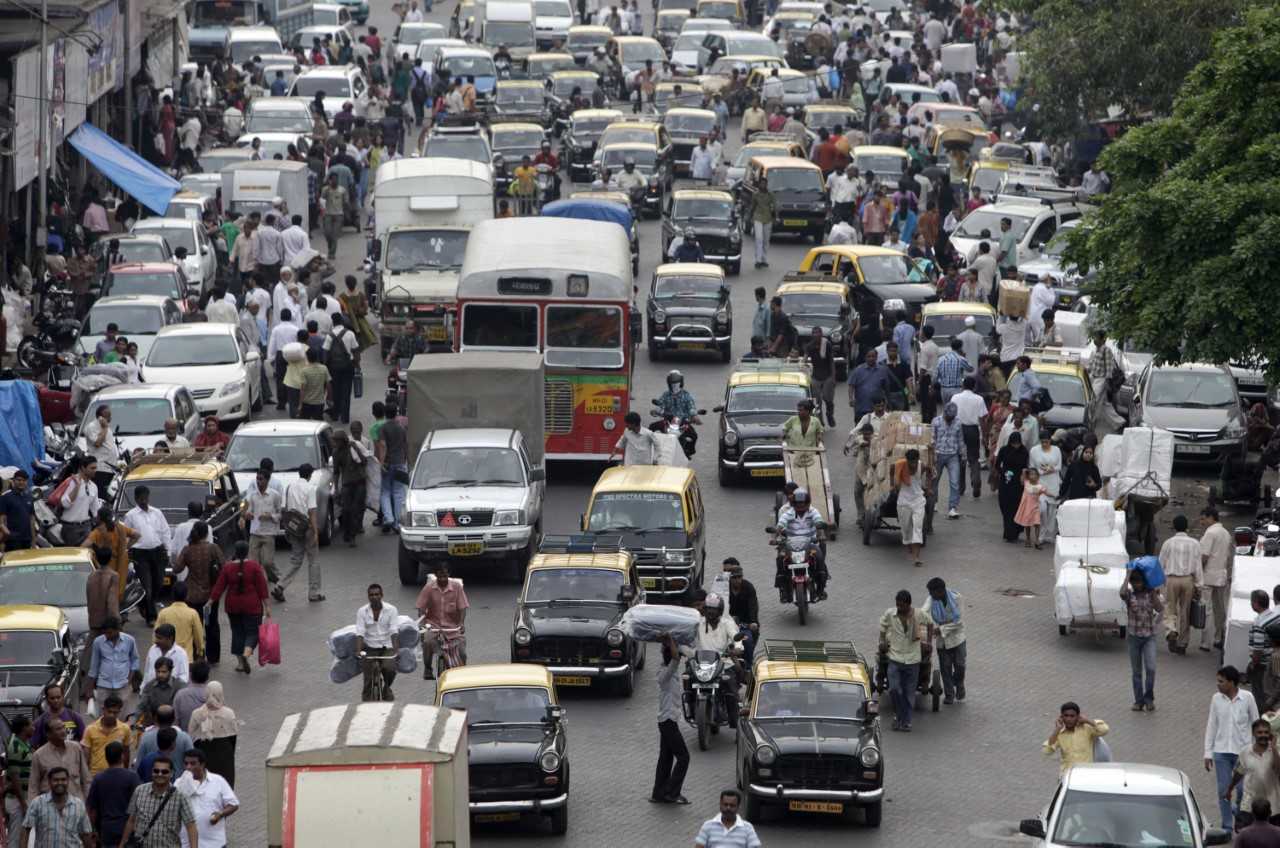
What once housed spinning mills is now Mumbai's most densely populated business hub. And the strain is beginning to show.
Travel in and out of Lower Parel, home to India's biggest companies in central Mumbai, invariably leads to a gridlock. Short distances take more than an hour on most days.
“It's not just about sitting in traffic,” says Dharmesh Mehta, managing director and chief executive officer at Axis Capital. It nearly turned fatal at his office when one of his colleagues suffered a heart attack and had to be taken to hospital.
It took us 1 hour 45 minutes (to reach the hospital). By the time we reached the hospital, he had no pulse. Luckily, we were able to revive him on time. An ambulance, when called, said it would take at least an hour to reach our office. So, in an emergency, I don't think anyone will survive.Dharmesh Mehta, MD & CEO, Axis Capital

Lower Parel has limited points of entry. One of them, the Delisle Road bridge, was recently shut after an report by the Indian Institute of Technology, Bombay, said it was dilapidated and dangerous. Official estimates of rebuilding the bridge are at least two years, but government agencies are still bickering over who will do it.
There was lack of foresight in permissions given to commercial buildings in Lower Parel, says RS Pasricha, former director general of Maharashtra Police. Pasricha, who headed the Mumbai Traffic Police in the 1980s, cited examples of how buildings came up in the area without the required infrastructure.
The authorities should have considered these requirements before allowing more constructions. So many buildings have come up in Saath Rasta and more are in the offing. A similar situation exists at Senapati Bapat Marg. Somebody should have barred construction in the absence of facilities like the metro, roads and flyovers.PS Pasricha, Former DGP, Maharashtra
Meanwhile, an online petition has surfaced asking the police to find ways to manage traffic in the congested area.
Watch the full interview here

-
Where You Live Shapes How You Get To Work | The Reason Why

Two-wheelers are the most popular way to get to work in India, accounting for nearly 43% of workplace commutes.
-
High US Salaries, No Green Card Certainty: The Financial Calculation Facing Indian H-1B Families
The suspension of PERM processing at eight technology employers does not cancel existing H-1B visas. What it does is force a question many Indian families have been avoiding: is the US salary worth tying your career and family plans to one employer?
-
Unhedged Position: Can India See An Indonesia-Style Time Correction?
The Nifty is trading below levels it first clocked in 2024. Is there, then, as I have suggested in the headline, potential that the current time correction drags on painfully for the next three-five, even ten years?
-
Navigating Friction And Energy Realities: An Analysis Of Marco Rubio's October Visit To India
Occurring at a critical juncture marked by stalled trade negotiations and escalating geopolitical pressures over global energy supplies, the visit offers a profound window into modern US-India relations.
-
India Exports Capital. Why Not Export Trusteeship?
The big question, then, is whether India can build an institution that global borrowers, investors, banks, and lawyers can trust, even without an Indian connection.
-
France's Economy & Politics Are In Crisis | The Reason Why
Let's look at how the French economy and politics evolved under Nicolas Sarkozy, Franois Hollande and Emmanuel Macron.
-
You May Inherit The Business. You Must Earn Its Credibility.
Succession tests the founder's ability to share authority as much as it tests the next generation's readiness to assume it.
-
Signing Deals Is One Thing; Making Them Work Is Another | The Week In Whys
Sometimes, things don't turn out as planned. Indian companies have lost some bids to rivals, some projects won't produce until 2030.
-
FOMC Wall, PERM Suspension, Hospital Stocks | Talking Points This Week
A PERM suspension would directly affect green-card sponsorship rather than H-1B visas, so the near-term earnings impact could remain relatively limited. The key question is whether this marks a new phase in US scrutiny of Indian IT.
-
Everything, Everywhere, All At Once: Dalal Street's Week To Forget | Joining The Dots
Visa curbs, a Starlink spat and cancer drug caps: what connects this week's shocks for Indian markets









