Modi’s ‘Housing For All’ In Cities Plan Needs Rs 1 Lakh Crore In Three Years: Crisil
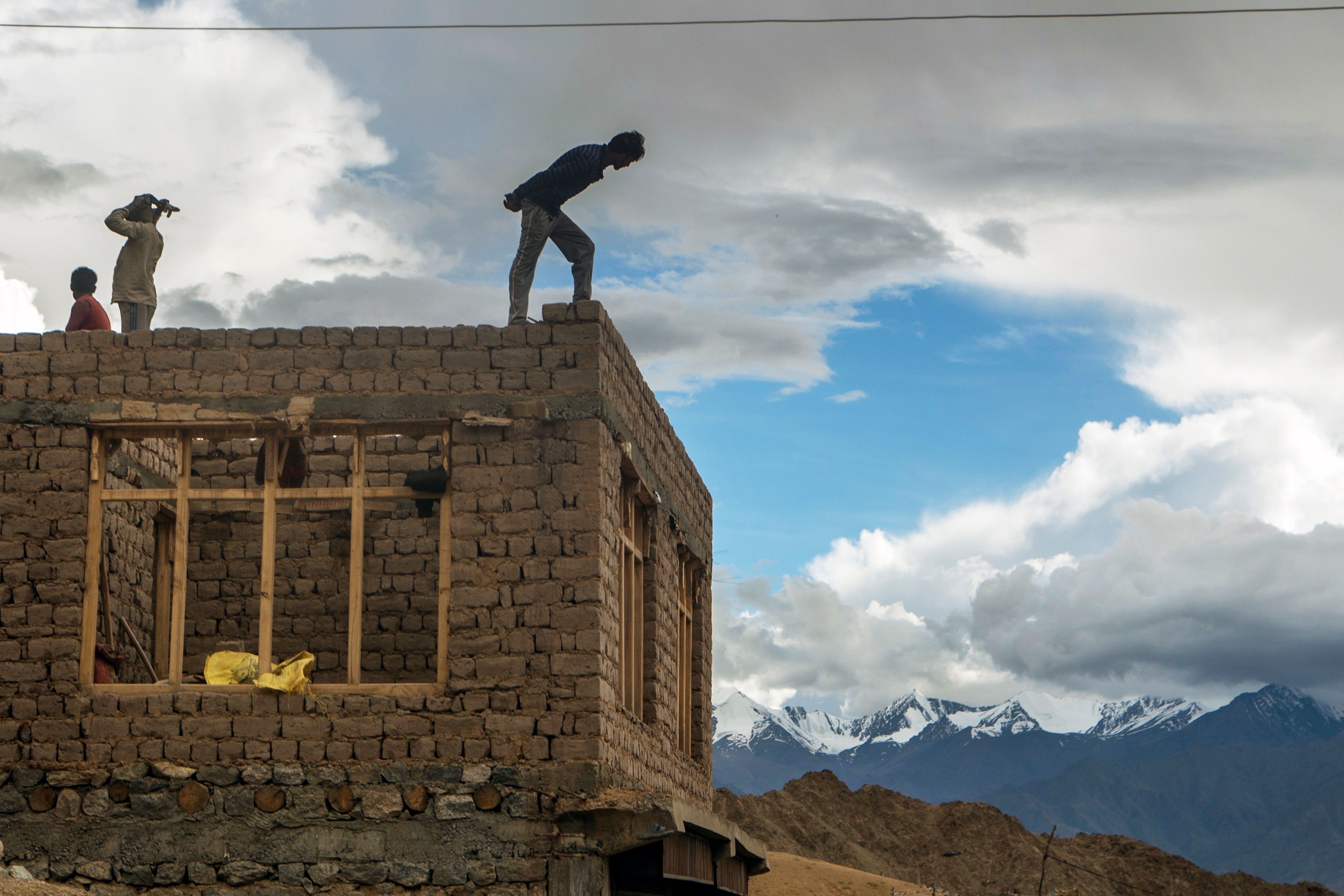
Prime Minister Narendra Modi's “Housing For All By 2022” scheme needs Rs 1 lakh crore in the next three years to complete the construction of one crore urban homes, according to Crisil Research.
The government needs to contribute Rs 1.5 lakh crore in seven years through March 2022 to construct one crore homes under the Pradhan Mantri Awas Yojana - Urban, making the average cost of a house at Rs 1.5 lakh, according to a note by Crisil. Only 22 percent of this, or Rs 32,500 crore, has been disbursed so far, it said.
“Our calculations show the government will have to garner around Rs 1 lakh crore over the next three years if it has to achieve the target of building one crore houses,” Prasad Koparkar, senior director at Crisil Research, wrote. “This is going to be a tall ask given the current fiscal arithmetic.”
The urban part of the prime minister's scheme includes slum redevelopment, affordable housing in partnership, beneficiary-led home construction or improvement and credit-linked subsidy. Economically weaker sections and low-income group beneficiaries can avail assistance of up to Rs 2.67 lakh a house, while benefits to middle-income families are restricted to credit-linked subsidy.

Although a total of 63 lakh houses were sanctioned but only 12 lakh were constructed as of Nov. 26 and around 23 lakh are under construction, according to the report. The flagship scheme, being implemented by the Ministry of Housing and Urban Affairs since its launch in June 2015, aims to build 30 lakh houses by the end of current fiscal. The ministry also plans to sanction 75 lakh new houses by the close of this fiscal.
Andhra Pradesh, Uttar Pradesh, Maharashtra, Madhya Pradesh and Tamil Nadu together accounted for a 55 percent share of the sanctioned houses, the report said.
Earlier this month, the Union Housing and Urban Affairs Minister Hardeep Singh Puri had said that PMAY will achieve its target two years before its 2022 deadline. “In every three months several housing projects are being sanctioned and execution of projects under PMAY is excellent,” the minister said, adding that Rs 60,000 crore under National Urban Housing Fund had been provided as part of extra budgetary resources for the scheme.
Over the past seven quarters, PMAY-U witnessed average project investments worth Rs 35,000 crore per quarter and average sanctions of six lakh units per quarter, Crisil said. “Going by the current sanctioning velocity, the targets seem achievable, provided execution also gains momentum.”
PM Modi's flagship scheme faces headwinds from unavailability of land in prime areas or within the city limits, lack of interest from private developers, bidding mechanism, among others, the rating agency said.
Crisil noted that for extra budgetary resources, the government has initiated fundraising through entities like the Housing and Urban Development Corporation. Since these are typically bonds with a 10-year maturity with interest and principal repayment managed through future budgetary announcements, the provisions in future budgets would be a key monitorable, the rating agency said.

“One crore houses would mean an opportunity for over Rs 2 lakh crore of home loans, and incremental consumption of 80-100 million tonne of cement and 10-15 million tonne of steel,” the agency's Research Director Rahul Prithiani said
He pointed that the construction opportunity was worth four billion square feet over the life of the scheme. This would translate into nine to ten crore incremental jobs over the execution period, without factoring in some repetitive jobs continuing after the completion of a project.

-
High US Salaries, No Green Card Certainty: The Financial Calculation Facing Indian H-1B Families

The suspension of PERM processing at eight technology employers does not cancel existing H-1B visas. What it does is force a question many Indian families have been avoiding: is the US salary worth tying your career and family plans to one employer?
-
Swiggy vs Eternal: Food Delivery's Two Rivals Are No Longer In The Same Race
Eternal is building a private AI assistant, dark.ai. Swiggy is still working out how to make Instamart pay, with an operating loss of Rs 895 crore in the July-September quarter while Blinkit stayed profitable.
-
Where You Live Shapes How You Get To Work | The Reason Why
Two-wheelers are the most popular way to get to work in India, accounting for nearly 43% of workplace commutes.
-
Unhedged Position: Can India See An Indonesia-Style Time Correction?
The Nifty is trading below levels it first clocked in 2024. Is there, then, as I have suggested in the headline, potential that the current time correction drags on painfully for the next three-five, even ten years?
-
Navigating Friction And Energy Realities: An Analysis Of Marco Rubio's October Visit To India
Occurring at a critical juncture marked by stalled trade negotiations and escalating geopolitical pressures over global energy supplies, the visit offers a profound window into modern US-India relations.
-
India Exports Capital. Why Not Export Trusteeship?
The big question, then, is whether India can build an institution that global borrowers, investors, banks, and lawyers can trust, even without an Indian connection.
-
France's Economy & Politics Are In Crisis | The Reason Why
Let's look at how the French economy and politics evolved under Nicolas Sarkozy, Franois Hollande and Emmanuel Macron.
-
You May Inherit The Business. You Must Earn Its Credibility.
Succession tests the founder's ability to share authority as much as it tests the next generation's readiness to assume it.
-
Signing Deals Is One Thing; Making Them Work Is Another | The Week In Whys
Sometimes, things don't turn out as planned. Indian companies have lost some bids to rivals, some projects won't produce until 2030.
-
FOMC Wall, PERM Suspension, Hospital Stocks | Talking Points This Week
A PERM suspension would directly affect green-card sponsorship rather than H-1B visas, so the near-term earnings impact could remain relatively limited. The key question is whether this marks a new phase in US scrutiny of Indian IT.









