Modi Arrives In Germany On First Leg Of Four-Nation Tour
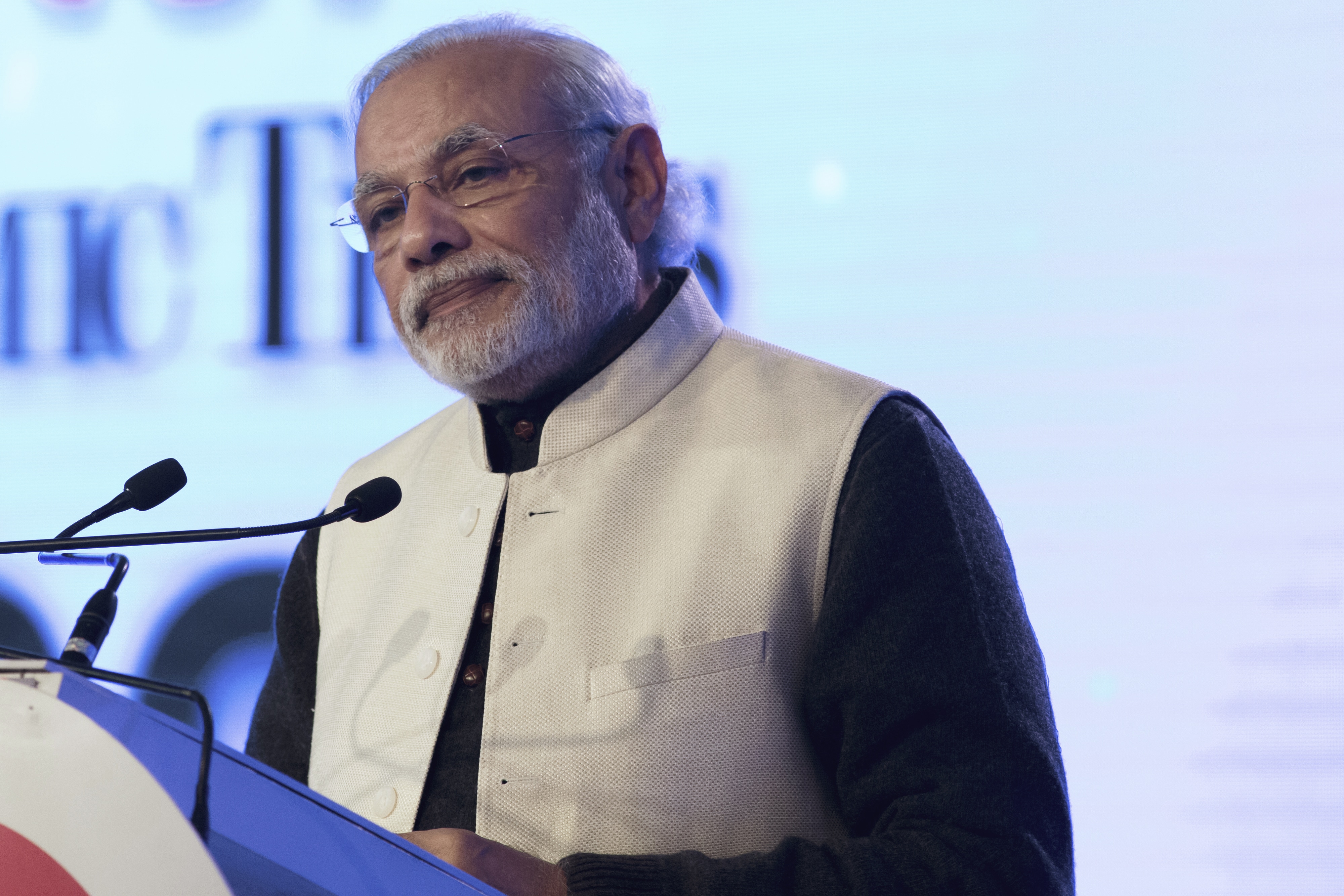
Prime Minister Narendra Modi arrived in Berlin on the first leg of his six-day, four-nation tour of Germany, Spain, Russia and France aimed at boosting bilateral economic engagement with them and inviting more investment for India's transformation.
Reached Germany. I am sure this visit will lead to beneficial outcomes & deepen India-Germany friendship. pic.twitter.com/RdYLWUYeMn
May 29, 2017His Germany visit, which he described as a "new chapter" in bilateral relations, will begin with a meeting with Chancellor Angela Merkel at her country retreat of Schloss Meseberg.
Both leaders will discuss issues of mutual interest in an informal setting over dinner at the 18th-century palace, nearly 80 km northwest of Berlin.
"I am confident that this visit will open a new chapter in our bilateral cooperation with Germany and further deepen our strategic partnership," Modi said in a Facebook post ahead of his visit.
Modi said he and Merkel will “chart out a future roadmap of cooperation with focus on trade and investment, security and counter-terrorism, innovation and science and technology, skill development, urban infrastructure, railways and civil aviation, clean energy, development cooperation, health and alternative medicine”.
Describing Germany as a valuable partner, the prime minister said, “German competencies fit well with my vision for India's transformation”.
The more formal part of the visit will begin tomorrow when Modi is welcomed with military honors at the Chancellery, following which he will hold talks with Merkel as part of the fourth round of the bi-annual India-Germany Intergovernmental Consultations [IGC]. The last IGC was held in New Delhi in October 2015 when bilateral ties were significantly scaled up.
Also Read: Prime Minister Narendra Modi Embarks On Four Nation Tour
In Berlin, the two leaders are expected to clinch a host of agreements and are likely to deliberate on several pressing global issues, including the situation in the South China Sea, China's 'One Belt, One Road' initiative and the growing threat of terrorism.
Prime Minister Modi and Chancellor Merkel will have a luncheon meeting with senior business leaders before inaugurating the Indo-German Business Forum on Tuesday.
The deadlocked Free Trade Agreement (FTA) between India and the European Union (EU) is likely to take centre-stage at this meeting, with Germany-based CEOs keen to push for a further opening up of the Indian market.
The India-Germany Bilateral Investment Treaty (BIT), among India's 23 BITs with EU countries, had lapsed in March this year. Trade between the two countries stands at 17.42 billion euros in 2016, up only marginally from 17.33 billion euros the previous year.
Germany is the seventh largest foreign direct investor (FDI) in India and the total FDI from April 2000 until December 2016 amounted to $9.54 billion. A total of 1,800 German companies are operating in India.
The German embassy in Berlin had launched the Make in India Mittelstand (MIIM) Programme in September 2015 to facilitate the German Mittelstand (SMEs) to do business in India.
Currently 73 German Mittelstand (SMEs) companies are being facilitated through MIIM Programme for their market entry and investment in India.
Out of these, 46 companies have progressed well in India investment plan, the embassy claims.
Modi will end his German tour with a courtesy call on German President, Frank-Walter Steinmeier, before leaving for Spain on Tuesday evening.

-
High US Salaries, No Green Card Certainty: The Financial Calculation Facing Indian H-1B Families

The suspension of PERM processing at eight technology employers does not cancel existing H-1B visas. What it does is force a question many Indian families have been avoiding: is the US salary worth tying your career and family plans to one employer?
-
Swiggy vs Eternal: Food Delivery's Two Rivals Are No Longer In The Same Race
Eternal is building a private AI assistant, dark.ai. Swiggy is still working out how to make Instamart pay, with an operating loss of Rs 895 crore in the July-September quarter while Blinkit stayed profitable.
-
Where You Live Shapes How You Get To Work | The Reason Why
Two-wheelers are the most popular way to get to work in India, accounting for nearly 43% of workplace commutes.
-
Unhedged Position: Can India See An Indonesia-Style Time Correction?
The Nifty is trading below levels it first clocked in 2024. Is there, then, as I have suggested in the headline, potential that the current time correction drags on painfully for the next three-five, even ten years?
-
Navigating Friction And Energy Realities: An Analysis Of Marco Rubio's October Visit To India
Occurring at a critical juncture marked by stalled trade negotiations and escalating geopolitical pressures over global energy supplies, the visit offers a profound window into modern US-India relations.
-
India Exports Capital. Why Not Export Trusteeship?
The big question, then, is whether India can build an institution that global borrowers, investors, banks, and lawyers can trust, even without an Indian connection.
-
France's Economy & Politics Are In Crisis | The Reason Why
Let's look at how the French economy and politics evolved under Nicolas Sarkozy, Franois Hollande and Emmanuel Macron.
-
You May Inherit The Business. You Must Earn Its Credibility.
Succession tests the founder's ability to share authority as much as it tests the next generation's readiness to assume it.
-
Signing Deals Is One Thing; Making Them Work Is Another | The Week In Whys
Sometimes, things don't turn out as planned. Indian companies have lost some bids to rivals, some projects won't produce until 2030.
-
FOMC Wall, PERM Suspension, Hospital Stocks | Talking Points This Week
A PERM suspension would directly affect green-card sponsorship rather than H-1B visas, so the near-term earnings impact could remain relatively limited. The key question is whether this marks a new phase in US scrutiny of Indian IT.









