Modi Arrives In Astana As India Set To Enter Shanghai Cooperation Organisation
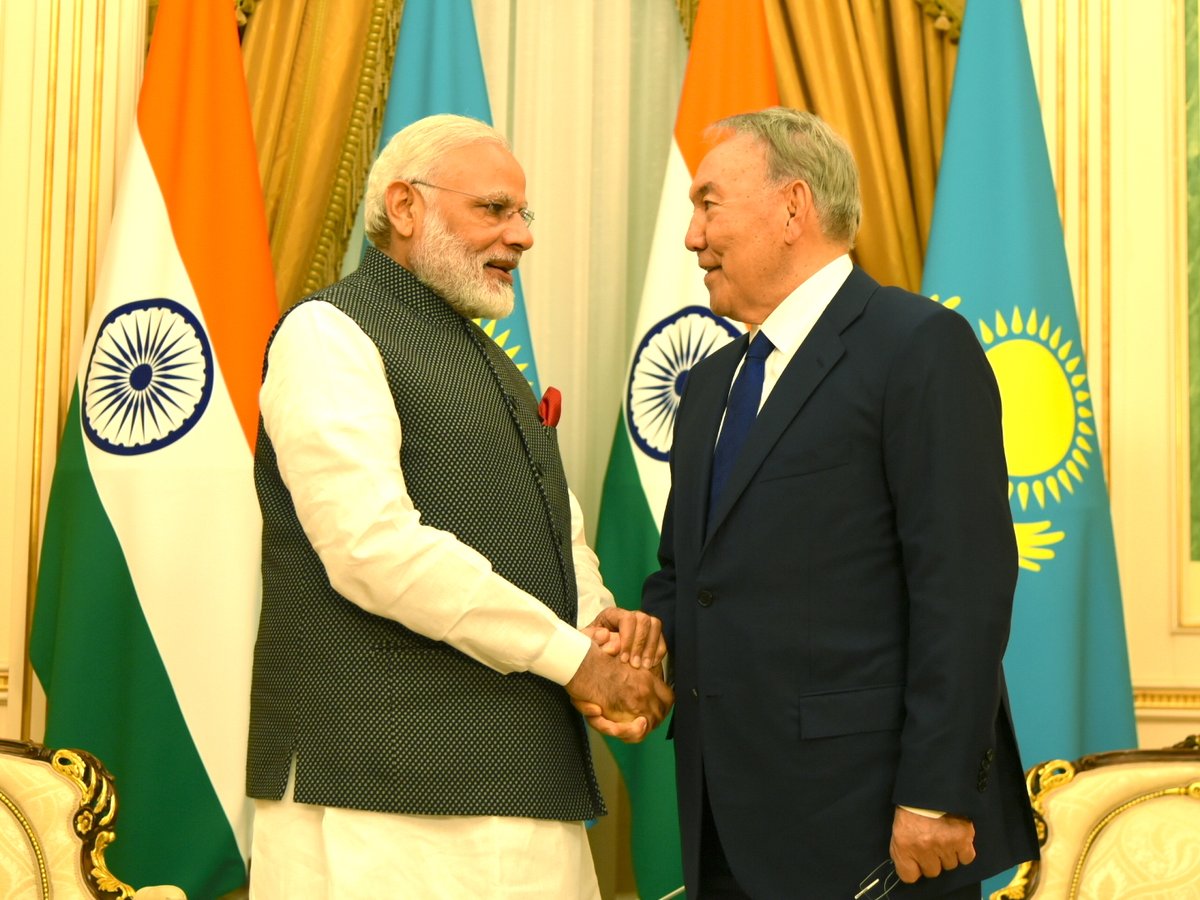
- India and Pakistan will be inducted as full members of the Shanghai Cooperation Organisation.
- This is first meeting between the two leaders after India boycotted the high-profile Belt and Road Forum in Beijing last month.
- Modi and Pakistan PM Nawaz Sharif may meet to ease the growing tension between the two neighbours.
- India keen on deepening its security-related cooperation with the SCO and its Regional Anti-Terrorism Structure.
Prime Minister Narendra Modi arrived in Kazakhstan's capital Astana on Wednesday for a two-day visit to attend the Shanghai Cooperation Organisation (SCO) Summit. India and Pakistan will be inducted as full members of the bloc during the summit, in the first ever expansion since its inception in 2001.
India's entry into the China-dominated grouping is seen as a major milestone as it is expected to increase the group's heft in regional geo-politics and trade negotiations besides giving it a pan-Asian hue.
Experts say India's inclusion may even bring down Beijing's overarching influence over the SCO.
The Prime Minister will address the SCO Summit tomorrow and is expected to meet Chinese President Xi Jinping amid growing differences between the two countries over a host of issues, including the China-Pakistan Economic Corridor and India's Nuclear Suppliers Group membership bid.
If the meeting takes place, then it would be the first between the two leaders after India boycotted the high-profile Belt and Road Forum held in Beijing last month in which 29 world leaders took part.
India abstained from the Summit to highlight its concerns over the $50 billion China-Pakistan Economic Corridor which is part of the Belt and Road Initiative (BRI) and passes through Pakistan-occupied Kashmir (PoK).
There is also speculation about a possible meeting between Modi and Pakistan Prime Minister Nawaz Sharif to ease the growing tension between the two neighbours.
However, India has been maintaining that there was neither any request from the Pakistani side nor any such proposal from the Indian side for a Modi-Sharif meeting.
President Xi arrived on Wednesday, while Prime Minister Sharif reached the Kazakh capital on Thursday.
The Prime Minister is also expected to meet a number of other foreign leaders, including Kazakh President Nursultan Nazarbayev.
“I look forward to deepening India's association with the SCO which will help us in economic, connectivity and counter- terrorism cooperation, among other things,” Prime Minister Modi said ahead of his visit.
The SCO had set the ball rolling to make India a member of the bloc during its summit in Ufa, Russia, in July, 2015, when administrative hurdles were cleared to grant membership to India and Pakistan.
Entry of India and Pakistan will enhance the SCO's influence in dealing with pressing challenges and promoting trade and investment in the region.Rashid Alimov, Secretary-General, SCO
Inclusion of India and Pakistan into the SCO would mean addition of another 1.45 billion people which would make the grouping cover around 40 per cent of the global population.
The SCO was founded at a Summit in Shanghai in 2001 by the Presidents of Russia, China, Kyrgyz Republic, Kazakhstan, Tajikistan and Uzbekistan.
India, Iran and Pakistan were admitted as observers at the 2005 Astana Summit. The Tashkent SCO Summit in June 2010 had lifted the moratorium on new membership, paving the way for the expansion of the grouping.
India feels as an SCO member, it will be able to play a major role in addressing the threat of terrorism in the region.
India is also keen on deepening its security-related cooperation with the SCO and its Regional Anti-Terrorism Structure (RATS) which specifically deals with issues relating to security and defence.
India has been an observer at the SCO since 2005 and has generally participated in the ministerial-level meetings of the grouping which focus mainly on security and economic cooperation in the Eurasian region.
Russia had been favouring permanent SCO membership for India while China pushed for induction of Pakistan.

-
Navigating Energy Crossroads: S Jaishankar's Call For Diversified Supply Chains At G20 Ministerial Meeting

As geopolitical fault lines continue to test maritime trade routes and commodity flows, Jaishankar's message remains pertinent: true economic resilience requires open markets, protected transit lines, and a genuine commitment to multilateral cooperation rather than coercion.
-
Indians Are Travelling, But Not Every Journey Is A Holiday | The Week In Whys
Pilgrims, patients and working women are the real travellers, and the system hasn't quite caught up with them.
-
Getting To Work Costs Women More | The Reason Why
It is not just about women paying more than men. It is about women paying much more in cities than in villages.
-
AI Bias In Investing Cannot Be Eliminated, But It Can Be Governed
Framing is a particularly important example as identical financial information presented in terms of gains rather than losses can lead an LLM to reach a different assessment.
-
Joining The Dots | Dark Skies, Steady Diya: Why Hope Holds This Diwali
With war, a weak rupee and foreign outflows weighing on sentiment, policymakers at the NDTV World Summit and market veterans at NDTV Profit Ignite: Diwali Edition offered the same advice: stay invested and filter out the noise.
-
The Curious Case of Equitas Small Finance Bank And A CEO Who Quit For Stock
PN Vasudevan believes persistent investor concerns over a perceived conflict of interest had become a governance overhang on Equitas Small Finance Bank's stock, even as the lender improved profitability and asset quality.
-
Talking Points This Week: AI Cash Burn, A Tiger Comeback And An India That Still Finds Its Own Path
India is not immune to higher oil or tighter global liquidity, yet its earnings base is broader, its domestic policy levers are still available.
-
Foreign Investors Own Half Of HDFC Bank and ICICI Bank. An LTCG Cut Could Matter Most Here
Foreign portfolio investors have US$115 billion parked in HDFC Bank, ICICI Bank. If the government cuts long-term capital gains tax, Jefferies says returning foreign money could land here first.
-
'Never Seen This Level Of Negativity': Sandeep Tandon Says The Next Rally May Be Closer Than You Think
Veteran investor Sandeep Tandon says foreign selling is easing, large-caps are due a comeback and mid-caps are crowded, while he turns positive on gold, power and pharma this Diwali.










