Michigan Would Take Biggest Hit From Border Tax, Foes Say
(Bloomberg) -- Michigan, a state critical to Donald Trump's presidential win, would be the hardest hit by a proposed 20 percent tax on U.S. companies' domestic sales and imports, according to a study released by conservative groups associated with billionaire brothers Charles and David Koch.
The report, which used federal tax, labor and census data, was commissioned by Freedom Partners and Americans for Prosperity. Both have lobbied against the so-called border-adjusted tax, while supporting comprehensive tax reform.
The proposal for border adjustments -- part of a tax overhaul plan backed by House Speaker Paul Ryan of Wisconsin and House Ways and Means Committee Chairman Kevin Brady of Texas -- is driving a wedge between the mega donors and some of their traditional political allies. The Koch-backed groups say the tax would mean higher costs for retailers and other industries that rely on imports, including Michigan's automakers.
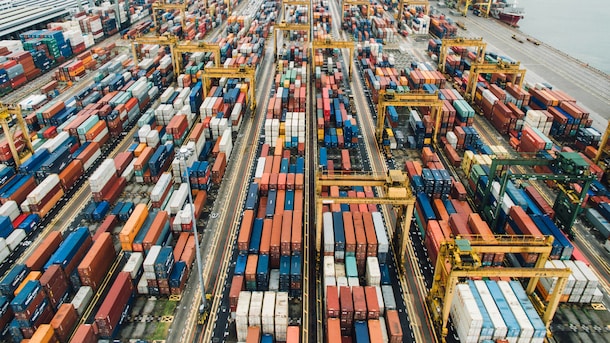
The study, released Thursday morning, compared state imports to overall economic activity to show how sensitive each might be to a tax on imported goods. Those most affected, because of their higher level of imports as compared to gross domestic product, were found to be Michigan, Louisiana, Tennessee, New Jersey, Kentucky, South Carolina, Illinois, Texas, Georgia and California.
Like Michigan, eight of the top 10 states listed in the study are home to auto assembly plants. Ryan's home state of Wisconsin ranked 29th, while Brady's Texas was eighth.
Stronger Dollar
“Americans deserve comprehensive, pro-growth tax reform, but a new tax on U.S. consumers is the wrong approach,” Nathan Nascimento, a vice president of policy for Freedom Partners, said in a statement. “Lawmakers should consider the vital role of importers in their states, and ask themselves whether they are willing to put so much at risk just as state and local economies are starting to turn the corner.”
The proposal's supporters say it would lead to a strengthening dollar, which would mitigate the affect on importers. Still, some economists have said currency exchange rates are difficult to predict and may not move in lockstep with a tax on imports.
The American Made Coalition, a group of exporters that includes Boeing Co. and General Electric Co., was critical of the report's findings.
“This erroneous ‘study' cherry-picks a stand-alone provision and conveniently fails to look at the entirety of the Republican tax reform proposal, which includes a $2 trillion tax cut,” spokesman John Gentzel said in a statement. “Our current tax system is outdated and gives foreign importers, including the sponsors of this report, a huge leg up over American manufacturers.”
‘Easily Discredited'
That sentiment was echoed by Brady on Thursday afternoon in comments to reporters.
“That so-called study will be easily discredited and probably fits the definition of fake news,” he said. “It takes one provision, pretends the economy freezes, that there are no changes in currency, applies it in our current tax code, and comes up with fantasy figures.”
An automotive industry study found that carmakers would need to raise prices by thousands of dollars to recoup higher costs associated with the tax.
The National Automobile Dealers Association and the American International Automobile Dealers Association have raised concerns about the proposal, while the two biggest U.S. automakers have expressed differing views.
Companies Split
Mary Barra, chief executive officer for General Motors Co., said in February that the BAT could be “harmful” if not done thoughtfully and warned of unintended consequences. Mark Fields, Ford's chief executive officer, in January called the proposal “very intriguing” for his company because it's the largest producer of vehicles in the U.S. and a top exporter.
Japanese, German and Korean carmakers would likely get hit even harder by the tax than most U.S. manufacturers. Some of the states in the study's top 10 list are home to their plants, including Tennessee (Volkswagen), Kentucky (Toyota), Illinois (Subaru), Texas (Toyota) and Georgia (Kia).
The House Republican plan calls for replacing the existing corporate income tax of 35 percent with the border-adjusted tax on their domestic sales. Companies' exports and offshore income would be exempt from U.S. taxes. The proposal, which has been estimated to raise more than $1 trillion over a decade, is a centerpiece of Ryan's tax blueprint because it helps to fund planned rate cuts.
Koch Industries, a Wichita, Kansas-based conglomerate with interests ranging from oil and ranching to farming and the manufacturing of electrical components, would actually benefit from passage of the proposal because it produces many products domestically, according to a statement earlier this year released by Koch Companies Public Sector LLC.
Whether Trump would sign on to a border-adjusted tax remains to be seen. Treasury Secretary Steven Mnuchin and Gary Cohn, the chairman of his National Economic Council, are said to oppose the concept.
--With assistance from Craig Trudell and Sahil Kapur
To contact the reporter on this story: John McCormick in Chicago at jmccormick16@bloomberg.net.
To contact the editors responsible for this story: Joshua Gallu at jgallu@bloomberg.net, John Voskuhl, Justin Blum

-
Unhedged Position: Can India See An Indonesia-Style Time Correction?

The Nifty is trading below levels it first clocked in 2024. Is there, then, as I have suggested in the headline, potential that the current time correction drags on painfully for the next three-five, even ten years?
-
Navigating Friction And Energy Realities: An Analysis Of Marco Rubio's October Visit To India
Occurring at a critical juncture marked by stalled trade negotiations and escalating geopolitical pressures over global energy supplies, the visit offers a profound window into modern US-India relations.
-
India Exports Capital. Why Not Export Trusteeship?
The big question, then, is whether India can build an institution that global borrowers, investors, banks, and lawyers can trust, even without an Indian connection.
-
France's Economy & Politics Are In Crisis | The Reason Why
Let's look at how the French economy and politics evolved under Nicolas Sarkozy, Franois Hollande and Emmanuel Macron.
-
You May Inherit The Business. You Must Earn Its Credibility.
Succession tests the founder's ability to share authority as much as it tests the next generation's readiness to assume it.
-
Signing Deals Is One Thing; Making Them Work Is Another | The Week In Whys
Sometimes, things don't turn out as planned. Indian companies have lost some bids to rivals, some projects won't produce until 2030.
-
FOMC Wall, PERM Suspension, Hospital Stocks | Talking Points This Week
A PERM suspension would directly affect green-card sponsorship rather than H-1B visas, so the near-term earnings impact could remain relatively limited. The key question is whether this marks a new phase in US scrutiny of Indian IT.
-
Everything, Everywhere, All At Once: Dalal Street's Week To Forget | Joining The Dots
Visa curbs, a Starlink spat and cancer drug caps: what connects this week's shocks for Indian markets
-
India Is Going Abroad For Critical Minerals. But It May Take Years To Pay Off | The Reason Why
Although India's steps are in the right direction, they remain modest compared with India's growing dependence.
-
When Everyone Has AI, What Gives You An Edge?
India's young workforce is entering an uncertain world of work where powerful AI tools are becoming widely accessible. The advantage will belong to those who combine deep expertise with digital fluency, and the distinctly human capabilities that technology cannot manufacture.