Maldives’ Former President Mohamed Nasheed Seeks Indian Military Intervention
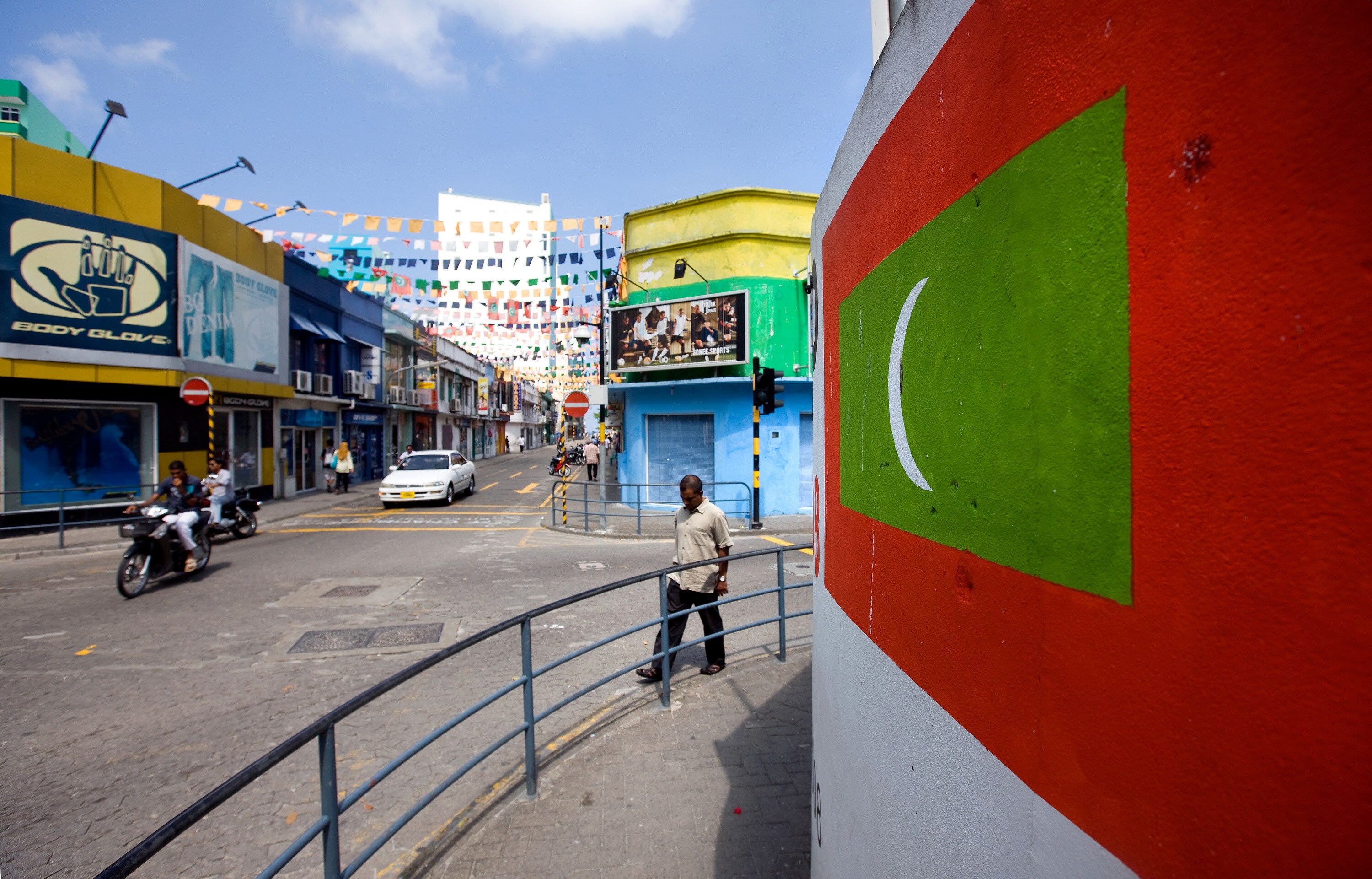
Exiled former Maldivian president Mohamed Nasheed today sought India's diplomatic and military intervention to resolve the ongoing political crisis in the island nation after President Abdulla Yameen declared a state of emergency and troops arrested the top judge.
The picturesque Indian Ocean archipelago was plunged into chaos on Thursday when the Supreme Court called for the release of nine imprisoned opposition politicians, ruling that their trials were politically motivated and flawed.
The government refused to implement the ruling, prompting a wave of protests in the capital, Male, with angry clashes between police and demonstrators.
Yameen yesterday declared a state of emergency. Chief Justice Abdulla Saeed and another judge, Ali Hameed, were arrested hours after the government declared a state of emergency. No details were given about the investigation or any charges. Former President Maumoon Abdul Gayoom, who has allied himself with the Opposition, was detained at his home.
Nasheed, whose Maldivian Democratic Party functions from Colombo, appealed for India's help.
In a statement issued here by the MDP, Nasheed said, “We would like the Indian government to send an envoy, backed by its military, to free the judges and the political detainees, including former President Maumoon Abdul Gayoom, from their detention and to bring them to their homes. We are asking for a physical presence.”
Nasheed said that President Yameen has illegally declared martial law.
“President Yameen's announcement — which declares a state of emergency, the banning of fundamental freedoms, and the suspension of the Supreme Court — is tantamount to a declaration of martial law in the Maldives. This declaration is unconstitutional and illegal. Nobody in the Maldives is required to, nor should, follow this unlawful order,” Nasheed said.
“We must remove him from power. The people of the Maldives have a legitimate request to world governments, especially to India and the United States.”
He also asked the U.S. to ensure that all American financial institutions stop all transactions of the Yameen regime's leaders.
Earlier, Nasheed also expressed concern over Yameen's deliberate delay in implementing the Supreme Court ruling to immediately release political prisoners. “This deliberate refusal by the government to uphold the Constitution further destabilises the Maldives and wider Indian Ocean security,” Nasheed said.
Nasheed, 50, the country's first democratically-elected leader -- was sentenced to 13 years in jail on terror charges in March 2015 over the arbitrary arrest of chief criminal judge Abdullah Muhammed during his presidency.
He was granted asylum in the U.K. after he was authorised to seek medical treatment there amid mounting foreign pressure.
Nasheed was narrowly defeated in 2013 by President Yameen. Nasheed says his conviction on terror charges was politically motivated.
The Maldivian government holds that Nasheed is convicted for a crime and is wanted in the Maldives to serve a jail sentence. Nasheed said he will seek UN support to ensure he is allowed to contest this year's election.

-
High US Salaries, No Green Card Certainty: The Financial Calculation Facing Indian H-1B Families

The suspension of PERM processing at eight technology employers does not cancel existing H-1B visas. What it does is force a question many Indian families have been avoiding: is the US salary worth tying your career and family plans to one employer?
-
Unhedged Position: Can India See An Indonesia-Style Time Correction?
The Nifty is trading below levels it first clocked in 2024. Is there, then, as I have suggested in the headline, potential that the current time correction drags on painfully for the next three-five, even ten years?
-
Navigating Friction And Energy Realities: An Analysis Of Marco Rubio's October Visit To India
Occurring at a critical juncture marked by stalled trade negotiations and escalating geopolitical pressures over global energy supplies, the visit offers a profound window into modern US-India relations.
-
India Exports Capital. Why Not Export Trusteeship?
The big question, then, is whether India can build an institution that global borrowers, investors, banks, and lawyers can trust, even without an Indian connection.
-
France's Economy & Politics Are In Crisis | The Reason Why
Let's look at how the French economy and politics evolved under Nicolas Sarkozy, Franois Hollande and Emmanuel Macron.
-
You May Inherit The Business. You Must Earn Its Credibility.
Succession tests the founder's ability to share authority as much as it tests the next generation's readiness to assume it.
-
Signing Deals Is One Thing; Making Them Work Is Another | The Week In Whys
Sometimes, things don't turn out as planned. Indian companies have lost some bids to rivals, some projects won't produce until 2030.
-
FOMC Wall, PERM Suspension, Hospital Stocks | Talking Points This Week
A PERM suspension would directly affect green-card sponsorship rather than H-1B visas, so the near-term earnings impact could remain relatively limited. The key question is whether this marks a new phase in US scrutiny of Indian IT.
-
Everything, Everywhere, All At Once: Dalal Street's Week To Forget | Joining The Dots
Visa curbs, a Starlink spat and cancer drug caps: what connects this week's shocks for Indian markets
-
India Is Going Abroad For Critical Minerals. But It May Take Years To Pay Off | The Reason Why
Although India's steps are in the right direction, they remain modest compared with India's growing dependence.









