The Woman Standing Between Modi and a Majority
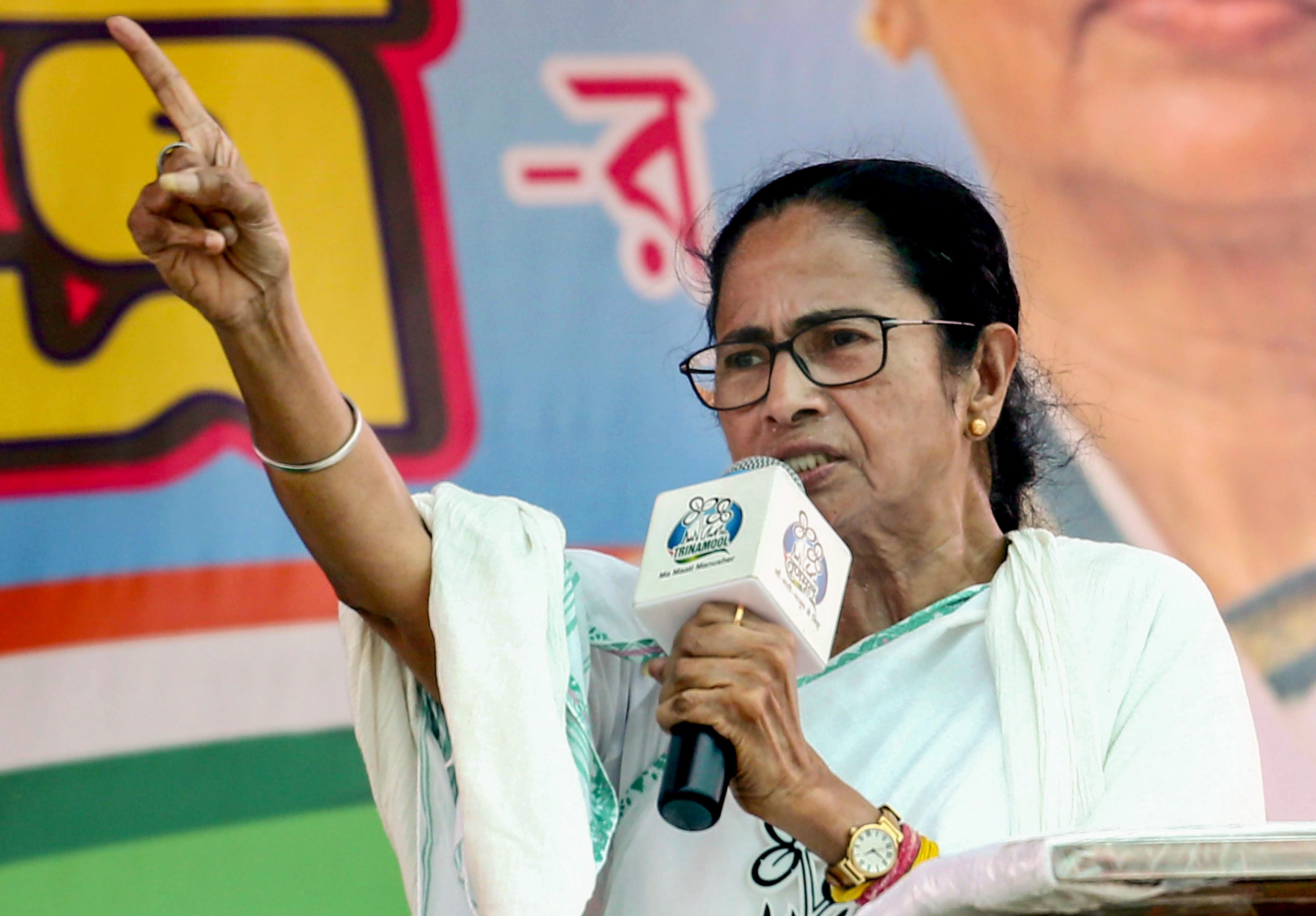
(Bloomberg) --
Santu Adhikari scavenges with scarred hands through the rubble of a Tata Motors factory where he once hoped to work. But the plant was torn down before it was finished, and the 28-year-old now spends his days among its ruins in this field outside Kolkata, hunting for scrap iron to sell.
Adhikari blames his grim predicament on one of India's most powerful regional politicians: West Bengal Chief Minister Mamata Banerjee, who triumphed in state polls after leading farmer protests here in the province's fertile Singur district to drive away the company a decade ago. Narendra Modi swooped in and brought the factory across the country to his home state of Gujarat, part of an investment push that propelled his Bharatiya Janata Party to victory in India's 2014 general election.
“She won elections and became chief minister because of Singur, and she will lose because of the condition it's in today,” Adhikari said. “We support the BJP. When the BJP hold a meeting, all the young people go.”
Modi needs frustrated voters like Adhikari to make gains in India's fourth-largest state, where his ruling BJP only won two of 42 seats five years ago. Polls show he faces a tough nationwide fight to win re-election on May 23, making it necessary to win in states where the party has previously struggled.
Standing in his way is Banerjee, 64, who still dominates this province of nearly 100 million people and is a possible prime minister candidate if a loose alliance of opposition parties can band together and defeat Modi. Her All India Trinamool Congress party won 80 percent of the state's seats in 2014, making her party the strongest opposition force nationally after the Congress Party.
Banerjee has cultivated an image as a populist street fighter, and a survivor: She lived through an attack by stick-wielding thugs early in her career. To now defend her turf from the BJP, she's turned her campaign into a full-blown assault on Modi's record, pointing to policy failures like a 2016 cash ban that hit economic growth.
“You cancelled our notes, Mr. Modi,” she shouted out in a recent speech outside Kolkata to a large crowd kept back by bamboo dividers. “Now the people of Bengal will cancel your votes and oust you.”
If Banerjee comes back with a similar number of seats and the national election is close, she could be the most important person in forming an opposition coalition government in New Delhi.
Dislodging her seems almost impossible. Even just defending her seat-rich state might be enough to prevent the BJP from cobbling a majority as the ruling party needs to win new territory amid expected losses elsewhere.
Banerjee's most passionate supporters say she's a potential prime ministerial candidate. While that's unlikely — partly because the BJP is expected to retain its grip on New Delhi — she's already using her influence to rally national opposition to Modi. In January, Banerjee hosted powerful opposition leaders from across India at a high profile meeting.
“Mamata is leading the anti-Modi brigade,” said Mahua Moitra, a former investment banker turned Trinamool state legislator.
Banerjee, who didn't respond to interview requests, has had a colorful, and sometimes contentious, career. In 1990, thugs wielding bamboo sticks fractured her skull at a rally. In 1993, police fired into a march she was leading, killing 13 people.
She vaulted to greater prominence in 2008, when she united opposition to the West Bengal government's attempts to acquire land for the Tata factory.
“She's very quick at picking up issues,” said Pradeep Gooptu, secretary of the Kolkata-based Bengal Initiative, a liberal think-tank. “She realized the discontent lay in the villages, not in the cities, so she moved over to a rural agenda to accelerate her rise to power.”
Still, for frustrated Hindus in a state where the BJP is untested, Modi's economic promises and nationalist agenda are enticing.
After Banerjee chased Tata away, Modi, who then led the western province of Gujarat, burnished his credentials by luring the company's factory there.
“If the BJP comes to power, there will be development,” said Krishna Panda, a 40-year-old farmer, who traveled hours by bus to see Modi speak in Kolkata.
In this election, the BJP is drawing criticism elsewhere for failing to create sufficient jobs. Even the Tata factory in Gujarat, which built the world's cheapest car, looks set to end production of the unpopular Nano this year. But Panda hasn't followed any of that.
Meanwhile, the BJP has attempted to argue that Trinamool courts the state's roughly 25 million Muslims at the expense of Hindus. It's seized on an important Hindu festival and Banerjee's 2017 request that celebrants refrain from submerging idols on one day of a multi-day celebration because it conflicted with an Islamic holiday.
“That hit the Bengali psyche hard,” said Jay Prakash Majumdar, BJP vice-president for West Bengal. “Hindus are thinking, ‘If we continue with Trinamool, minorities will slowly take control.'”
But Banerjee has her loyalists, particularly among rural voters attracted to the handouts she given.
One program gives free bicycles to students, another guarantees a cash payout for young girls who stay in school and one subsidizes purchases of rice and wheat.
“We have been given proper roads in last two years, and three new school buildings in the last five years,” Amanur Mondal, 32, said while waiting with thousands of supporters to hear Banerjee speak in the village of Charghat. “We are here to support and vote for Mamata Banerjee.”
To contact the editor responsible for this story: Anjali Cordeiro at acordeiro2@bloomberg.net, Ruth Pollard
©2019 Bloomberg L.P.

-
Talking Points This Week: Tech Nerves, FII Buying, And A Faraway Banking Shock

The global markets are not shining this Diwali. The exception in the large markets is, India.
-
Midterm Rally Lasted A Day. The Hard Reality Of A Divided US May Last Two Years | Opinion
Between a contested AI boom, a debt ceiling that arrives in 2027 and a president with every incentive to act alone, the next two years may prove more volatile than the first day's rally suggests.
-
Blue Wave Will Derail the AI Trade but Won't Dismantle the AI Era | Unhedged Position
The Democrats' sweep of the US Congress will see politics collide with economic forces both over the long and short term.
-
It's Time To Take The GST Council's Bet On Trust Global
Payment records can prove India's services exports, and clear, proportionate rules can bring foreign digital sellers into the tax net.
-
Opinion | India at 38: From Innovation Overperformer to Innovation Powerhouse
India now has 453 VC-backed deep science startups, 18 of them late-stage, after 117 percent growth since 2020. Laurus Labs, at USD 9.3 billion, is the most valuable deep science company in any middle-income economy outside China.
-
Navigating Energy Crossroads: S Jaishankar's Call For Diversified Supply Chains At G20 Ministerial Meeting
As geopolitical fault lines continue to test maritime trade routes and commodity flows, Jaishankar's message remains pertinent: true economic resilience requires open markets, protected transit lines, and a genuine commitment to multilateral cooperation rather than coercion.
-
Indians Are Travelling, But Not Every Journey Is A Holiday | The Week In Whys
Pilgrims, patients and working women are the real travellers, and the system hasn't quite caught up with them.
-
Getting To Work Costs Women More | The Reason Why
It is not just about women paying more than men. It is about women paying much more in cities than in villages.
-
AI Bias In Investing Cannot Be Eliminated, But It Can Be Governed
Framing is a particularly important example as identical financial information presented in terms of gains rather than losses can lead an LLM to reach a different assessment.









