Koregaon-Bhima Case: Supreme Court Stays Order Refusing Police Time To File Chargesheet
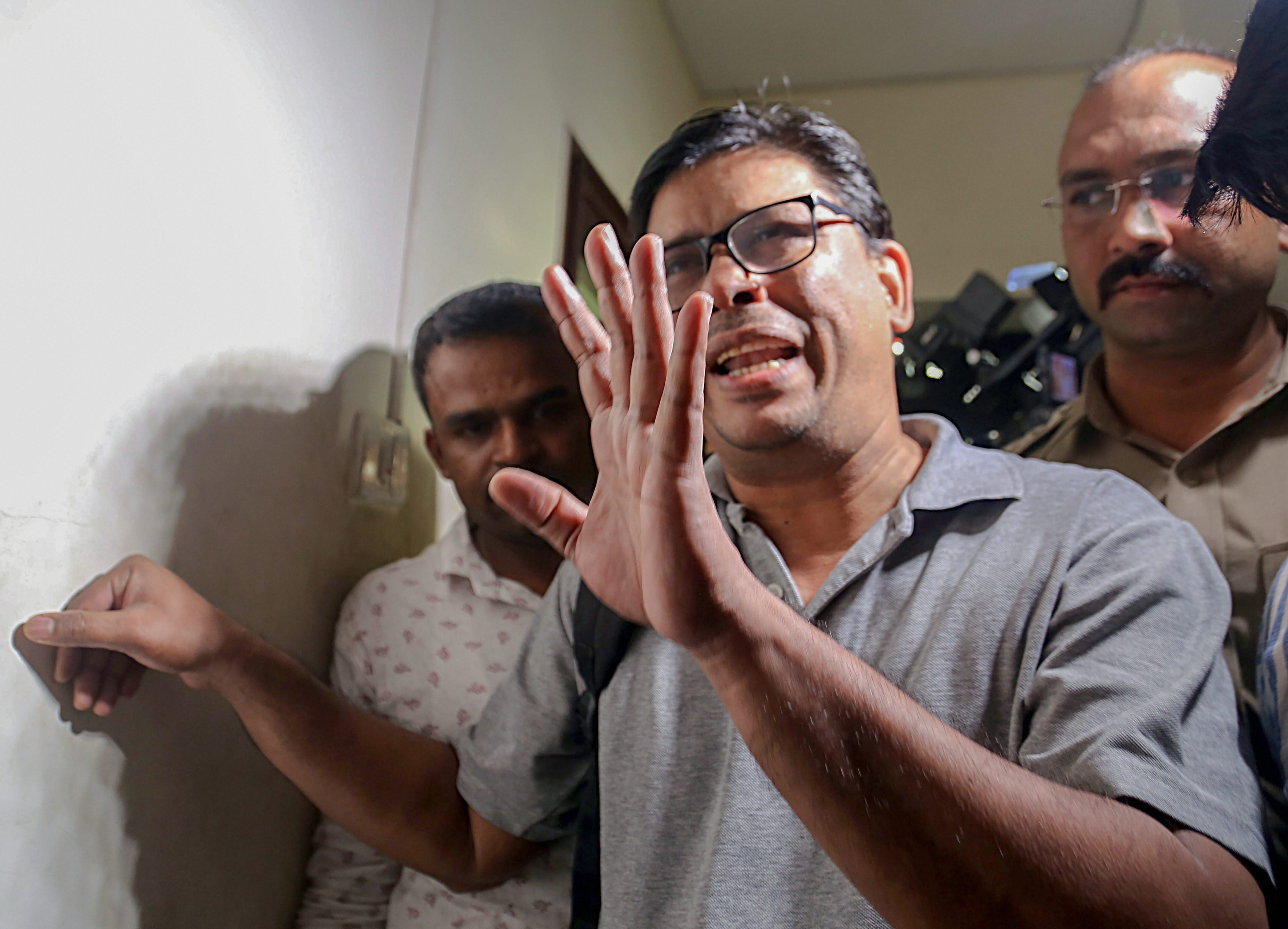
The Supreme Court stayed the Bombay High Court's order refusing extension of time to the state police for filing a chargesheet in the Koregaon-Bhima violence case.
Taking note of the appeal of the Maharashtra government, a bench headed by Chief Justice Ranjan Gogoi stayed the high court order and issued notice to rights activists on the plea. Recently, the Bombay High Court had set aside the lower court's order allowing extension of time to police to file its probe report against the rights activists in the violence case.
Earlier, the apex court had refused to interfere with the arrest of five rights activists by the Maharashtra Police in connection with the Koregaon-Bhima violence case and declined to appoint a Special Investigation Team for probe into their arrest.
The Pune Police had arrested lawyer Surendra Gadling, Nagpur University professor Shoma Sen, Dalit activist Sudhir Dhawale, activist Mahesh Raut and Kerala native Rona Wilson in June for their alleged links with Maoists under the Unlawful Activities (Prevention) Act.
The arrests had followed raids at their residences and offices in connection with the Elgar Parishad conclave held in Pune on Dec. 31 last year, which, the police had claimed, had led to violence at Bhima Koregaon the next day.
Maharashtra government had on Oct. 25 moved the apex court challenging the Bombay High Court order by which the extension of time granted to state police to conclude the probe was set aside.
The bench had considered the submissions of lawyer Nishant Katneshwar, appearing for the Maharashtra government, that the appeal needed to be heard on an urgent basis, in the previous hearing.
The lawyer had said if the high court order isn't stayed then accused in the violence case would become entitled for grant of statutory bail for want of non-filing of chargesheet within the stipulated period.
Under the Unlawful Activities Prevention Act, a chargesheet must be filed within 90 days of arrest. However, the prosecutor can file a report before the trial court, explaining the reasons for the delay, and seek more time. If satisfied, the court can extend the time by 90 days.
In the present case, the Pune sessions court had granted the police the additional 90 days, following an application from the investigating officer and written submissions by an assistant commissioner of police.
Gadling had challenged this, saying the report and the submissions came from the police, not the prosecutor. Under the Act, the report should be filed by the prosecutor, he said.
The petition filed in the top court by the state government said the investigating officer had filed an application in the trial court under his signature giving reasons for extension of time on Aug. 30, 2018. It had also said that the high court should not have been carried away by the fact of mentioning of names of the parties in detail.

-
High US Salaries, No Green Card Certainty: The Financial Calculation Facing Indian H-1B Families

The suspension of PERM processing at eight technology employers does not cancel existing H-1B visas. What it does is force a question many Indian families have been avoiding: is the US salary worth tying your career and family plans to one employer?
-
Swiggy vs Eternal: Food Delivery's Two Rivals Are No Longer In The Same Race
Eternal is building a private AI assistant, dark.ai. Swiggy is still working out how to make Instamart pay, with an operating loss of Rs 895 crore in the July-September quarter while Blinkit stayed profitable.
-
Where You Live Shapes How You Get To Work | The Reason Why
Two-wheelers are the most popular way to get to work in India, accounting for nearly 43% of workplace commutes.
-
Unhedged Position: Can India See An Indonesia-Style Time Correction?
The Nifty is trading below levels it first clocked in 2024. Is there, then, as I have suggested in the headline, potential that the current time correction drags on painfully for the next three-five, even ten years?
-
Navigating Friction And Energy Realities: An Analysis Of Marco Rubio's October Visit To India
Occurring at a critical juncture marked by stalled trade negotiations and escalating geopolitical pressures over global energy supplies, the visit offers a profound window into modern US-India relations.
-
India Exports Capital. Why Not Export Trusteeship?
The big question, then, is whether India can build an institution that global borrowers, investors, banks, and lawyers can trust, even without an Indian connection.
-
France's Economy & Politics Are In Crisis | The Reason Why
Let's look at how the French economy and politics evolved under Nicolas Sarkozy, Franois Hollande and Emmanuel Macron.
-
You May Inherit The Business. You Must Earn Its Credibility.
Succession tests the founder's ability to share authority as much as it tests the next generation's readiness to assume it.
-
Signing Deals Is One Thing; Making Them Work Is Another | The Week In Whys
Sometimes, things don't turn out as planned. Indian companies have lost some bids to rivals, some projects won't produce until 2030.
-
FOMC Wall, PERM Suspension, Hospital Stocks | Talking Points This Week
A PERM suspension would directly affect green-card sponsorship rather than H-1B visas, so the near-term earnings impact could remain relatively limited. The key question is whether this marks a new phase in US scrutiny of Indian IT.









