Insolvency Law: Supreme Court Declines Airtel's Plea To Set Off Dues Payable To Aircel
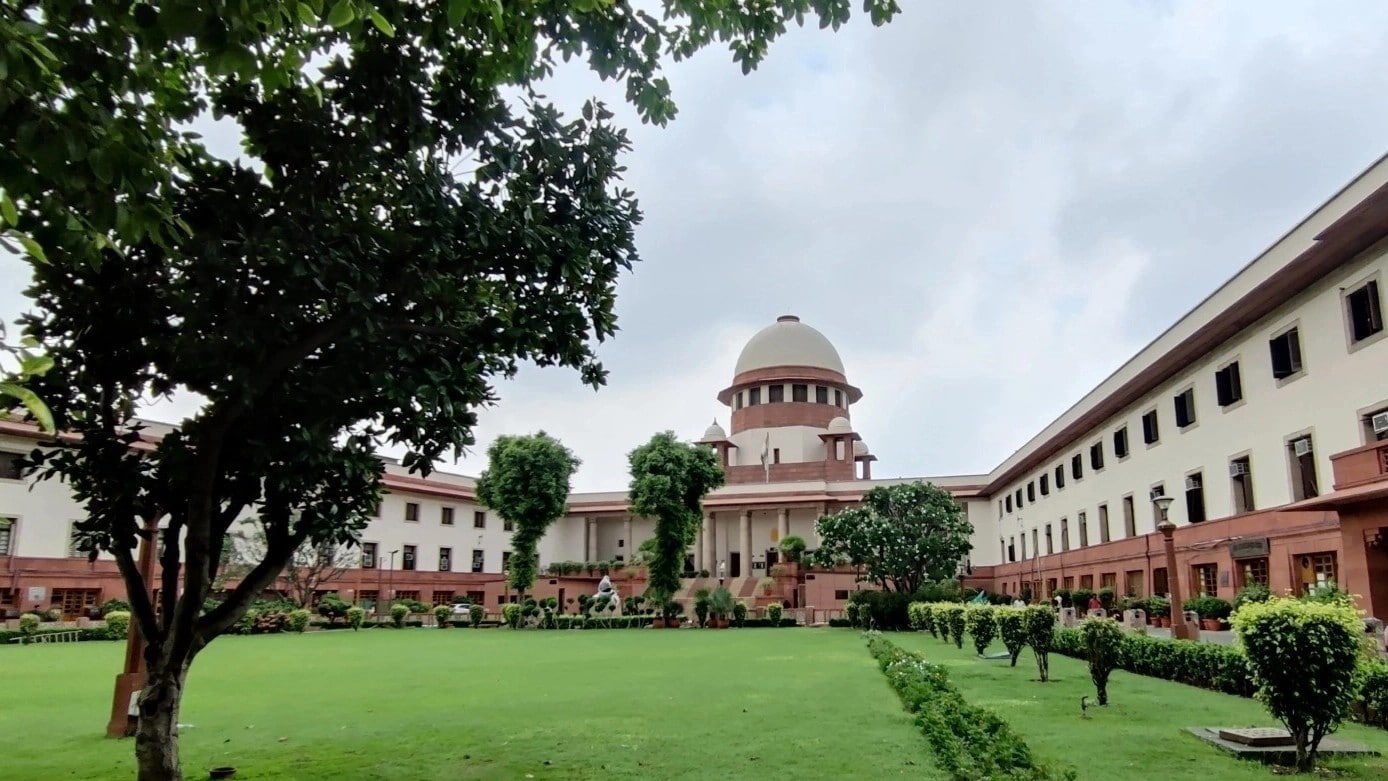
The Supreme Court upheld an order of the National Company Law Appellate Tribunal on Wednesday, which held that a set-off from an amount that is due cannot be permitted during the subsistence of a moratorium under the Insolvency and Bankruptcy Code.
The court was dealing with a case pertaining to Bharti Airtel Ltd. and its spectrum trade agreements with Aircel Ltd. and its subsidiary, Dishnet Wireless Ltd.
In 2016, Airtel entered into eight STAs for the purchase of the right to use the spectrum allocated to Aircel in the 2,300 MHz band.
Thereafter, Aircel was admitted into insolvency in 2018. At the time, Airtel owed Aircel nearly Rs 454 crore. However, Airtel claimed a set-off of Rs 112.87 crore from the amount payable, claiming that this amount is due and payable by Aircel entities.
Airtel's claim, however, was rejected by the resolution professional. This prompted it to file an appeal before the NCLT.
The NCLT held that Airtel had a right to set off Rs 112.87 crore from the payment, which was due and payable to Aircel entities.
This led to another appeal being filed before the NCLAT. The appellate tribunal allowed the appeal and held that a set-off violates the basic principles and protection accorded under the insolvency law.
The tribunal further held that as a moratorium under the IBC applies till the date of completion of the insolvency resolution process, which is until the resolution plan is approved or the liquidation order is passed, it will be contrary to law if a set-off is permitted during this period.
Subsequently, a final appeal was filed before the top court.
The court explained that the relationship and the nature of identity of the corporate debtor undergo a change upon the commencement of the resolution process.
Declining to interfere with the NCLAT's decision, the court said that the past-due bills of the debtor cannot be offset against bills that are due after the resolution process has started, as this is against the law.

-
High US Salaries, No Green Card Certainty: The Financial Calculation Facing Indian H-1B Families

The suspension of PERM processing at eight technology employers does not cancel existing H-1B visas. What it does is force a question many Indian families have been avoiding: is the US salary worth tying your career and family plans to one employer?
-
Unhedged Position: Can India See An Indonesia-Style Time Correction?
The Nifty is trading below levels it first clocked in 2024. Is there, then, as I have suggested in the headline, potential that the current time correction drags on painfully for the next three-five, even ten years?
-
Navigating Friction And Energy Realities: An Analysis Of Marco Rubio's October Visit To India
Occurring at a critical juncture marked by stalled trade negotiations and escalating geopolitical pressures over global energy supplies, the visit offers a profound window into modern US-India relations.
-
India Exports Capital. Why Not Export Trusteeship?
The big question, then, is whether India can build an institution that global borrowers, investors, banks, and lawyers can trust, even without an Indian connection.
-
France's Economy & Politics Are In Crisis | The Reason Why
Let's look at how the French economy and politics evolved under Nicolas Sarkozy, Franois Hollande and Emmanuel Macron.
-
You May Inherit The Business. You Must Earn Its Credibility.
Succession tests the founder's ability to share authority as much as it tests the next generation's readiness to assume it.
-
Signing Deals Is One Thing; Making Them Work Is Another | The Week In Whys
Sometimes, things don't turn out as planned. Indian companies have lost some bids to rivals, some projects won't produce until 2030.
-
FOMC Wall, PERM Suspension, Hospital Stocks | Talking Points This Week
A PERM suspension would directly affect green-card sponsorship rather than H-1B visas, so the near-term earnings impact could remain relatively limited. The key question is whether this marks a new phase in US scrutiny of Indian IT.
-
Everything, Everywhere, All At Once: Dalal Street's Week To Forget | Joining The Dots
Visa curbs, a Starlink spat and cancer drug caps: what connects this week's shocks for Indian markets
-
India Is Going Abroad For Critical Minerals. But It May Take Years To Pay Off | The Reason Why
Although India's steps are in the right direction, they remain modest compared with India's growing dependence.