India’s NSG Bid Has Become ‘More Complicated’, Says China
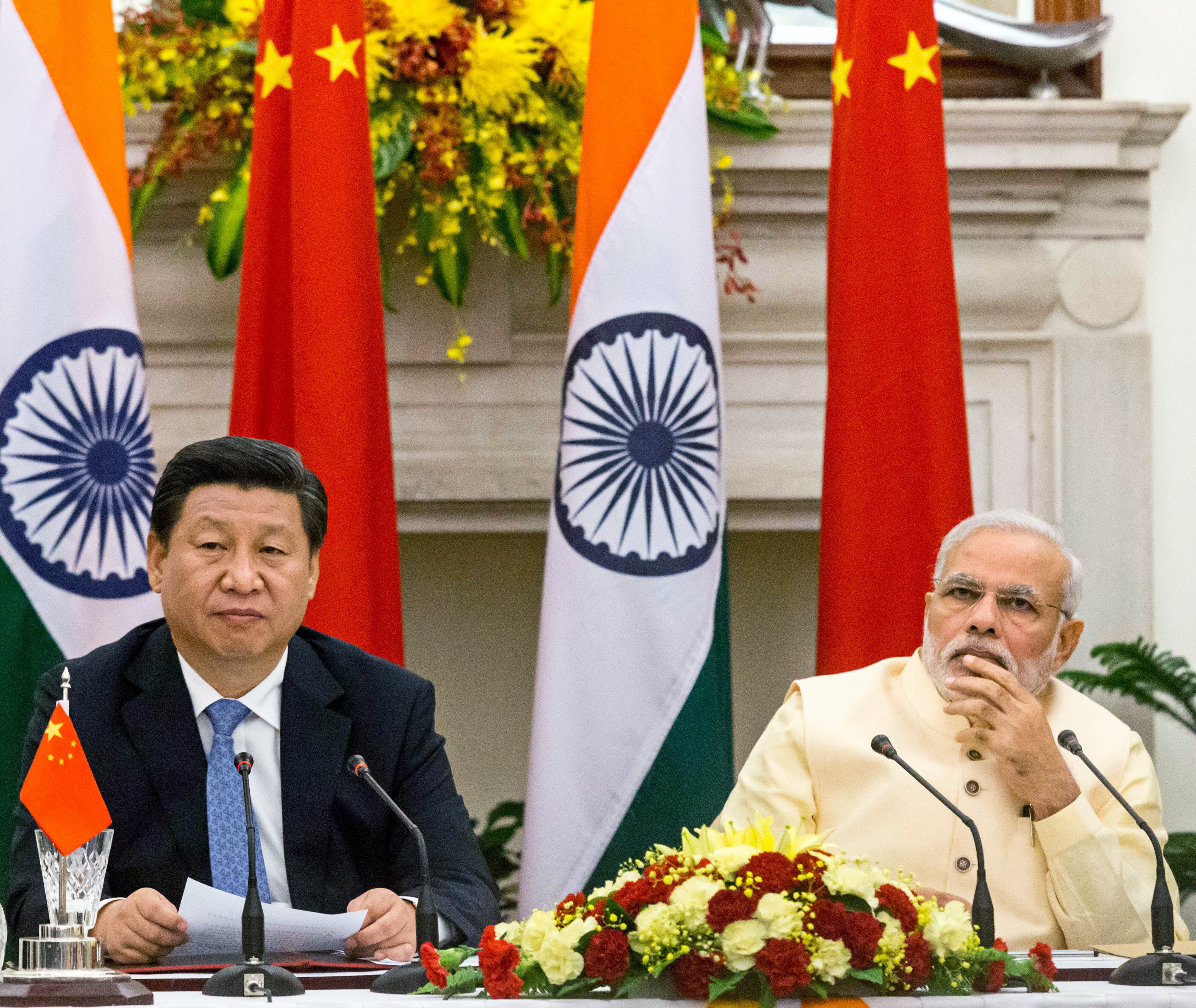
China has said India's membership bid in the Nuclear Suppliers Group (NSG) has become more complicated under the new circumstances as it again ruled out backing New Delhi's entry in the grouping, saying there should be non-discriminatory solution applicable to all Non-Proliferation of Nuclear Weapons signatory countries.
China has been blocking India's membership in the 48-nation grouping which controls the nuclear commerce even though India has the backing of majority of the members.
The group goes by consensus approach on the admission of new members. “It is a new issue under the new circumstances and it is more complicated than the previously imagined,” China's Assistant Minister of Foreign Affairs Li Huilai told media briefing.
He, however, did not elaborate what are the new circumstances and complications.
“China supports the NSG to have consultation for reaching non-discriminatory and universally applicable solution, applicable to all members of the NSG,” he said.
Pakistan has also applied for the NSG membership. While China has not openly supported Pakistan's membership, it came with a two-step approach which stipulates that the NSG members first need to arrive at a set of principles for the admission of non-NPT states into the NSG and then move forward discussions of specific cases.
Last month, Chinese Foreign Ministry spokesperson Hua Chunying told the media that there is no change in China's stand on admission of non-NPT states into NSG, ruling out any chances of India's entry into the elite grouping.
Asked about the chances of India's admission into the grouping during this month's plenary session expected to take place in the Swiss capital Bern, he said, “China's position on the non-NPT members' participation in the NSG has not changed.”
Li, who interacted with media to highlight Chinese President Xi Jinping's participation in the Shanghai Cooperation Organisation (SCO) summit to be held at Astana, Capital of Kazakhstan on June 8 to 9, said China wants to deepen relations with India.
“China and India are important neighbours and both are fast developing, both are emerging new market economies. Both are important forces upholding peace and stability”, he said.
In recent years, relations between India and China are developing “sound and at quite fast speed”.
President Xi and Prime Minister Narendra Modi during their meetings have agreed to deepen bilateral cooperation and make joint efforts to build even closer development partnership, he said.
The highlight of the SCO summit is the admission of India and Pakistan as new members of the organisation.
Prime Minister Modi is scheduled to take part in the SCO summit where his Pakistani counterpart Nawaz Sharif is also expected to be present.
Modi is also likely to meet Jinping on the sidelines of the summit though officials say the meeting has not been confirmed.
Li said the six-member grouping will be strengthened by the entry of India and Pakistan and it will extend the group's reach from Central Asia to South Asia.
He said the entry of the two countries will cover three-fifth of Euro Asian continent and will account for half of the world's population.
China will take the rotating Presidency of the group next year, Li said.
He also said Iran, which is the observer, has expressed interest to join the organisation and its application will come up for discussion at the Astana summit.
The SCO comprised of China, Kazakhstan, Kyrgyzstan, Russia, Tajikistan and Uzbekistan acts as China-dominated security group focussing on Central Asia.
India and Pakistan till now had the status of observers along with Afghanistan, Belarus, Iran and Mongolia in the group.
Asked about Afghanistan blaming Pakistan's intelligence agency for recent massive bomb attacks in Kabul, Li said China condemned recent terrorist attacks in Afghanistan, Britain and Philippines.
“China strongly condemns these violent terrorist incidents and in fact we oppose all forms of terrorism,” he said.
“The international community should step up cooperation and work together to jointly tackle the terrorism and China stands willing to work together with other parties, bilaterally and multilaterally to step up cooperation and take all necessary measures to jointly protect respective countries and regional security and development,” he said.
The SCO is also considering a treaty on terrorism.

-
Navigating Energy Crossroads: S Jaishankar's Call For Diversified Supply Chains At G20 Ministerial Meeting

As geopolitical fault lines continue to test maritime trade routes and commodity flows, Jaishankar's message remains pertinent: true economic resilience requires open markets, protected transit lines, and a genuine commitment to multilateral cooperation rather than coercion.
-
Indians Are Travelling, But Not Every Journey Is A Holiday | The Week In Whys
Pilgrims, patients and working women are the real travellers, and the system hasn't quite caught up with them.
-
Getting To Work Costs Women More | The Reason Why
It is not just about women paying more than men. It is about women paying much more in cities than in villages.
-
AI Bias In Investing Cannot Be Eliminated, But It Can Be Governed
Framing is a particularly important example as identical financial information presented in terms of gains rather than losses can lead an LLM to reach a different assessment.
-
Joining The Dots | Dark Skies, Steady Diya: Why Hope Holds This Diwali
With war, a weak rupee and foreign outflows weighing on sentiment, policymakers at the NDTV World Summit and market veterans at NDTV Profit Ignite: Diwali Edition offered the same advice: stay invested and filter out the noise.
-
The Curious Case of Equitas Small Finance Bank And A CEO Who Quit For Stock
PN Vasudevan believes persistent investor concerns over a perceived conflict of interest had become a governance overhang on Equitas Small Finance Bank's stock, even as the lender improved profitability and asset quality.
-
Talking Points This Week: AI Cash Burn, A Tiger Comeback And An India That Still Finds Its Own Path
India is not immune to higher oil or tighter global liquidity, yet its earnings base is broader, its domestic policy levers are still available.
-
Foreign Investors Own Half Of HDFC Bank and ICICI Bank. An LTCG Cut Could Matter Most Here
Foreign portfolio investors have US$115 billion parked in HDFC Bank, ICICI Bank. If the government cuts long-term capital gains tax, Jefferies says returning foreign money could land here first.
-
'Never Seen This Level Of Negativity': Sandeep Tandon Says The Next Rally May Be Closer Than You Think
Veteran investor Sandeep Tandon says foreign selling is easing, large-caps are due a comeback and mid-caps are crowded, while he turns positive on gold, power and pharma this Diwali.










