India Weighs Tariff Cuts On Cars, Chemicals As Trump Duties Loom
Indian officials are exploring ways to lower tariffs on a wide range of imports, including cars and chemicals, in a bid to evade US President Donald Trump's threatened reciprocal levies, according to people familiar with the matter.
Officials in New Delhi are discussing reducing duties for automobiles, some agricultural products, chemicals, critical pharmaceuticals, as well as certain medical devices and electronics, the people said, asking not to be identified as the plans aren't finalised.
The proposals would go much further than previous tariff reductions already unveiled by Prime Minister Narendra Modi's administration in recent weeks, like on high-end motorcycles and bourbon whiskey — goods exported by the US to India, but while politically important for Trump, aren't sold in large volumes in the South Asian nation.
India's Ministry of Commerce and Industry didn't immediately respond to a request for further information.
New Delhi is hoping such efforts will help India close a trade deal with the US by the fall, a goal set by both countries at the Modi-Trump summit earlier this month in Washington. While officials don't expect that deal to be finalised by April — when Trump's planned reciprocal levies may begin — they're hopeful progress toward an agreement may shield India from those duties.
Indian officials are examining the country's existing tariff regime from multiple angles. Among the options under consideration is whether to reduce overall average tariffs or take a more sector-by-sector approach, the people said. Separately, India's Ministry of Commerce and Industry set up a team that's taking feedback from other ministries and stakeholders on the potential impact any reciprocal tariffs might have, some of the people said. Some sectors aren't expected to see any tariff reductions, including dairy products, they said.
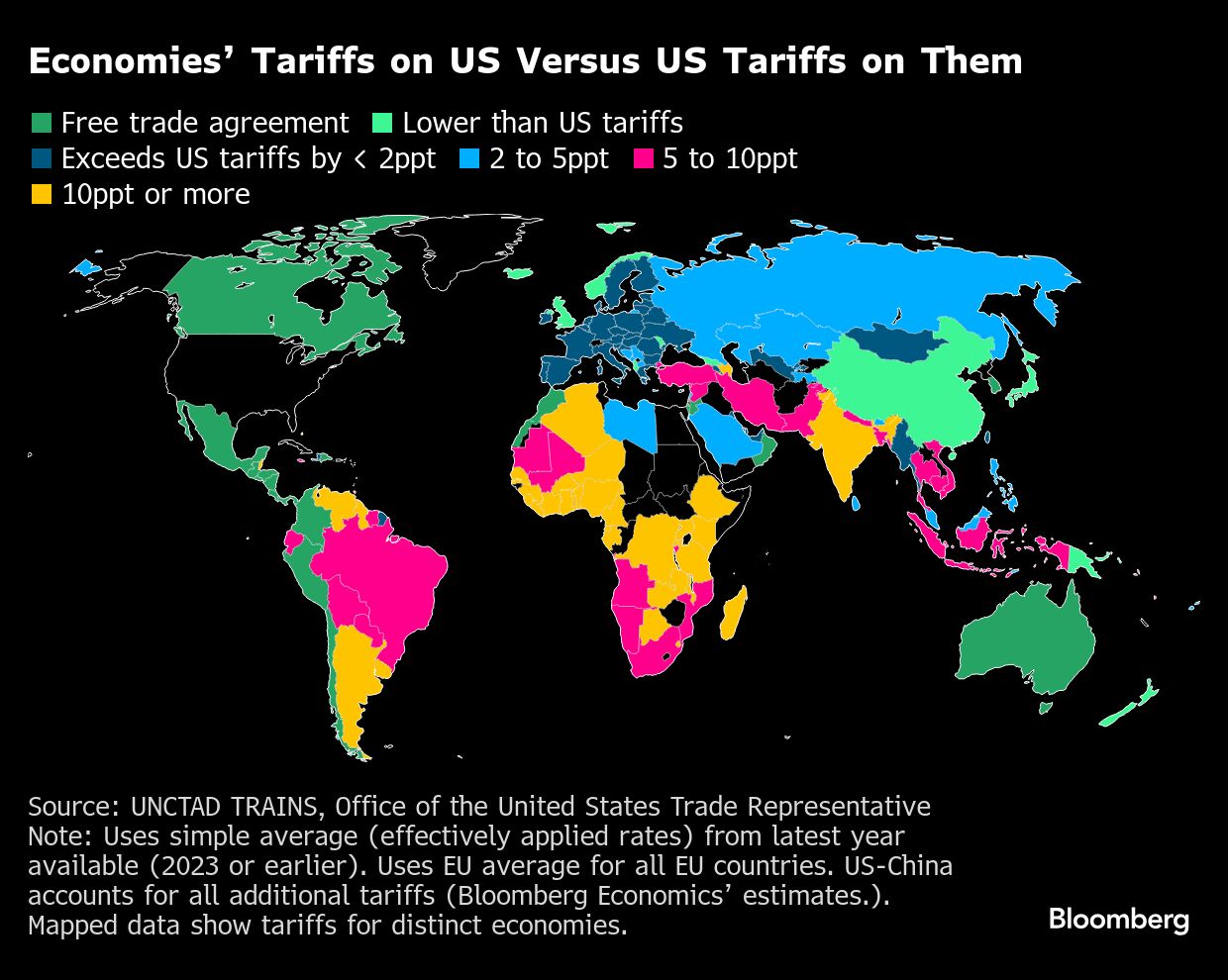
The efforts underscore the lengths New Delhi is going to preserve access to its largest trading partner and accommodate US demands for a more equal playing field in trade. India charges among the highest tariffs in the world, making it particularly vulnerable to Trump's vow to charge like-for-like duties on its exports.
Weapons Purchases
The US has already said it wants to sell more energy and weapons to India — products that are largely supplied to India by Russia. Other products Washington also hopes to add to the list include industrial goods, automobiles and agricultural products, according to people familiar with the matter. India is preparing a list of products that it buys from other countries but not the US, and is evaluating whether it can buy more such products from America, people familiar with the matter said.
Trump signed a measure Feb. 13 directing his administration to propose a round of so-called reciprocal tariffs that could remodel America's trading relationship with the world.
“Under Trump's proposed reciprocal tariffs, all kinds of presumed unfair trade actions can be added to the tariff calculation,” said Deborah Elms, head of trade policy at the Hinrich Foundation. “It remains to be seen exactly how this all plays out, but India is certainly at risk of facing high tariffs into the US in the near term.”
To be sure, moves to roll-back India's tariff regime are likely to face challenges. Some officials are concerned that across-the-board cuts could lead to a flood of cheap Chinese imports, swamping domestic industry. To check against that prospect, Indian officials are exploring measures such as non-tariff trade barriers like tighter quality standards and anti-dumping duties.
At the Trump-Modi summit, both sides agreed to seal a trade deal and signaled plans to boost trade between the two countries to $500 billion by 2030, up from $127 billion in 2023. The US has for years been cultivating closer links with India, which it sees as a counterweight in the region against a more assertive China.

-
Where You Live Shapes How You Get To Work | The Reason Why

Two-wheelers are the most popular way to get to work in India, accounting for nearly 43% of workplace commutes.
-
High US Salaries, No Green Card Certainty: The Financial Calculation Facing Indian H-1B Families
The suspension of PERM processing at eight technology employers does not cancel existing H-1B visas. What it does is force a question many Indian families have been avoiding: is the US salary worth tying your career and family plans to one employer?
-
Unhedged Position: Can India See An Indonesia-Style Time Correction?
The Nifty is trading below levels it first clocked in 2024. Is there, then, as I have suggested in the headline, potential that the current time correction drags on painfully for the next three-five, even ten years?
-
Navigating Friction And Energy Realities: An Analysis Of Marco Rubio's October Visit To India
Occurring at a critical juncture marked by stalled trade negotiations and escalating geopolitical pressures over global energy supplies, the visit offers a profound window into modern US-India relations.
-
India Exports Capital. Why Not Export Trusteeship?
The big question, then, is whether India can build an institution that global borrowers, investors, banks, and lawyers can trust, even without an Indian connection.
-
France's Economy & Politics Are In Crisis | The Reason Why
Let's look at how the French economy and politics evolved under Nicolas Sarkozy, Franois Hollande and Emmanuel Macron.
-
You May Inherit The Business. You Must Earn Its Credibility.
Succession tests the founder's ability to share authority as much as it tests the next generation's readiness to assume it.
-
Signing Deals Is One Thing; Making Them Work Is Another | The Week In Whys
Sometimes, things don't turn out as planned. Indian companies have lost some bids to rivals, some projects won't produce until 2030.
-
FOMC Wall, PERM Suspension, Hospital Stocks | Talking Points This Week
A PERM suspension would directly affect green-card sponsorship rather than H-1B visas, so the near-term earnings impact could remain relatively limited. The key question is whether this marks a new phase in US scrutiny of Indian IT.
-
Everything, Everywhere, All At Once: Dalal Street's Week To Forget | Joining The Dots
Visa curbs, a Starlink spat and cancer drug caps: what connects this week's shocks for Indian markets