India, Pakistan Foreign Ministers To Meet On UNGA Sidelines
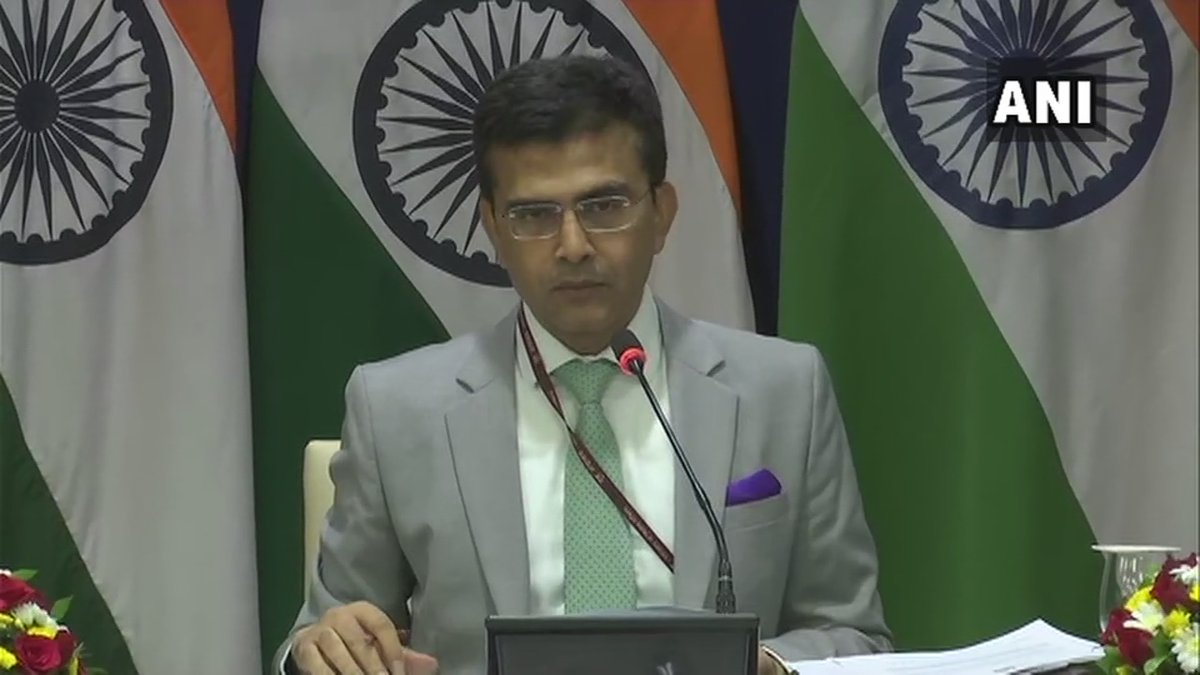
Foreign ministers of India and Pakistan will meet on sidelines of the United Nations General Assembly in New York, the government announced on Thursday, the first such high-level engagement since suspension of dialogue between the two nations after the Pathankot air base terror attack in 2016.
Announcing the meeting between External Affairs Minister Sushma Swaraj with her Pakistani counterpart Shah Mahmood Qureshi, Ministry of External Affairs spokesperson Raveesh Kumar, however, made it clear it is not a resumption of the Indo-Pak dialogue and India agreed to the meeting following a request from Pakistan.
He also insisted the decision doesn't change the country's position on cross-border terrorism.
During the meeting, likely to take place next week, India is expected to strongly raise the issue of terrorism emanating from the Pakistani soil.
The Swaraj-Qureshi meeting will be the first engagement at this level since Jan. 2016 when New Delhi halted the dialogue with Islamabad in the aftermath of Pathankot terror attack, for which India holds Pakistan-based groups responsible.
Indo-Pak ties have nose-dived since then in view of a number of terror strikes by Pakistan-based groups, which India retaliated by carrying out 'surgical strikes' in September 2016 across the Line of Control. India has been maintaining that terror and talks cannot go together.
"I must distinguish between a meeting and dialogue. This does not indicate any change in policy as far as our stand on terrorism and cross-border terrorism is concerned," the MEA spokesperson said at a media briefing.
The last meeting between the two foreign ministers was held during Swaraj's visit to Islamabad in Dec. 2015 to attend the Heart of Asia Summit, where she had met he then Pakistan foreign minister Sartaj Aziz.
After the meeting, the two sides had announced resumption of Indo-Pak dialogue under the comprehensive bilateral format, but the initiative did not take off after Pakistan-based terror groups attacked the Pathankot air base.
Kumar said Swaraj will also attend the SAARC foreign ministers' meeting on the sidelines of the UNGA.
India has been maintaining that there cannot be any comprehensive dialogue with Pakistan till it stops cross-border terrorism.
India agreed to Swaraj-Qureshi meeting following a letter to Prime Minister Narendra Modi by his Pakistani counterpart Imran Khan seeking a ministerial interaction on the sidelines of the UNGA.
Separately, the Pakistan Foreign Minister has also written a letter to Swaraj reiterating Khan's proposal for a meeting. Both the letters were handed over to India on September 17 by Pakistan High Commissioner, Kumar said.
The date for the meeting was being finalised by the permanent missions of the two countries in New York, he said adding the agenda for the meeting is yet to be finalised.
Swaraj is scheduled to leave for New York on Sept. 22 morning and return on Sept. 30.
Khan, who was sworn in as Pakistan Prime Minister last month, has been favouring resumption of talks between the two sides. In his letter to Modi, Khan also indicated Pakistan's willingness to discuss terrorism.
Asked about Pakistan's push for a SAARC summit, Kumar said the atmosphere in the region is not conducive.
"There are number of other countries in the region who also felt that under the shadow of terrorism, it (SAARC summit) will be difficult to hold," said Kumar.
Kumar said Swaraj will also raise the issue of Kartarpur Sahib during the meeting. The Kartarpur Sahib shrine in Pakistan is revered by Indian Sikhs, who have been seeking permission for easier access to go there for pilgrimage.

-
High US Salaries, No Green Card Certainty: The Financial Calculation Facing Indian H-1B Families

The suspension of PERM processing at eight technology employers does not cancel existing H-1B visas. What it does is force a question many Indian families have been avoiding: is the US salary worth tying your career and family plans to one employer?
-
Unhedged Position: Can India See An Indonesia-Style Time Correction?
The Nifty is trading below levels it first clocked in 2024. Is there, then, as I have suggested in the headline, potential that the current time correction drags on painfully for the next three-five, even ten years?
-
Navigating Friction And Energy Realities: An Analysis Of Marco Rubio's October Visit To India
Occurring at a critical juncture marked by stalled trade negotiations and escalating geopolitical pressures over global energy supplies, the visit offers a profound window into modern US-India relations.
-
India Exports Capital. Why Not Export Trusteeship?
The big question, then, is whether India can build an institution that global borrowers, investors, banks, and lawyers can trust, even without an Indian connection.
-
France's Economy & Politics Are In Crisis | The Reason Why
Let's look at how the French economy and politics evolved under Nicolas Sarkozy, Franois Hollande and Emmanuel Macron.
-
You May Inherit The Business. You Must Earn Its Credibility.
Succession tests the founder's ability to share authority as much as it tests the next generation's readiness to assume it.
-
Signing Deals Is One Thing; Making Them Work Is Another | The Week In Whys
Sometimes, things don't turn out as planned. Indian companies have lost some bids to rivals, some projects won't produce until 2030.
-
FOMC Wall, PERM Suspension, Hospital Stocks | Talking Points This Week
A PERM suspension would directly affect green-card sponsorship rather than H-1B visas, so the near-term earnings impact could remain relatively limited. The key question is whether this marks a new phase in US scrutiny of Indian IT.
-
Everything, Everywhere, All At Once: Dalal Street's Week To Forget | Joining The Dots
Visa curbs, a Starlink spat and cancer drug caps: what connects this week's shocks for Indian markets
-
India Is Going Abroad For Critical Minerals. But It May Take Years To Pay Off | The Reason Why
Although India's steps are in the right direction, they remain modest compared with India's growing dependence.









