India Near Sale Of BrahMos Anti-Ship Missiles To Indonesia
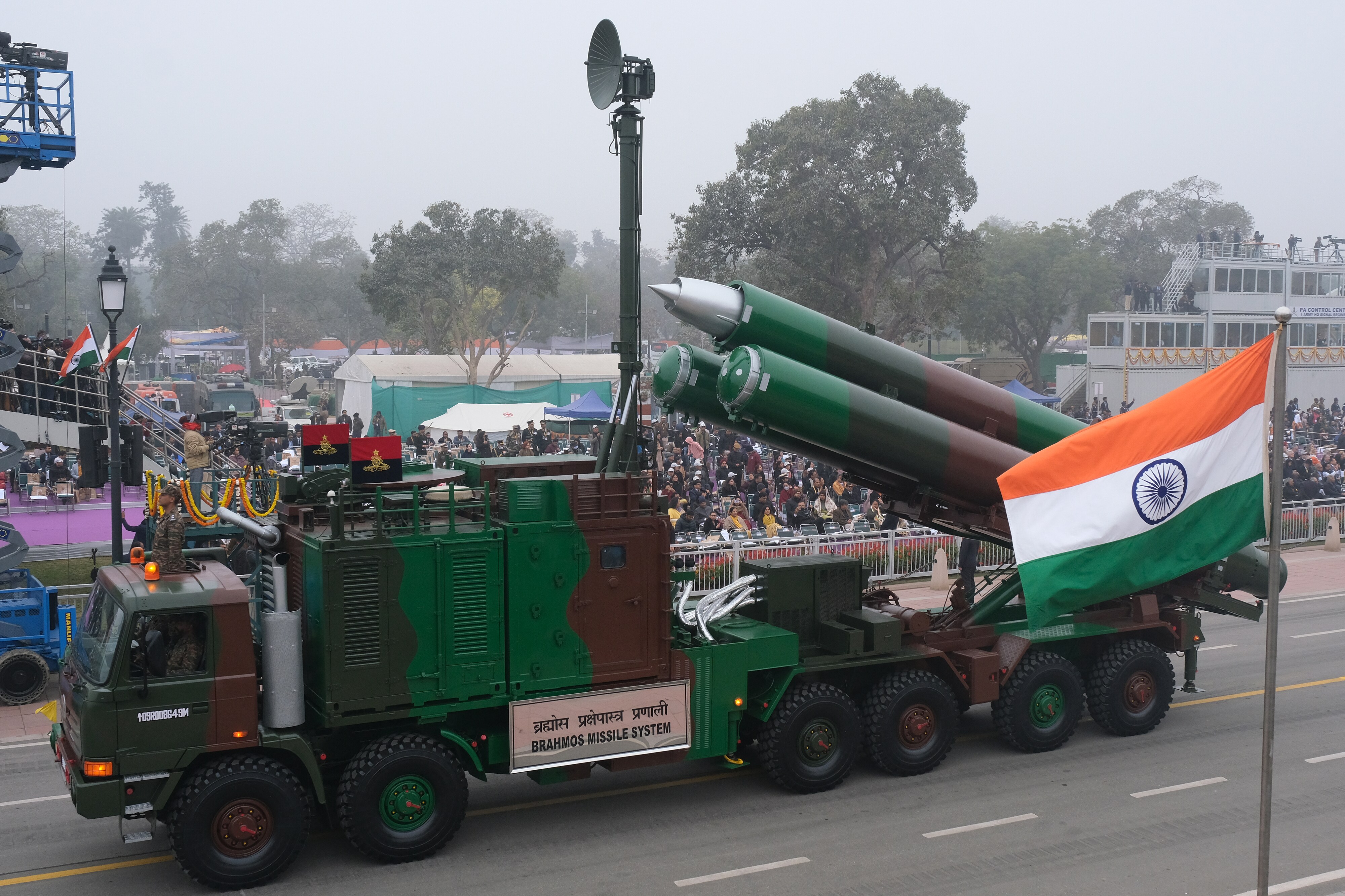
(Bloomberg) -- India is considering a $450 million deal to sell Russian-backed supersonic cruise missiles to Indonesia as the Southeast Asian country looks to bolster defenses, according to people familiar with the matter.
The sale of the BrahMos cruise missiles is expected to be announced as early as this week when Indonesian President Prabowo Subianto officially visits India, the people said, asking not be identified as discussions are private. Prabowo is set to attend the Republic Day celebrations as a special guest on Sunday.
A key hurdle for Indonesia is securing financing for the missile purchases given the nation's budget constraints, one of the people said. Funding is still being discussed with India and it's unclear when a deal can be finalized for the missiles, which have a firing range of at least 380 kilometers (186 miles).
If the sale goes through, Indonesia would be the second country after the Philippines to acquire the anti-ship cruise missiles. Southeast Asian nations are modernizing and bolstering their militaries as the South China Sea remains a flashpoint with an assertive China and President Donald Trump back in the White House.
India and Indonesia have been negotiating for about a decade for the sale of the BrahMos cruise missile, jointly developed by India and Russia. Rosoboronexport, Russia's state owned military hardware supplier, is part of the negotiations, the people said.
India's Defense Ministry and Ministry of External Affairs declined to comment on the missile deal. A spokesman with Indonesia's Defense Ministry also declined to comment.
About a week before Prabowo's visit, Indonesia's Ministry of Foreign Affairs said the two countries will announce initial pacts for health, education, maritime safety and security.
Indonesia is keen to have access to the missile technology so that it doesn't face shortages in spares and components, the people said. Last month, India's ambassador discussed a technology transfer offer with Indonesia's Defense Minister Sjafrie Sjamsoeddin.
The first Trump administration pressured Indonesia to abandon deals to buy Russian-made fighter jets and naval vessels from China. It was part of Washington's efforts to stop its biggest rivals from eroding US military supremacy and threatening its national security.
Prabowo, a former general, had played a key role in negotiating arms deals when he was defense minister under Joko Widodo's administration. He and his cabinet colleagues at the time decided to scrap the deals with China and Russia to avoid getting on the wrong side of the US.
Emerging markets including Indonesia are looking to bolster their economies as Trump returns to office with threats to roil global trade. Indonesia recently joined the BRICS group of developing nations — established by Brazil, Russia, India, China and South Africa — which has positioned itself as an alternative to the US-led global order.
Prabowo is likely to expand military and maritime security cooperation with India when he makes his official visit this week. It is expected to be a continuation of joint exercises and port visits by Indonesian warships, as part of Jakarta's focus on maritime security across Asia.

-
Why Amazon And Flipkart Are Struggling To Beat Meesho In India's Smaller Cities

With 274 million users and lowest-cost logistics, Meesho is defending its value commerce crown against giants like Amazon and Flipkart.
-
High US Salaries, No Green Card Certainty: The Financial Calculation Facing Indian H-1B Families
The suspension of PERM processing at eight technology employers does not cancel existing H-1B visas. What it does is force a question many Indian families have been avoiding: is the US salary worth tying your career and family plans to one employer?
-
Swiggy vs Eternal: Food Delivery's Two Rivals Are No Longer In The Same Race
Eternal is building a private AI assistant, dark.ai. Swiggy is still working out how to make Instamart pay, with an operating loss of Rs 895 crore in the July-September quarter while Blinkit stayed profitable.
-
Where You Live Shapes How You Get To Work | The Reason Why
Two-wheelers are the most popular way to get to work in India, accounting for nearly 43% of workplace commutes.
-
Unhedged Position: Can India See An Indonesia-Style Time Correction?
The Nifty is trading below levels it first clocked in 2024. Is there, then, as I have suggested in the headline, potential that the current time correction drags on painfully for the next three-five, even ten years?
-
Navigating Friction And Energy Realities: An Analysis Of Marco Rubio's October Visit To India
Occurring at a critical juncture marked by stalled trade negotiations and escalating geopolitical pressures over global energy supplies, the visit offers a profound window into modern US-India relations.
-
India Exports Capital. Why Not Export Trusteeship?
The big question, then, is whether India can build an institution that global borrowers, investors, banks, and lawyers can trust, even without an Indian connection.
-
France's Economy & Politics Are In Crisis | The Reason Why
Let's look at how the French economy and politics evolved under Nicolas Sarkozy, Franois Hollande and Emmanuel Macron.
-
You May Inherit The Business. You Must Earn Its Credibility.
Succession tests the founder's ability to share authority as much as it tests the next generation's readiness to assume it.
-
Signing Deals Is One Thing; Making Them Work Is Another | The Week In Whys
Sometimes, things don't turn out as planned. Indian companies have lost some bids to rivals, some projects won't produce until 2030.










