In Charts: A U-Turn In Oil, Rupee Sets The Stage For A Status Quo Policy
The Monetary Policy Committee's December review comes against a dramatically different backdrop when compared to the one in October.
Crude oil prices are down more than 20 percent. The rupee has gained 5 percent. Upside risks to inflation have, for now, turned to downside risks. No surprise then that most economists are predicting a status quo on rates.
According to Bloomberg, 48 of the 52 economists polled, believe that the MPC will continue to maintain a status quo on the repo rate. After 50 basis points in repo rate hikes so far this financial year, the benchmark rate now stands at 6.5 percent.
Getting The Inflation Projection Right
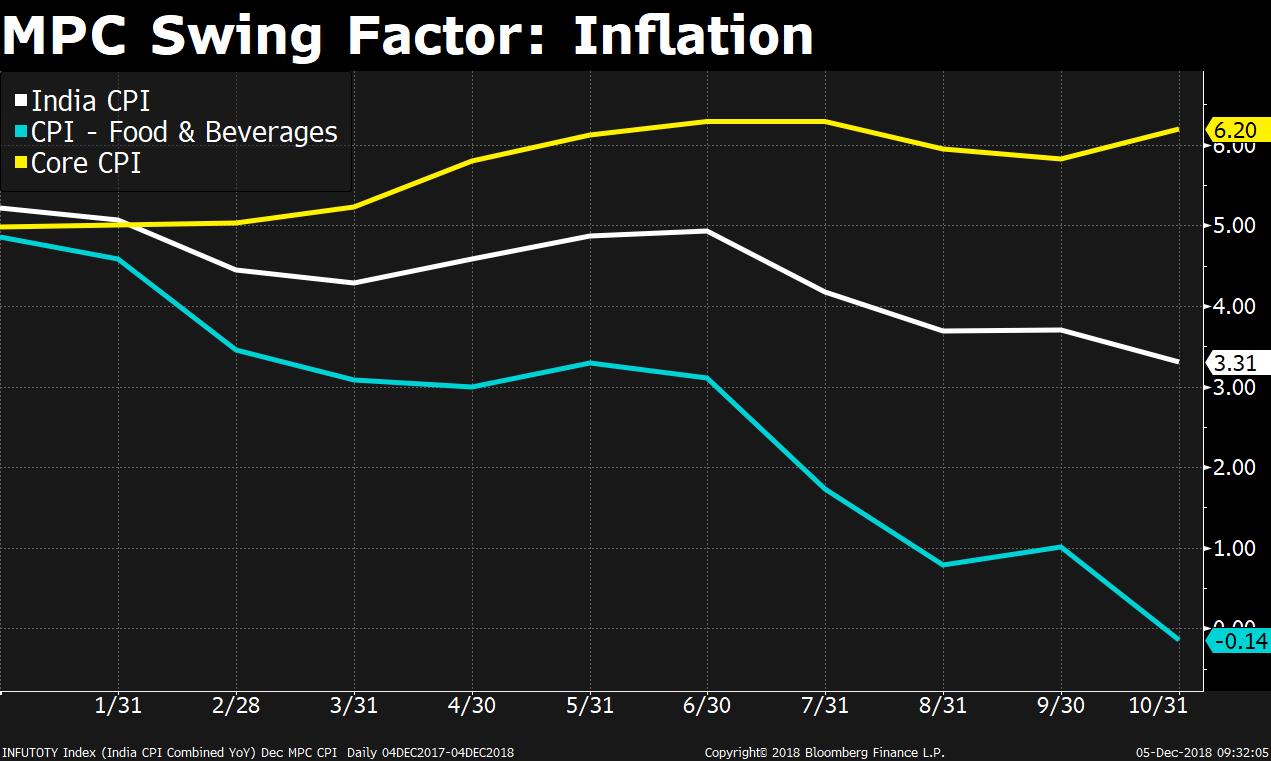
Beyond the near-term decision of keeping rates on hold, the MPC will need to do some soul-searching on its inflation forecasting abilities. Retail inflation has remained below forecasts for the last five months and is currently under the mid-point of the inflation target of 4 (+/- 2) percent.
To be sure, the MPC does not need to respond to monthly prints and is looking to bring inflation down to 4 percent in a durable manner. However, the trajectory of low food prices gives them enough reason to debate whether inflation will end the year lower than the projection of 3.9-4.5 percent.
Saugata Bhattacharya, chief economist at Axis Bank expects inflation to end the year just above 4 percent and sees a probability of the MPC moving back to a ‘neutral' stance. Prachi Mishra, chief India economist at Goldman Sachs, argues to the contrary and expects the base effect on inflation to wear out. She expects rate hikes to resume in 2019.
Lower Risk From Crude Oil
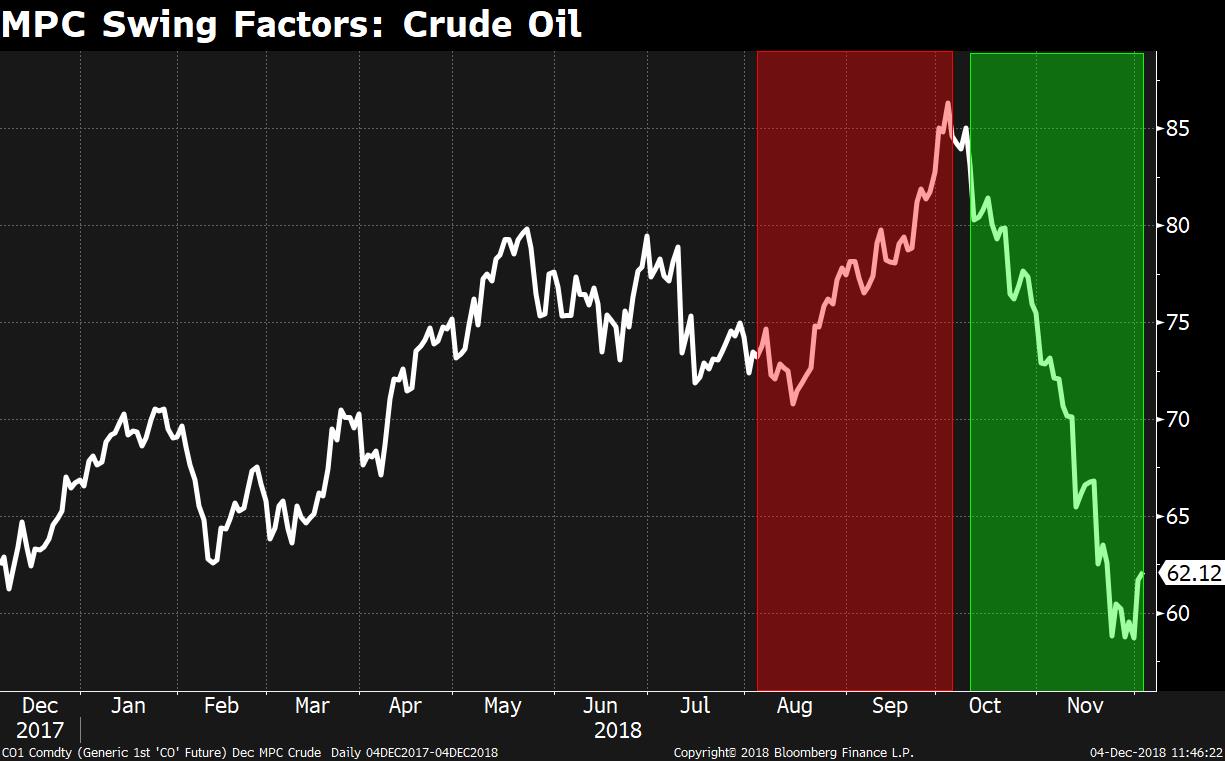
At the October policy review, the committee had highlighted the upside risks to inflation emerging from oil prices. “Oil prices remain vulnerable to further upside pressures, especially if the response of oil-producing nations to supply disruptions from geopolitical tensions is not adequate,” the committee had noted in its resolution.
However, since then Brent crude oil prices are down by close to 25 percent. While the committee may remain cautious given the sharp volatility seen in oil prices this year, it may whittle down the upside risk being built into inflation projections on account of oil prices.
Rupee Returns To Stability
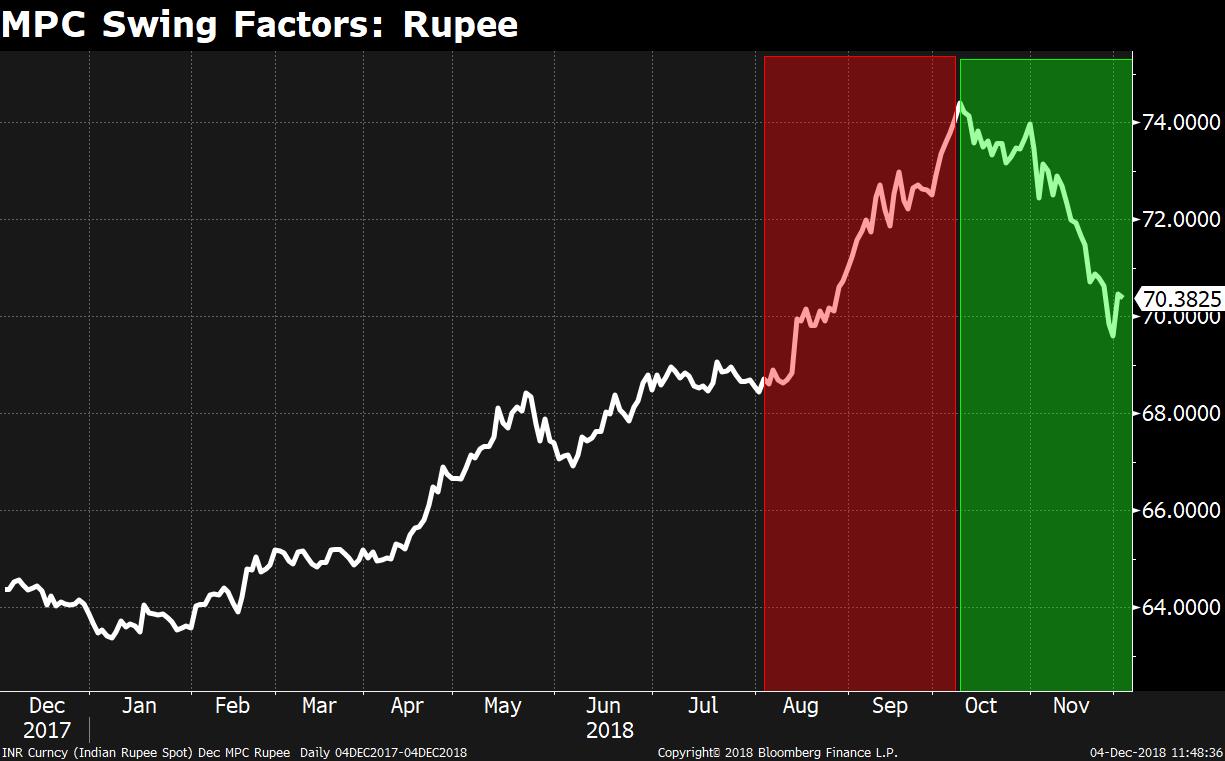
The fall in price of crude has also helped stabilise the rupee.
After hitting a record low below 74/$, the rupee has now moved back to near 70/$. At current levels, fears of imported inflation on account of a sharply weaker currency will abate.
“The combination of the close to 25 percent fall in oil prices since the last policy meeting, the 5 percent appreciation of the rupee versus the U.S. dollar over the same time, and the absence of any MSP-related food inflation, suggests that inflation will remain low for longer,” wrote Pranjul Bhandari, chief India economist at HSBC India. Bhandari sees no change in rates in December but expects one rate hike in 2019.
Uncertainty On Growth
While the comfort on inflation has increased, the comfort on growth has decreased.
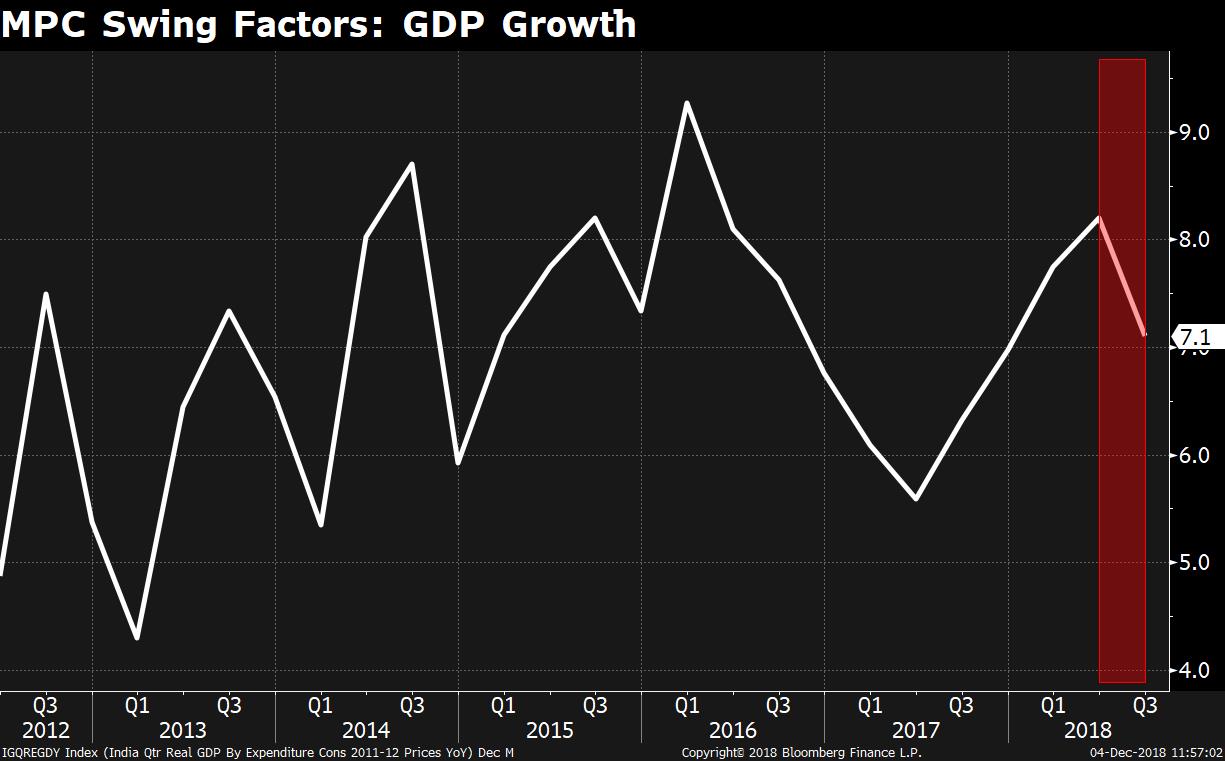
At 7.1 percent, GDP growth came in lower than expectations for the second quarter of the current fiscal year. The MPC had retained it's economic growth projection at 7.4 percent for the current financial year when it last met, but there is now a possibility of a lower full year growth estimate, said Radhika Rao, economist at DBS Bank.
The recently released second quarter GDP data showed some signs of a fall in consumption growth, possibly due to rural distress and heightened crude oil prices. While investment has remained strong, high real rates in India could prove to be a dampener for growth.
Growth is expected to moderate further to 6.6 percent in the second half of the year, according to Kotak Economics Research. The more important question is whether India's potential GDP would also be lower, the report asked.
Liquidity Remains In Focus
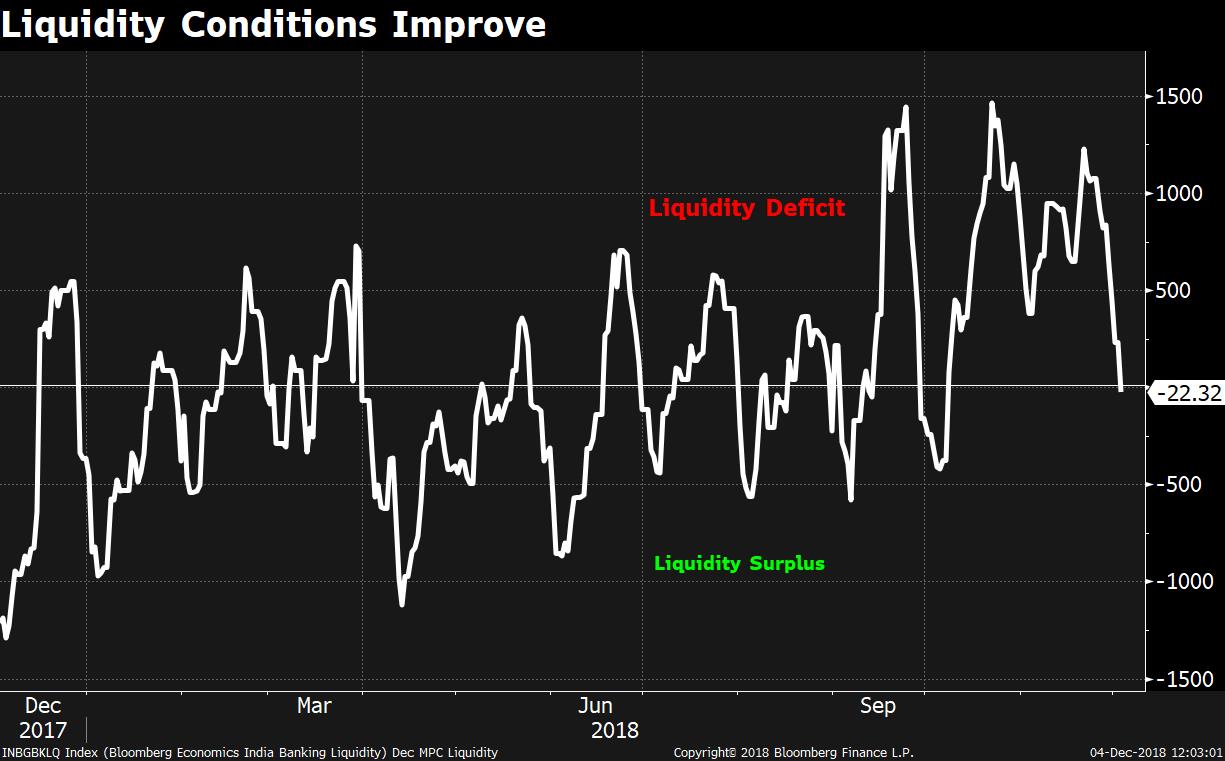
While a status quo on rates is a near certainty, the markets will be watching for any additional measures or guidance on liquidity.
Liquidity could tighten going forward amid higher leakage from currency in circulation, advance tax outflows and tighter government spending, said Madhavi Arora, economist at Edelweiss Research. However, the central bank is likely to continue tackling this through open market operations rather than through a lowering of the cash reserve ratio (CRR), Arora said.
After remaining in deficit for the last few months, liquidity conditions have eased in recent days. The RBI has announced its intention to buy bonds worth Rs 40,000 crore in December.

-
High US Salaries, No Green Card Certainty: The Financial Calculation Facing Indian H-1B Families

The suspension of PERM processing at eight technology employers does not cancel existing H-1B visas. What it does is force a question many Indian families have been avoiding: is the US salary worth tying your career and family plans to one employer?
-
Swiggy vs Eternal: Food Delivery's Two Rivals Are No Longer In The Same Race
Eternal is building a private AI assistant, dark.ai. Swiggy is still working out how to make Instamart pay, with an operating loss of Rs 895 crore in the July-September quarter while Blinkit stayed profitable.
-
Where You Live Shapes How You Get To Work | The Reason Why
Two-wheelers are the most popular way to get to work in India, accounting for nearly 43% of workplace commutes.
-
Unhedged Position: Can India See An Indonesia-Style Time Correction?
The Nifty is trading below levels it first clocked in 2024. Is there, then, as I have suggested in the headline, potential that the current time correction drags on painfully for the next three-five, even ten years?
-
Navigating Friction And Energy Realities: An Analysis Of Marco Rubio's October Visit To India
Occurring at a critical juncture marked by stalled trade negotiations and escalating geopolitical pressures over global energy supplies, the visit offers a profound window into modern US-India relations.
-
India Exports Capital. Why Not Export Trusteeship?
The big question, then, is whether India can build an institution that global borrowers, investors, banks, and lawyers can trust, even without an Indian connection.
-
France's Economy & Politics Are In Crisis | The Reason Why
Let's look at how the French economy and politics evolved under Nicolas Sarkozy, Franois Hollande and Emmanuel Macron.
-
You May Inherit The Business. You Must Earn Its Credibility.
Succession tests the founder's ability to share authority as much as it tests the next generation's readiness to assume it.
-
Signing Deals Is One Thing; Making Them Work Is Another | The Week In Whys
Sometimes, things don't turn out as planned. Indian companies have lost some bids to rivals, some projects won't produce until 2030.
-
FOMC Wall, PERM Suspension, Hospital Stocks | Talking Points This Week
A PERM suspension would directly affect green-card sponsorship rather than H-1B visas, so the near-term earnings impact could remain relatively limited. The key question is whether this marks a new phase in US scrutiny of Indian IT.









