Imran Khan Says Karachi Attack Caused By Chinese Trade Deals
(Bloomberg) -- Pakistan's Prime Minister Imran Khan said Friday's assault on China's diplomatic mission in Karachi was due to trade deals signed between the two nations earlier this month.
“The failed attack against the Chinese Consulate was clearly a reaction to the unprecedented trade agreements that resulted from our trip to China,” Khan said on Twitter. “The attack was intended to scare Chinese investors -- these terrorists will not succeed.”
The failed attack against the Chinese Consulate was clearly a reaction to the unprecedented trade agreements that resulted from our trip to China. The attack was intended to scare Chinese investors and undermine CPEC. These terrorists will not succeed.
November 23, 2018Separately, a bombing in northwestern Orakzai killed at least 25 people on Friday, local media reported. The former cricket star condemned both attacks and said they were “part of a planned campaign to create unrest in the country by those who do not want Pakistan to prosper.”
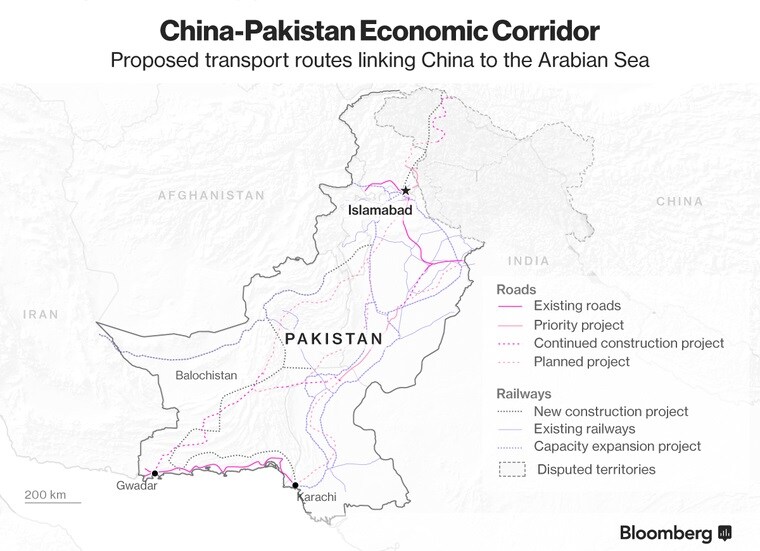
The assault in Pakistan's largest city and financial hub left seven people dead. The incident is the second major attack this year on Chinese officials in Karachi, a megacity of at least 15 million people in a country that is one of the key partners in China's Belt and Road initiative. In February gunmen killed Chen Zhu, a shipping executive, in the city's posh Zamzama district. The violence has raised concern in Beijing, which is financing infrastructure projects valued at about $60 billion across Pakistan.
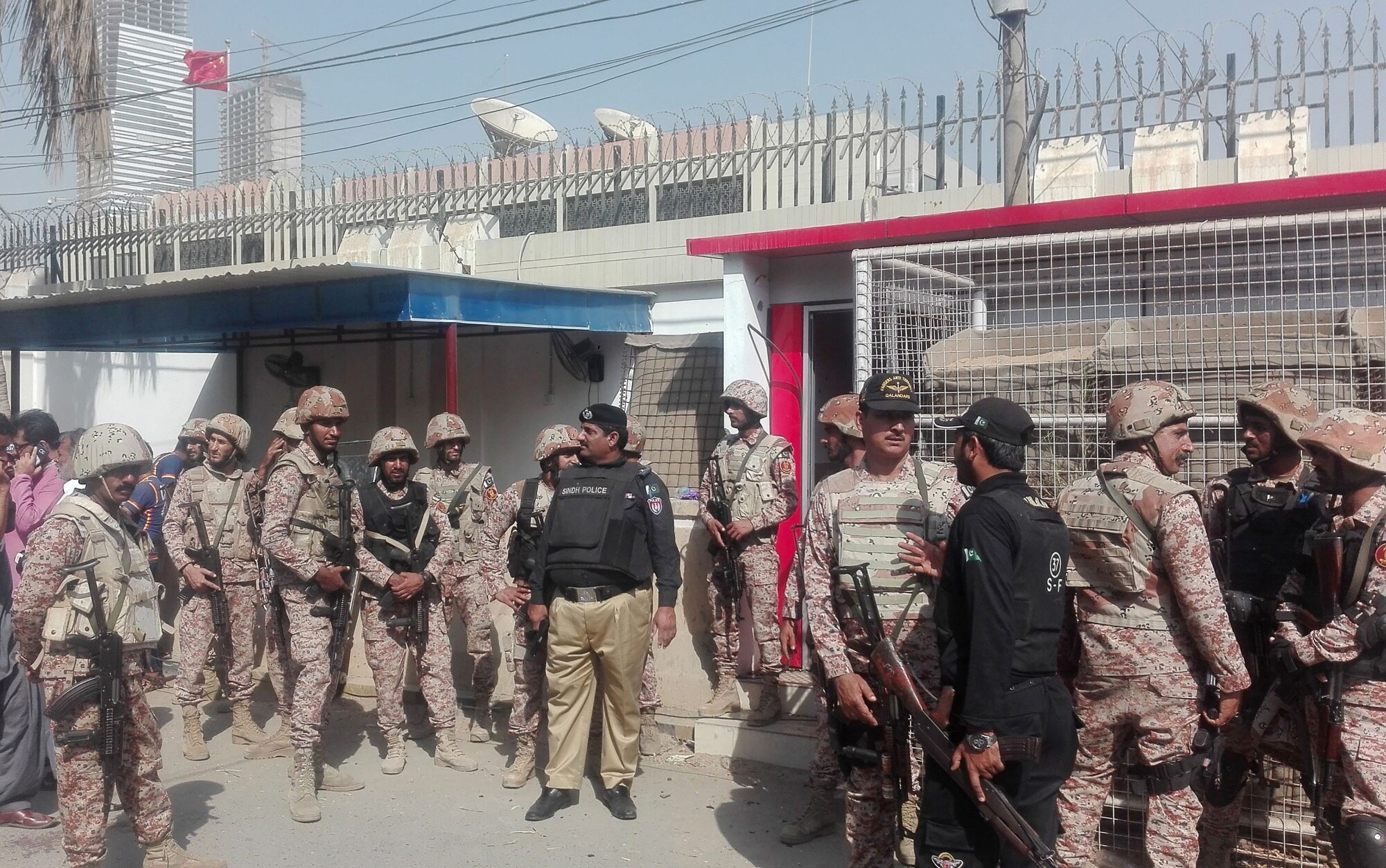
An explosive-laden vehicle was driven outside the Chinese consulate and in an exchange of fire two policemen guarding the building and all three assailants were killed, Amir Shaikh, a senior police official, told reporters in Karachi. Two civilians collecting visas also died. Pakistan's Foreign Minister Shah Mahmood Qureshi later told lawmakers in Islamabad that a suicide bomber had detonated explosives while trying to enter the building.
The raid will come as a shock to China and Pakistan's armed forces, which have beefed up security across the South Asian nation after a number of military operations targeting terrorist groups since 2013. Pakistan's army has also raised a 15,000 strong force to protect the Chinese projects and has curtailed the movement of workers at those sites who aren't allowed outside without an armed escort.
Beijing has become increasingly vocal over the risks in Pakistan. In December last year, its embassy in Islamabad warned of imminent terror attacks on Chinese targets. That followed the Islamic State-claimed killings of two Chinese teachers in June 2017 in the restive southwestern province of Balochistan, where China is building a port.
“China has requested Pakistan to take measures to make sure the safety of Chinese citizens and organizations,” Geng Shuang, a foreign ministry spokesman, said at a daily briefing in Beijing on Friday. “China believes that Pakistan will take measures to make sure that China-Pakistan Economic Corridor proceeds smoothly,” he said, referring to the local branding of Belt and Road in Pakistan.
‘Similar Attacks'
Pakistan's Foreign Ministry spokesman Mohammad Faisal told reporters in Islamabad that it is too early to know who is responsible. Reuters reported that the Balochistan Liberation Army, a separatist movement in the restive province neighboring Karachi, claimed the attack.
“Similar attacks targeting Chinese engineers and businessmen happened in the past to force Pakistan's government to back down from certain issues,” said Sun Shihai, director of the Institute of South Asia Studies in Sichuan University of China. “These individual attacks will only raise the awareness of Pakistan and China's governments to put more emphasis on security.”
China's influence has increased across Pakistan in recent years. Islamabad has also pivoted to Beijing as relations with the U.S. are increasing strained under President Donald Trump, who canceled military aid to Pakistan this year. Trump has repeatedly accused Pakistan of sheltering insurgent groups who operate in Afghanistan -- a charge refuted by Pakistani government and military officials.
‘Debt Diplomacy'
Yet resentment toward the Chinese is also rising. Critics say Beijing is ensnaring Pakistan in so-called “debt diplomacy” by granting opaque loans that Islamabad will find difficult to repay as it faces a balance-of-payments crisis. Pakistan is currently negotiating a bailout with the International Monetary Fund.
Many Pakistani firms also grumble about the preferential treatment being meted out to Chinese businesses since 2015 when President Xi Jinping first launched the China-Pakistan Economic Corridor.
Friday's attack is “a very high profile attempt which failed but nevertheless it causes concerns” that there are people opposing China's mega projects in Pakistan, said Hasan Askari Rizvi, a Lahore-based political analyst and former government official.

-
Talking Points This Week: Tech Nerves, FII Buying, And A Faraway Banking Shock

The global markets are not shining this Diwali. The exception in the large markets is, India.
-
Midterm Rally Lasted A Day. The Hard Reality Of A Divided US May Last Two Years | Opinion
Between a contested AI boom, a debt ceiling that arrives in 2027 and a president with every incentive to act alone, the next two years may prove more volatile than the first day's rally suggests.
-
Blue Wave Will Derail the AI Trade but Won't Dismantle the AI Era | Unhedged Position
The Democrats' sweep of the US Congress will see politics collide with economic forces both over the long and short term.
-
It's Time To Take The GST Council's Bet On Trust Global
Payment records can prove India's services exports, and clear, proportionate rules can bring foreign digital sellers into the tax net.
-
Opinion | India at 38: From Innovation Overperformer to Innovation Powerhouse
India now has 453 VC-backed deep science startups, 18 of them late-stage, after 117 percent growth since 2020. Laurus Labs, at USD 9.3 billion, is the most valuable deep science company in any middle-income economy outside China.
-
Navigating Energy Crossroads: S Jaishankar's Call For Diversified Supply Chains At G20 Ministerial Meeting
As geopolitical fault lines continue to test maritime trade routes and commodity flows, Jaishankar's message remains pertinent: true economic resilience requires open markets, protected transit lines, and a genuine commitment to multilateral cooperation rather than coercion.
-
Indians Are Travelling, But Not Every Journey Is A Holiday | The Week In Whys
Pilgrims, patients and working women are the real travellers, and the system hasn't quite caught up with them.
-
Getting To Work Costs Women More | The Reason Why
It is not just about women paying more than men. It is about women paying much more in cities than in villages.
-
AI Bias In Investing Cannot Be Eliminated, But It Can Be Governed
Framing is a particularly important example as identical financial information presented in terms of gains rather than losses can lead an LLM to reach a different assessment.









