Identifying Beneficiaries For NYAY Feasible With Big Data, Says Congress
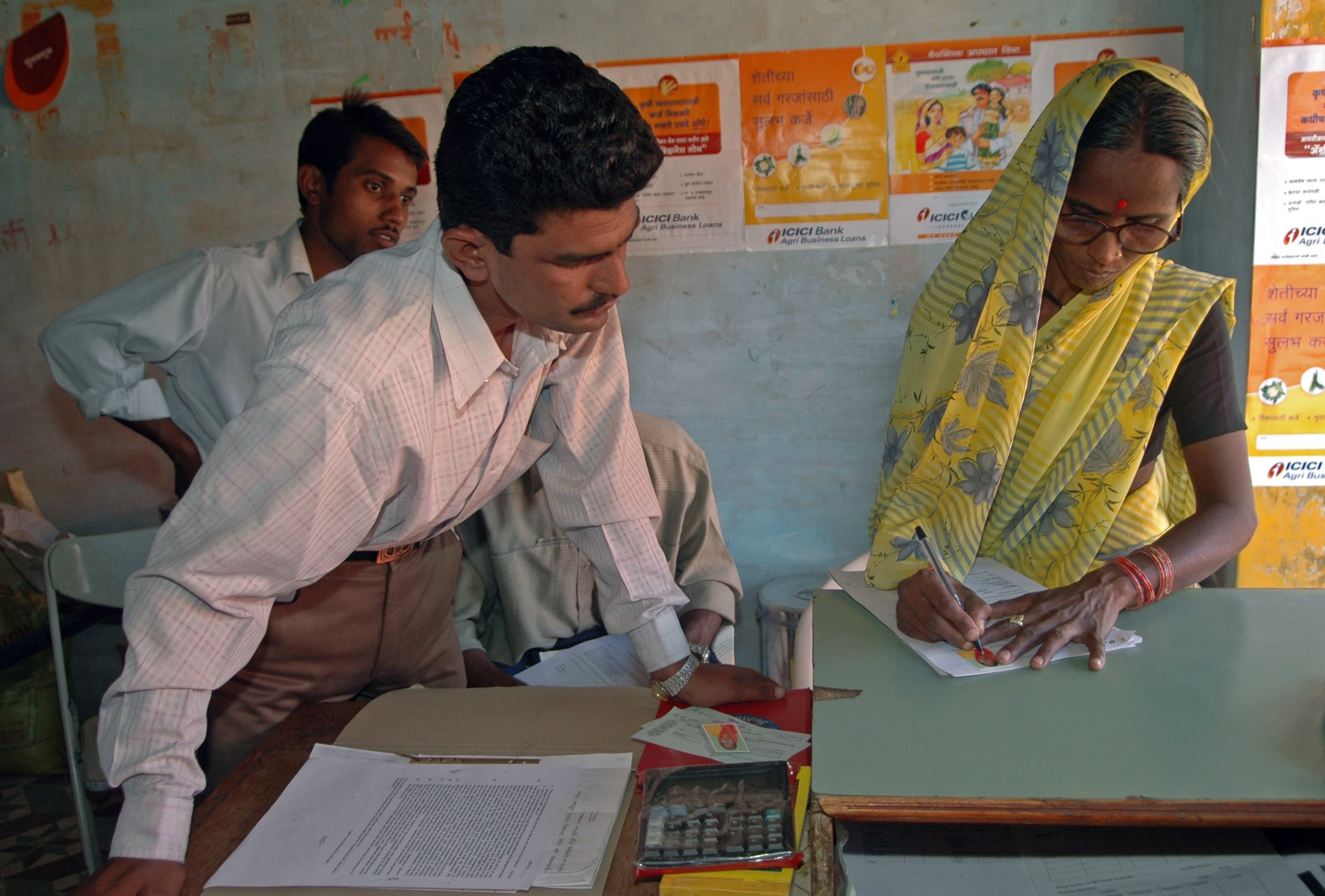
The Indian National Congress has proposed a minimum income plan for the poorest 20 percent among India's population should the party come to power. The plan, called Nyuntam Aay Yojana or NYAY, entails a minimum income of Rs 6,000 to five crore families with income levels below Rs 12,000 per month.
Following the announcement, economists have raised two broad concerns—the cost associated with the scheme and the problem of identifying the right beneficiaries.
At an estimated Rs 3.5 lakh crore, the scheme would cost 1.8-2 percent of GDP. Economists have questioned whether such a scheme can exist together with the ongoing subsidies on food, fertilisers and farm loans without a significant expansion in the fiscal deficit.
The Congress party, however, maintains that it would adhere to the path of fiscal consolidation despite implementing such a scheme.
There are more than 900 centrally-sponsored schemes which can be looked into for expenditure savings if needed, said Praveen Chakravarty, chairman of the data analytics department of the Congress party.
“This is re-monetisation of India's economy, which is money in the hands of the people,” he said, adding that it should lead to an immediate consumption boost and investment demand which hopefully leads to job creation and increase in tax revenues.
Chakravarty also sees some low-hanging fruits for tax buoyancy. “That primarily comes from Goods and Services Tax simplification—both on the rates front and the logistics and operational front.”
Apart from the cost, economists have raised concerns about the feasibility of implementing such a scheme. Amiya Kumar Bagchi, professor of Economics and director at Institute of Development Studies said that no matter what database you use to assess income or the beneficiaries, you will run into trouble.
“For the poorest living in pipes, underneath bridges and very temporary squatments, there will be a problem of identity. Most of them will not have ration cards and Aadhaar cards,” Bagchi said. “A well-intentioned government can use good social workers and NGOs to give them identity. But it will be an uphill task, especially in view of the new citizenship law which has rendered lakhs of long-term residents into illegal immigrants.”
To this concern, Chakravarty said that there are already a number of schemes—Ayushman Bharat and MGNREGA—run by the current government that targets India's poor families. “The fact that governments are increasingly embarking on targeted schemes tells you something,” he said. “I will admit that something like this was perhaps not possible to do 10-20 years ago. We do have much more data analytics technology and information today than we did before.”
The scheme, he said, would be implemented over a 18-24 month period with pilot projects to ensure that the projects play out well on the ground.
“The fundamental question is, can trickle down benefits actually trickle down to the bottom-most 5 percent, 10 percent or 20 percent? Perhaps, the answer is no. That is why we need a direct policy remedy for that section of the society,” he said.

-
Why Amazon And Flipkart Are Struggling To Beat Meesho In India's Smaller Cities

With 274 million users and lowest-cost logistics, Meesho is defending its value commerce crown against giants like Amazon and Flipkart.
-
High US Salaries, No Green Card Certainty: The Financial Calculation Facing Indian H-1B Families
The suspension of PERM processing at eight technology employers does not cancel existing H-1B visas. What it does is force a question many Indian families have been avoiding: is the US salary worth tying your career and family plans to one employer?
-
Swiggy vs Eternal: Food Delivery's Two Rivals Are No Longer In The Same Race
Eternal is building a private AI assistant, dark.ai. Swiggy is still working out how to make Instamart pay, with an operating loss of Rs 895 crore in the July-September quarter while Blinkit stayed profitable.
-
Where You Live Shapes How You Get To Work | The Reason Why
Two-wheelers are the most popular way to get to work in India, accounting for nearly 43% of workplace commutes.
-
Unhedged Position: Can India See An Indonesia-Style Time Correction?
The Nifty is trading below levels it first clocked in 2024. Is there, then, as I have suggested in the headline, potential that the current time correction drags on painfully for the next three-five, even ten years?
-
Navigating Friction And Energy Realities: An Analysis Of Marco Rubio's October Visit To India
Occurring at a critical juncture marked by stalled trade negotiations and escalating geopolitical pressures over global energy supplies, the visit offers a profound window into modern US-India relations.
-
India Exports Capital. Why Not Export Trusteeship?
The big question, then, is whether India can build an institution that global borrowers, investors, banks, and lawyers can trust, even without an Indian connection.
-
France's Economy & Politics Are In Crisis | The Reason Why
Let's look at how the French economy and politics evolved under Nicolas Sarkozy, Franois Hollande and Emmanuel Macron.
-
You May Inherit The Business. You Must Earn Its Credibility.
Succession tests the founder's ability to share authority as much as it tests the next generation's readiness to assume it.
-
Signing Deals Is One Thing; Making Them Work Is Another | The Week In Whys
Sometimes, things don't turn out as planned. Indian companies have lost some bids to rivals, some projects won't produce until 2030.










