Hillary Clinton Speaks To Charlie Rose On Her Book, The Election Loss & Trump
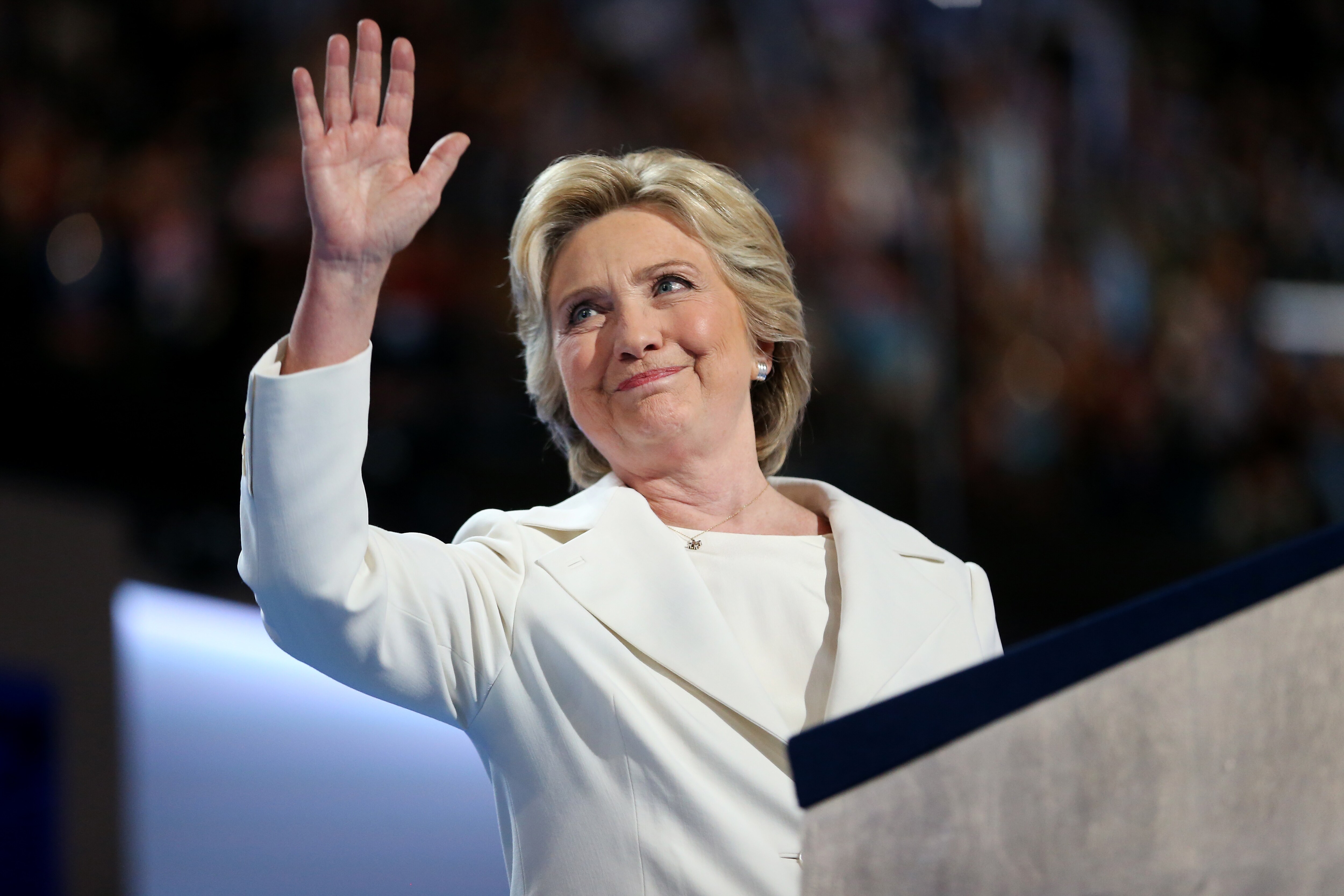
Hillary Clinton, the Democratic Party's nominee for the President of the United States lost her bid for the top office in 2016. A year later, Clinton has penned down reflections on her campaign and her loss in a book titled ‘What Happened'. Speaking to American talk show host Charlie Rose, Clinton described her loss as “devastating.” She added that she hoped that Donald Trump would prove to be a better President than his campaign had suggested. But he has not.
Edited excerpts of the interview:
At 9 am, 9 pm of the election night, you thought you were going to win. Is that correct?
I did. The first returns that came in were not what we thought from Florida and North Carolina, but we knew that those would be challenging states. We still felt good about everything we knew about the states to come to get to the electoral college majority.And it went downhill from there. It was a shocking, devastating evening. I write in great detail about it, because I wasn't prepared for that.
Did you also have a victory speech, but not a concession speech prepared?
I did. And it was an effort in that speech to reach out to all the people who were against me, who my opponent had really stirred up against me as well because I thought it was important to be the President for everybody and that's what I was looking forward to doing.
When you finally realised that it wasn't going well, and decided to come back next morning, what all did you go through?
I was still in shock, but I was devastated. So, once it became clear that the electoral college was going the other way, I had to do several things, which I did and described. I had to call Donald Trump, which was something that I can barely remember. I sort of reconstruct it because it was surreal to wish him well, hope that he would be a good President for everybody. He didn't think he was going to win, so he was also somewhat unprepared. I had to call President Obama and tell him how sorry I was because I knew that there would be a great effort under a new administration, the other party to try to undo much of what he had accomplished. And then I had to work on a speech. I really wasn't prepared to go out until I'd gotten all that done and by then it was 1:30-2 in the morning. So we had to find a place to deliver a concession speech which my stalwart band of advanced people did, and I showed up and delivered it the next morning.
As I said, Berlin once said, Richard Cohenreminded me of this, you know, the fox knows many thingsand the hedgehog knows one big thing. Is that sort of what happened here?
I think if you look at it, we -- certainlyI, thought I was running a campaign that was about manythings, but it turned out in part because of coverage based on mymistake with the e-mails, because of intervention of other forces, it turned outto be one thing about me, about my shortcomings, about the attacks on me,about the -- in my view, phony attacks on me.
So, I thought I was speaking about and Ihave in the book analyses which proved that I was talking more about jobsthan anybody else. Exit poll showed if you cared about the economy, youvoted for me. All of that. But if you do a word cloud that was done, itwas all about e-mails for me. And I thought I was done with that in July andit came back, you know, 12 days before the election.
So, you go back to Chappaqua?
Yes.
You walked in the woods.
I did.
Cried a lot?
Not cried so much. I really worked -- Ireally worked through over weeks, not days, over weeks,the disappointment I felt of letting people down. And my hope that Trumpwould turn out to be a better president than what his campaign suggested. Unfortunately, in may view, he has not.
AndI did various things. I spent a lot of time with family, friends, walked inthe woods. Just the other day at the book signing, I saw one of the youngwomen I met in the woods on one of those first jaunts. I spent a lot of time reflecting and it wasonly through that process that I thought to myself, you know, everybody isasking these questions and everybody has their own theories about whathappened. I want to know what happened.
I want to the best of my ability reallyexplore that, the role I played, my shortcomings, what the campaign could havedone differently, and then all of these outside forces. And I startedwriting the book which was very painful. I would literally write somethingand then go lie down for a while.
So, what is painful? Reading what they saidabout you? Reading how they may have rejected you whenyou thought they would obviously before you? Or understanding whatpeople believed about you?
Well, all the above. But what was painfulwas sitting down and trying to sort through it. And to be ashonest as I could, which there is no point in, you know, trying to avoidwhat the facts were, but also to be clear that I was looking for evidence.
You know, there was a lot of anecdotalopinion going on and I didn`t find that particularly useful. And there was alot of debate about what caused it, what happened, and what we could havedone differently. I wanted to try to sort it out, get to the bottom of it,and then see how I felt about it.
Watch The Interview Below

-
High US Salaries, No Green Card Certainty: The Financial Calculation Facing Indian H-1B Families

The suspension of PERM processing at eight technology employers does not cancel existing H-1B visas. What it does is force a question many Indian families have been avoiding: is the US salary worth tying your career and family plans to one employer?
-
Swiggy vs Eternal: Food Delivery's Two Rivals Are No Longer In The Same Race
Eternal is building a private AI assistant, dark.ai. Swiggy is still working out how to make Instamart pay, with an operating loss of Rs 895 crore in the July-September quarter while Blinkit stayed profitable.
-
Where You Live Shapes How You Get To Work | The Reason Why
Two-wheelers are the most popular way to get to work in India, accounting for nearly 43% of workplace commutes.
-
Unhedged Position: Can India See An Indonesia-Style Time Correction?
The Nifty is trading below levels it first clocked in 2024. Is there, then, as I have suggested in the headline, potential that the current time correction drags on painfully for the next three-five, even ten years?
-
Navigating Friction And Energy Realities: An Analysis Of Marco Rubio's October Visit To India
Occurring at a critical juncture marked by stalled trade negotiations and escalating geopolitical pressures over global energy supplies, the visit offers a profound window into modern US-India relations.
-
India Exports Capital. Why Not Export Trusteeship?
The big question, then, is whether India can build an institution that global borrowers, investors, banks, and lawyers can trust, even without an Indian connection.
-
France's Economy & Politics Are In Crisis | The Reason Why
Let's look at how the French economy and politics evolved under Nicolas Sarkozy, Franois Hollande and Emmanuel Macron.
-
You May Inherit The Business. You Must Earn Its Credibility.
Succession tests the founder's ability to share authority as much as it tests the next generation's readiness to assume it.
-
Signing Deals Is One Thing; Making Them Work Is Another | The Week In Whys
Sometimes, things don't turn out as planned. Indian companies have lost some bids to rivals, some projects won't produce until 2030.
-
FOMC Wall, PERM Suspension, Hospital Stocks | Talking Points This Week
A PERM suspension would directly affect green-card sponsorship rather than H-1B visas, so the near-term earnings impact could remain relatively limited. The key question is whether this marks a new phase in US scrutiny of Indian IT.









