GST: Exporters Lose At Supreme Court; Must Fulfill Conditions To Claim Refund
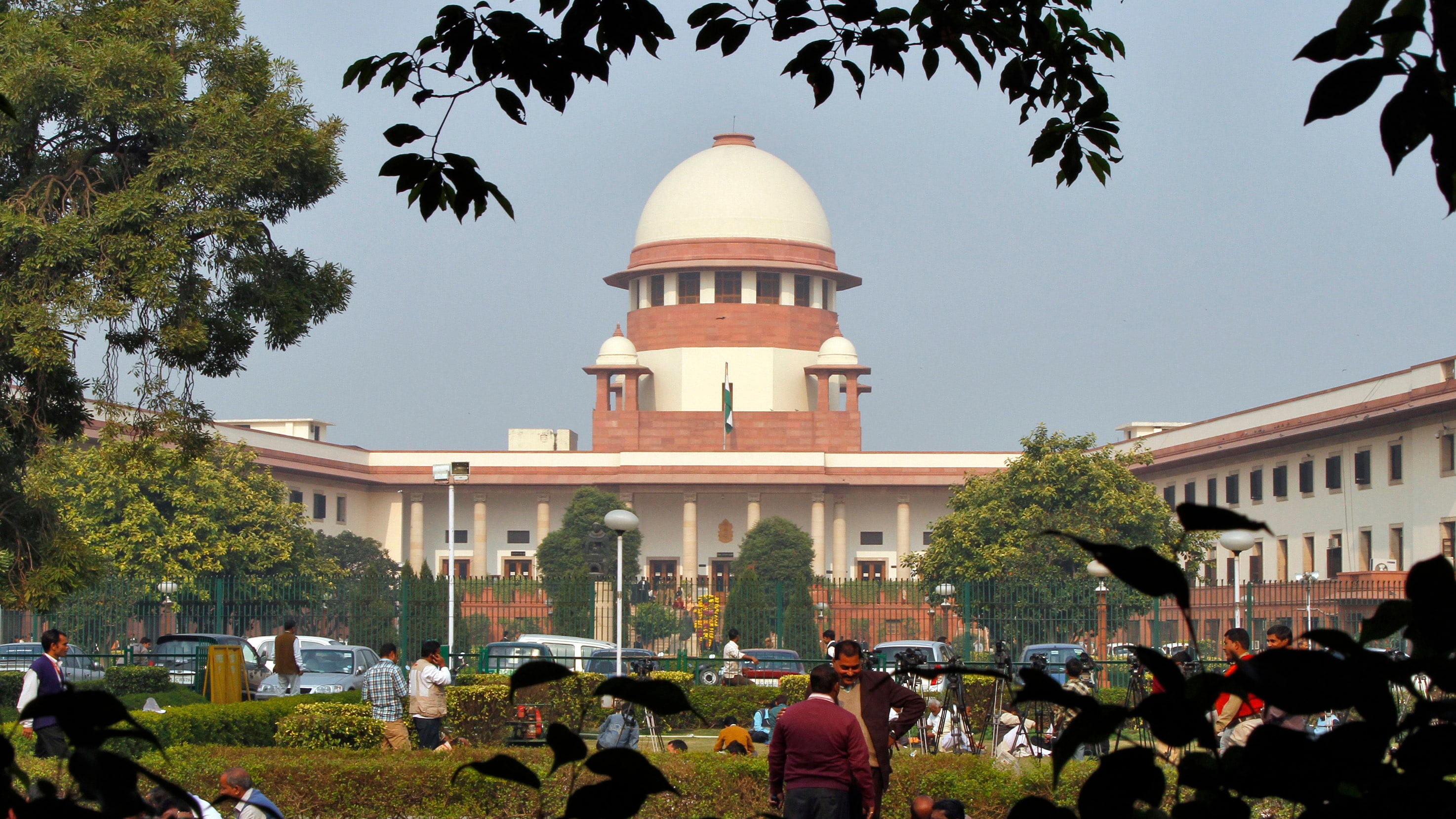
The mandatory condition that exporters must fulfill to claim credit or refund under the goods and services tax regime is valid, the Supreme Court said.
Called the ‘pre-import condition', it requires exporters to pay Integrated GST on imported raw materials, show utilisation of the raw materials for the final product to be exported, and then claim a refund of the IGST within a specified time.
In February 2019, the Gujarat High Court set aside this condition, holding it to be unreasonable and unfeasible for exporters. The court read down the ‘pre-import condition' and stated that the amendment was contrary to the objective of the foreign trade policy and thus arbitrary.
This prompted the GST department to approach the apex court.
The department argued that the GST brought about a major policy change. Consequently, exporters could no longer avail themselves of an exemption from paying IGST directly at the time of import. Such an exemption was allowed indirectly by allowing a refund of the IGST paid. The legislative intent was clear in imposing IGST on all imports, it said.
The exporters countered, saying those who undertake the manufacturing and export of goods in a continuous cycle could not prove the condition. There could not be ‘one-to-one' correlation between the import of a consignment of inputs and their utilisation for manufacturing final products for export.
It was argued that typically the export orders were to be executed by supplying the final products within a short period of four to eight weeks after receiving the purchase orders from overseas customers. However, if the ‘pre-import condition' was to be satisfied, the orders would take six months to reach the customer.
The apex court didn't see merit in this argument.
It clarified that inconvenience caused to the exporters cannot be a ground to hold that the insertion of the ‘pre-import condition' was arbitrary.
If a certain section of the business is inconvenienced, and would have to pay taxes and conditions are imposed upon their ability to freely import inputs (for the purpose of export), this alone cannot lead the court to conclude that such a change is unreasonable or arbitrary.Supreme Court
There is no constitutional requirement that, when making a new law or policy under a new law, concessions given in the past have to be given in the same way, especially when there is a complete overhaul of the taxation structure, said the court.
When you're striking down a provision that is created by the legislature, it cannot be struck down merely on the ground that a certain class of exporters is inconvenienced because of it. A provision can be struck down only when it violates the statute or the constitution itself, Rajat Bose, partner at Shardul Amarchand Mangaldas, said. "If the condition is not providing enough clarity, then clarity can be brought into it. There is no need to strike it down altogether".
"After the Supreme Court ruling, if the exporters think that there's still some doubt as to how the condition will play out, then they can write to the ministry asking for clarification," he said.

-
Ten Things I Learnt This Samvat

Patience can be a trap. Cheap stocks can stay cheap. Leverage can wipe you out. What did Samvat 2082 teach us? Niraj Shah writes on 10 lessons from the year gone by.
-
Talking Points This Week: Tech Nerves, FII Buying, And A Faraway Banking Shock
The global markets are not shining this Diwali. The exception in the large markets is, India.
-
Midterm Rally Lasted A Day. The Hard Reality Of A Divided US May Last Two Years | Opinion
Between a contested AI boom, a debt ceiling that arrives in 2027 and a president with every incentive to act alone, the next two years may prove more volatile than the first day's rally suggests.
-
Blue Wave Will Derail the AI Trade but Won't Dismantle the AI Era | Unhedged Position
The Democrats' sweep of the US Congress will see politics collide with economic forces both over the long and short term.
-
It's Time To Take The GST Council's Bet On Trust Global
Payment records can prove India's services exports, and clear, proportionate rules can bring foreign digital sellers into the tax net.
-
Opinion | India at 38: From Innovation Overperformer to Innovation Powerhouse
India now has 453 VC-backed deep science startups, 18 of them late-stage, after 117 percent growth since 2020. Laurus Labs, at USD 9.3 billion, is the most valuable deep science company in any middle-income economy outside China.
-
Navigating Energy Crossroads: S Jaishankar's Call For Diversified Supply Chains At G20 Ministerial Meeting
As geopolitical fault lines continue to test maritime trade routes and commodity flows, Jaishankar's message remains pertinent: true economic resilience requires open markets, protected transit lines, and a genuine commitment to multilateral cooperation rather than coercion.
-
Indians Are Travelling, But Not Every Journey Is A Holiday | The Week In Whys
Pilgrims, patients and working women are the real travellers, and the system hasn't quite caught up with them.
-
Getting To Work Costs Women More | The Reason Why
It is not just about women paying more than men. It is about women paying much more in cities than in villages.









