From Electoral Bonds To Article 370: A Look At Landmark Judgments Of Justice Sanjiv Khanna
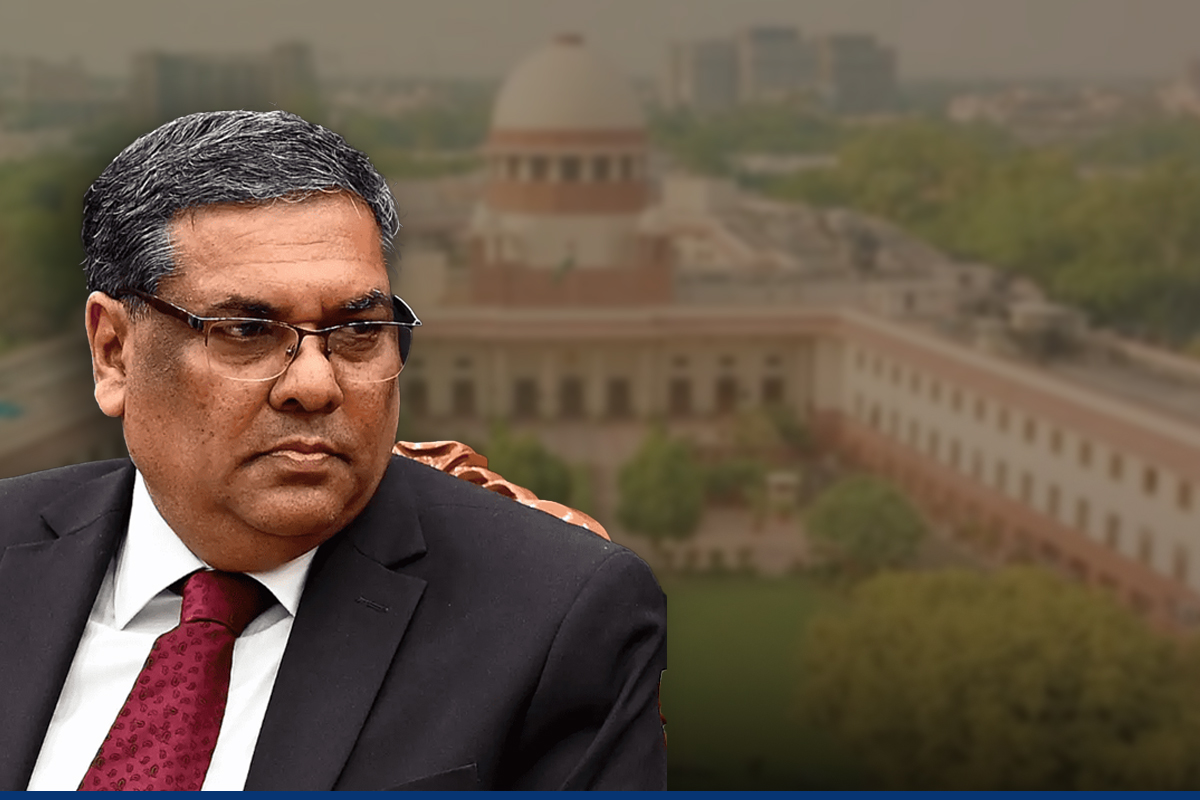
Chief Justice of India Sanjiv Khanna retired on May 13, after holding the top post for a brief period marked by many eventful occasions and landmark judgments. In a short tenure of just six months, CJI Khanna has left a legacy of judicial reforms, upholding Constitutional values and strengthening the judicial system.
Justice Khanna, who took over as the 51st Chief Justice of the Supreme Court of India on Nov. 11, 2024, exited the office, passing on the baton to Justice BR Gavai. The new CJI will take over the top post on Wednesday.
Born on May 14, 1960, Justice Khanna hailed from a distinguished legal lineage. He was elevated to the Supreme Court on January 18, 2019, after serving in various capacities. Throughout his tenure, he presided over benches delivering several landmark judgments, many deciphering the Constitutional matters that could have a lasting impact on India's judicial and political landscape.
Here's a look at 10 important judgments delivered by Justice Khanna during his tenure at the Supreme Court:
1) Halting Suits Against Religious Places
Case: Ashwini Upadhyay vs Union of India
A three-judge bench led by CJI Khanna directed trial courts to refrain from issuing effective orders or allowing surveys on existing places of worship where their religious character had been challenged. He referred to the Places of Worship (Special Provisions) Act, 1991, emphasising that no new suits could proceed until the validity of the Act was adjudicated.
2) Concerns Over Amendments To The Waqf Act
Case: Asaduddin Owaisi vs Union of India
In proceedings challenging the Waqf Amendment Act, 2025, CJI Khanna raised concerns about the removal of the ‘waqf-by-user' principle, enhanced powers for government officers and the inclusion of non-Muslims in Waqf governance. In response, the Centre assured the court it would not enforce certain disputed amendments.
3) No To 100% EVM-VVPAT Matching
Case: Association of Democratic Reforms vs Election Commission of India
Justice Khanna, heading the bench, rejected petitions demanding complete cross-verification between EVMs and VVPAT paper slips. He, however, urged the Election Commission of India to consider the feasibility of using machines for VVPAT slip counting and incorporating barcodes alongside party symbols for improved transparency.
4) Need For Clarity In ED Arrests
Case: Arvind Kejriwal vs Directorate of Enforcement
Granting interim bail to then Delhi Chief Minister Arvind Kejriwal, Justice Khanna highlighted inconsistencies in the Enforcement Directorate's approach. He underscored that an arrest under Section 19 of the PMLA must be grounded in clear material and a reasoned belief of guilt, rather than being a tool of investigation.
5) Electoral Bonds Scheme Unconstitutional
Case: Association for Democratic Reforms vs Union of India
A five-judge Constitution bench that included Justice Khanna struck down the Electoral Bonds scheme, which allowed anonymous donations to political parties. Justice Khanna argued that donor privacy didn't apply, as bank officers knew the donor's identity, and dismissed concerns about victimisation.
6) Upholding Abrogation Of Article 370
Case: In Re: Article 370 of the Constitution
A Constitution Bench upheld the Centre's 2019 decision to revoke Article 370, which had granted special status to Jammu and Kashmir. Justice Khanna's concurring opinion asserted that Article 370 was a transitory feature reflecting asymmetric federalism, not sovereignty. The court refrained from ruling on the legality of the bifurcation of the state into two Union Territories.
7) RTI Covers The Office Of The CJI
Case: CPIO, Supreme Court vs Subhash Chandra Agarwal
The Supreme Court held that the office of the Chief Justice of India falls under the purview of the Right to Information Act, 2005. Writing for the majority, Justice Khanna upheld a 2010 Delhi High Court ruling and clarified that judicial independence does not conflict with the public's right to know. But he noted that some aspects of judicial functioning may warrant confidentiality.
8) Supreme Court Can Grant Divorce Under Article 142
Case: Shilpa Sailesh vs Varun Sreenivasan
A five-judge bench ruled that the apex court could invoke Article 142 to grant divorce on the ground of irretrievable breakdown of marriage, even though such a ground is not recognised under statutory law. Justice Khanna, authoring the judgment, observed that this power must be exercised cautiously and not as a matter of routine. The mandatory six-month waiting period in mutual consent cases could also be waived under appropriate conditions.
9) Arbitrators' Fees Must Be Agreed Upon
Case: Oil And Natural Gas Corporation vs Afcons Gunanusa JV
The court ruled that arbitrators cannot set fees unilaterally without party consent. While the fee schedule in the Arbitration Act's Fourth Schedule is not binding, Justice Khanna dissented, allowing arbitrators to set reasonable fees if no agreement exists. The majority stressed the need to fix fees upfront to prevent future disputes.
10) Defining Hate Speech And Protecting Equality
Case: Amish Devgan vs Union of India
Justice Khanna, in a ruling refusing to quash FIRs against journalist Amish Devgan, clarified the distinction between hate speech and free speech. He held that hate speech undermines equality and dignity, which should be assessed from the viewpoint of reasonable and strong-minded individuals.

-
Ten Things I Learnt This Samvat

Patience can be a trap. Cheap stocks can stay cheap. Leverage can wipe you out. What did Samvat 2082 teach us? Niraj Shah writes on 10 lessons from the year gone by.
-
Talking Points This Week: Tech Nerves, FII Buying, And A Faraway Banking Shock
The global markets are not shining this Diwali. The exception in the large markets is, India.
-
Midterm Rally Lasted A Day. The Hard Reality Of A Divided US May Last Two Years | Opinion
Between a contested AI boom, a debt ceiling that arrives in 2027 and a president with every incentive to act alone, the next two years may prove more volatile than the first day's rally suggests.
-
Blue Wave Will Derail the AI Trade but Won't Dismantle the AI Era | Unhedged Position
The Democrats' sweep of the US Congress will see politics collide with economic forces both over the long and short term.
-
It's Time To Take The GST Council's Bet On Trust Global
Payment records can prove India's services exports, and clear, proportionate rules can bring foreign digital sellers into the tax net.
-
Opinion | India at 38: From Innovation Overperformer to Innovation Powerhouse
India now has 453 VC-backed deep science startups, 18 of them late-stage, after 117 percent growth since 2020. Laurus Labs, at USD 9.3 billion, is the most valuable deep science company in any middle-income economy outside China.
-
Navigating Energy Crossroads: S Jaishankar's Call For Diversified Supply Chains At G20 Ministerial Meeting
As geopolitical fault lines continue to test maritime trade routes and commodity flows, Jaishankar's message remains pertinent: true economic resilience requires open markets, protected transit lines, and a genuine commitment to multilateral cooperation rather than coercion.
-
Indians Are Travelling, But Not Every Journey Is A Holiday | The Week In Whys
Pilgrims, patients and working women are the real travellers, and the system hasn't quite caught up with them.
-
Getting To Work Costs Women More | The Reason Why
It is not just about women paying more than men. It is about women paying much more in cities than in villages.









